


Page 16 - 2023 SMOG Digital
P. 16
Trauma


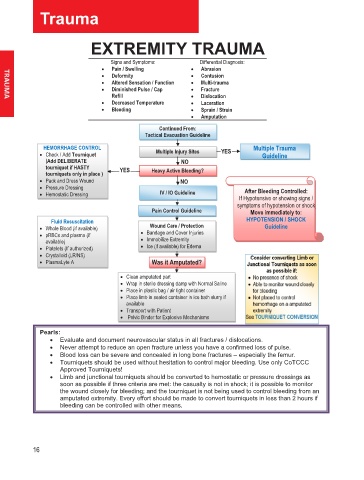
                     EXTREMITY TRAUMA

                         Signs and Symptoms:   Differential Diagnosis:
                       •  Pain / Swelling  •  Abrasion
                       •  Deformity        •  Contusion
                       •  Altered Sensation / Function  •  Multi-trauma
                       •  Diminished Pulse / Cap  •  Fracture
                         Refill            •  Dislocation
                       •  Decreased Temperature  •  Laceration
                       •  Bleeding         •  Sprain / Strain
                                           •  Amputation
                                    Continued From:
                                 Tactical Evacuation Guideline
          HEMORRHAGE CONTROL                     YES    Multiple Trauma
          • Check / Add Tourniquet  Multiple Injury Sites   Guideline
           (Add DELIBERATE              NO
           tourniquet if HASTY   YES
           tourniquets only in place )   Heavy Active Bleeding?
          • Pack and Dress Wound        NO
          • Pressure Dressing
          • Hemostatic Dressing     IV / IO Guideline   After Bleeding Controlled:
                                                     If Hypotensive or showing signs /
                                                     symptoms of hypotension or shock
                                  Pain Control Guideline   Move immediately to:
            Fluid Resuscitation                        HYPOTENSION / SHOCK
          • Whole Blood (if available)  Wound Care / Protection   Guideline
          • pRBCs and plasma (if  • Bandage and Cover Injuries
           available)           • Immobilize Extremity
          • Platelets (If authorized)  • Ice (if available) for Edema
          • Crystalloid (LR/NS)
          • PlasmaLyte A          Was it Amputated?
                           • Clean amputated part
                           • Wrap in sterile dressing damp with Normal Saline
                           • Place in plastic bag / air tight container
                           • Place limb in sealed container in ice bath slurry if
                             available
                           • Transport with Patient
                           • Pelvic Binder for Explosive Mechanisms
          Pearls:
            •  Evaluate and document neurovascular status in all fractures / dislocations.
            •  Never attempt to reduce an open fracture unless you have a confirmed loss of pulse.
            •  Blood loss can be severe and concealed in long bone fractures – especially the femur.
            •  Tourniquets should be used without hesitation to control major bleeding. Use only CoTCCC
              Approved Tourniquets!
            •  Limb and junctional tourniquets should be converted to hemostatic or pressure dressings as
              soon as possible if three criteria are met: the casualty is not in shock; it is possible to monitor
              the wound closely for bleeding; and the tourniquet is not being used to control bleeding from an
              amputated extremity. Every effort should be made to convert tourniquets in less than 2 hours if
              bleeding can be controlled with other means.


        16

