


Page 15 - 2023 SMOG Digital
P. 15
Trauma


                           CHEST TRAUMA

                                  Signs and Symptoms of Chest Trauma
                     •  Difficulty Breathing:  Cyanosis / Pursing of lips / Accessory muscle involvement
                     •  Rapid Respirations with SPO2 decreasing or <93% (Trauma: In Flight and on O2)
                     •  Flail Chest
                     •  Unequal Rise and Fall
                     •  Open Wound / Impalement Over Thorax
                     •  Penetrating Abdominal Wound
                     •  Bruising Across Chest or Base of Neck

                     •  Subcutaneous Emphysema or Deviated Trachea
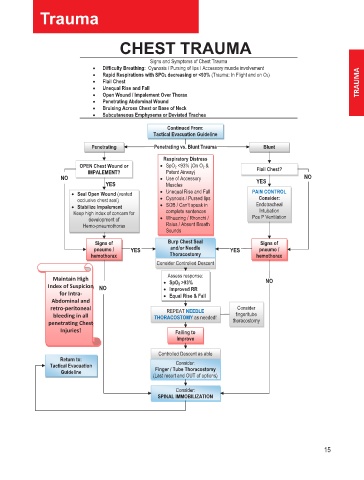
                                     Continued From:
                                  Tactical Evacuation Guideline
                     Penetrating   Penetrating vs. Blunt Trauma   Blunt

                                     Respiratory Distress
                  OPEN Chest Wound or   • SpO 2  <93% (On O 2  &   Flail Chest?
                    IMPALEMENT?      Patent Airway)
              NO                    • Use of Accessory   YES       NO
                        YES          Muscles
                 • Seal Open Wound (vented  • Unequal Rise and Fall  PAIN CONTROL
                  occlusive chest seal)  • Cyanosis / Pursed lips  Consider:
                 • Stabilize Impalement  • SOB / Can’t speak in  Endotracheal
                 Keep high index of concern for  complete sentences  Intubation
                    development of    • Wheezing / Rhonchi /  Pos P Ventilation
                   Hemo-pneumothorax   Rales / Absent Breath
                                     Sounds
                      Signs of        Burp Chest Seal     Signs of
                     pneumo /   YES   and/or Needle   YES   pneumo /
                     hemothorax       Thoracostomy       hemothorax
                                   Consider Controlled Descent
             Maintain High            Assess response:     NO
                                       O
           Index of Suspicion   NO   • SppO 2  >93%
                                        2
                                     • Improved RR
              for Intra-             • Equal Rise & Fall
            Abdominal and
            retro-peritoneal         REPEAT NEEDLE   Consider
             bleeding in all       THORACOSTOMY as needed!   finger/tube
            penetrating Chest                       thoracostomy
              Injuries!                Failing to
                                       Improve
                                   Controlled Descent as able
              Return to:
            Tactical Evacuation        Consider:
                                   Finger / Tube Thoracostomy
              Guideline           (Last resort and OUT of options)
                                       Consider:
                                   SPINAL IMMOBILIZATION


                                                                        15

