


Page 138 - JSOM Spring 2020
P. 138
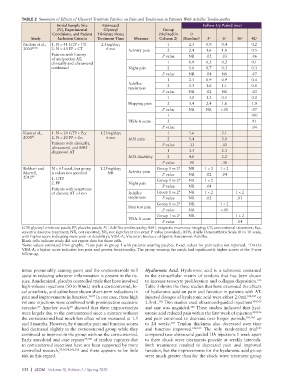
TABLE 2  Summary of Effects of Glyceryl Trinitrate Patches on Pain and Tenderness in Patients With Achilles Tendinopathy
                         Initial Sample Size   Estimated                             Follow-Up Period (mo)
                         (N), Experimental   Glyceryl               Group
                       Conditions, and Patient   Trinitrate Dose;   (Defined in   0
              Study      Inclusion Criteria  Treatment Time  Measure  Column 2)  (Baseline) a  3 a  6 a  36 a  42 a
           Paoloni et al.,   1. N = 41 GTP + CT  2.5mg/day;           1        2.3    0.9    0.4         0.2
           2004 89,90  2. N = 43 PP + CT     6 mo     Activity pain   2        2.4    1.6    1.0         0.5
                      Patients with history                         P value    NR     .02    .03         .06
                      of midportion AT,
                      clinically and ultrasound                       1        0.9    0.2    0.2         0.1
                      confirmed                       Night pain      2        1.0    0.7    0.3         0.3
                                                                    P value    NR     .04    NS          .07
                                                                      1        2.5    0.9    0.9         0.4
                                                      Achilles
                                                      tenderness      2        2.5    1.6    1.1         0.8
                                                                    P value    NR     .02    NS          .03
                                                                      1        3.0    1.2    0.5         0.2
                                                      Hopping pain    2        3.4    2.4    1.6         1.0
                                                                    P value    NR     NR    <.01         .07
                                                                      1                                  100
                                                      VISA-A score    2                                  91
                                                                    P value                              .04
           Kane et al.,   1. N = 20 GTP + Ecc  1.25mg/day;            1        5.6           3.1
           2008 91    2. N = 20 PP + Ecc     6 mo     AOS pain        2        5.4           3.0
                      Patients with clinically,                     P value    .33           .42
                      ultrasound, and MRI
                      diagnosed AT                                    1        3.5           2.3
                                                      AOS disability  2        4.0           2.2
                                                                    P value    .90           .38
           Bokhari and   N = 65 total, but group   1.25mg/day;    Group 1 vs 2 b  NR  1 < 2  1 < 2
           Murrell,    n values not specified  NR     Activity pain  P value   NR     .02    .04
           2012 88    1. GTP                                               b
                      2. PP                           Night pain  Group 1 vs 2  NR   1 < 2
                      Patients with symptoms                        P value    NR     .04
                      of chronic AT >3 mo             Achilles    Group 1 vs 2 b  NR  1 < 2       1 < 2
                                                      tenderness    P value    NR     .02          .03
                                                                  Group 1 vs 2 b  NR        1 < 2
                                                      Hop test pain
                                                                    P value    NR           <.01
                                                                  Group 1 vs 2 c  NR              1 > 2
                                                      VISA-A score
                                                                    P value                        .04
          GTP, glyceryl trinitrate patch; PP, placebo patch; AT, Achilles tendinopathy; MRI, magnetic resonance imaging; CT, conventional treatment; Ecc,
          eccentric exercise treatment; NR, not reported; NS, not significant (no exact P value provided); AOS, Ankle Osteoarthritis Scale (0 to 10 scale,
          with higher score indicating more pain or disability); VISA-A, Victorian Institute of Sports Assessment-Achilles.
          Blank cells indicate study did not report data for those cells.
                                     b
                                                                                                        c
          a Some values estimated from graphs.   Less pain in group 1 with patients wearing patches. Exact values for pain scales not reported.   On the
          VISA-A, a higher score indicates less pain and greater functionality. The group wearing the patch had significantly higher scores at the 3-year
          follow-up.

          tissue presumably causing pain) and the corticosteroids will   Hyaluronic Acid.  Hyaluronic acid is a substance contained
          assist in reducing whatever inflammation is present in the tis-  in the extracellular matrix of tendons that has been shown
          sues. Randomized, placebo controlled trials that have involved   to increase tenocyte proliferation and collagen disposition.
                                                                                                           103
          high-volume injections (50 to 90mL) with a corticosteroid, lo-  Table 3 shows the three studies that have examined the effects
          cal anesthetic, and saline have shown short-term reductions in   of hyaluronic acid on pain and function in patients with AT.
          pain and improvements in function. 94,97  In one case, these high   Injected dosages of hyaluronic acid were either 2.0mL 104,105  or
          volume injections were combined with postinjection eccentric   2.5mL.  Two studies used ultrasound-guided injections 104,105
                                                                   106
          exercise.  Another study  showed that these improvements   and one was unguided.  These studies indicated that hyal-
                              98
                                                                                106
                 97
          were largely due to the corticosteroid since a mixture without   uronic acid reduced pain within the first week of injection 104,106
          the corticosteroid had much less effect when measured at 1.5   and pain continued to decrease over longer periods, 104,105  up
          and 3 months. However, by 6 months pain and function scores   to 24 weeks.  Tendon thickness also decreased over time
                                                                        105
          had decreased slightly in the corticosteroid group while they   and function improved. 104,105  The only randomized trial
                                                                                                           105
          continued to improve in the group without the corticosteroid.   compared two ultrasound guided HA injections 1 week apart
          Early anecdotal and case reports 99,100  of tendon ruptures due   to three shock wave treatments provide at weekly intervals.
          to corticosteroid injections have not been supported by more   Both treatments resulted in decreased pain and improved
          controlled research, 93,96,98,101,102  and there appears to be little   function, but the improvements for the hyaluronic acid group
          risk in this regard.                               were much greater than for the shock wave treatment group
          132  |  JSOM   Volume 20, Edition 1 / Spring 2020

