


Page 62 - 2023 SMOG Digital
P. 62
Environmental


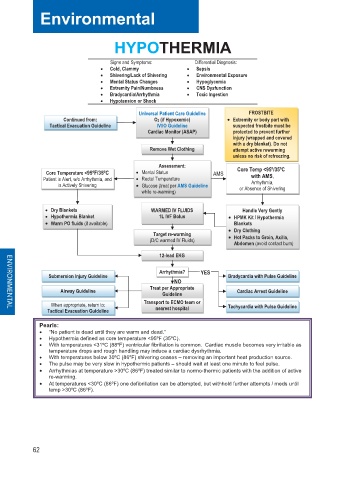
                          HYPOTHERMIA

                         Signs and Symptoms:   Differential Diagnosis:
                       •  Cold, Clammy    •  Sepsis
                       •  Shivering/Lack of Shivering  •  Environmental Exposure
                       •  Mental Status Changes  •  Hypoglycemia
                       •  Extremity Pain/Numbness  •  CNS Dysfunction
                       •  Bradycardia/Arrhythmia  •  Toxic Ingestion
                       •  Hypotension or Shock
                               Universal Patient Care Guideline   FROSTBITE
               Continued from:     O2 (if Hypoxemic)   • Extremity or body part with
            Tactical Evacuation Guideline   IV/IO Guideline   suspected frostbite must be
                                 Cardiac Monitor (ASAP)   protected to prevent further
                                                    injury (wrapped and covered
                                                    with a dry blanket). Do not
                                  Remove Wet Clothing   attempt active rewarming
                                                    unless no risk of refreezing.
                                    Assessment:
           Core Temperature <95ºF/35ºC   • Mental Status  AMS   Core Temp <95º/35ºC
          Patient is Alert, w/o Arrhythmia, and   • Rectal Temperature  with AMS,
                                                        Arrhythmia,
              is Actively Shivering    • Glucose (treat per AMS Guideline
                                while re-warming)    or Absence of Shivering
           • Dry Blankets         WARMED IV FLUIDS    Handle Very Gently
           • Hypothermia Blanket    1L IVF Bolus   • HPMK Kit / Hypothermia
           • Warm PO fluids (if available)          Blankets
                                                   • Dry Clothing
                                  Target re-warming
                                  (D/C warmed IV Fluids)   • Hot Packs to Groin, Axilla,
                                                    Abdomen (avoid contact burn)
                                    12-lead EKG
                                    Arrhythmia?   YES
            Submersion Injury Guideline            Bradycardia with Pulse Guideline
                                       NO
              Airway Guideline    Treat per Appropriate   Cardiac Arrest Guideline
                                    Guideline
            When appropriate, return to:    Transport to ECMO team or   Tachycardia with Pulse Guideline
           Tactical Evacuation Guideline   nearest hospital
   ENVIRONMENTAL
          Pearls:
          •  “No patient is dead until they are warm and dead.”
          •  Hypothermia defined as core temperature <95ºF (35ºC).
          •  With temperatures <31ºC (88ºF) ventricular fibrillation is common.  Cardiac muscle becomes very irritable as
            temperature drops and rough handling may induce a cardiac dysrhythmia.
          •  With temperatures below 30ºC (86ºF) shivering ceases – removing an important heat production source.
          •  The pulse may be very slow in hypothermic patients – should wait at least one minute to feel pulse.
          •  Arrhythmias at temperature >30ºC (86ºF) treated similar to normo-thermic patients with the addition of active
            re-warming.
          •  At temperatures <30ºC (86ºF) one defibrillation can be attempted, but withhold further attempts / meds until
            temp >30ºC (86ºF).


        62

