


Page 59 - 2023 SMOG Digital
P. 59
Environmental


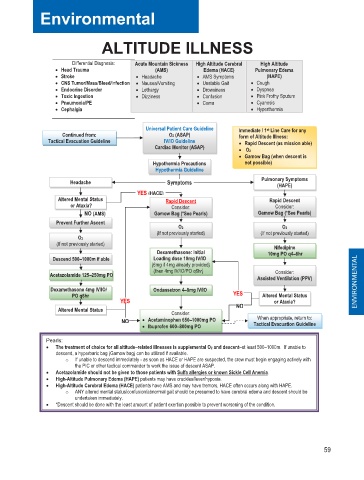
                       ALTITUDE ILLNESS

                 Differential Diagnosis:   Acute Mountain Sickness   High Altitude Cerebral   High Altitude
             • Head Trauma         (AMS)     Edema (HACE)   Pulmonary Edema
             • Stroke          • Headache   • AMS Symptoms  (HAPE)
                         I
                          n
             • CNS Tumor/Mass/Bleed/Infection  • Nausea/Vomiting  • Unstable Gait  • Cough
             • Endocrine Disorder  • Lethargy  • Drowsiness  • Dyspnea
             • Toxic Ingestion  • Dizziness  • Confusion  • Pink Frothy Sputum
             • Pneumonia/PE                 • Coma      • Cyanosis
             • Cephalgia                                • Hyperthermia
                                 Universal Patient Care Guideline   Immediate / 1 st  Line Care for any
               Continued from:        O2 (ASAP)      form of Altitude Illness:
            Tactical Evacuation Guideline   IV/IO Guideline   • Rapid Descent (as mission able)
                                   Cardiac Monitor (ASAP)
                                                     • O2
                                                     • Gamow Bag (when descent is
                                  Hypothermia Precautions   not possible)
                                   Hypothermia Guideline
                                                          Pulmonary Symptoms
                Headache             Symptoms                (HAPE)
                               YES (HACE)
              Altered Mental Status   Rapid Descent         Rapid Descent
                 or Ataxia?           Consider:              Consider:
                   NO (AMS)        Gamow Bag (*See Pearls)   Gamow Bag (*See Pearls)
             Prevent Further Ascent
                                        O2                    O2
                                   (If not previously started)   (If not previously started)
                  O2
             (If not previously started)                     Nifedipine
                                   Dexamethasone: Initial   10mg PO q4–6hr
                                                                 –
            Descend 500–1000m if able   Loading dose 10mg IV/IO
                  –
                                  (6mg if 4mg already provided)
            Acetazolamide 125–250mg PO   (then 4mg IV/IO/PO q6hr)   Consider:
                    –
                                                         Assisted Ventilation (PPV)   ENVIRONMENTAL
            Dexamethasone 4mg IV/IO/   Ondansetron 4–8mg IV/IO
                                         –
                 PO q6hr                            YES   Altered Mental Status
                           YES                               or Ataxia?
              Altered Mental Status   Consider:     NO
                                                         When appropriate, return to:
                                          –
                           NO   • Acetaminophen 650–1000mg PO  Tactical Evacuation Guideline
                                • Ibuprofen 600–800mg PO
                                        –
           Pearls:
                              –
           •  The treatment of choice for all altitude–related illnesses is supplemental O2 and descent–at least 500–1000m.  If unable to
             descend, a hyperbaric bag (Gamow bag) can be utilized if available.
               o  If unable to descend immediately - as soon as HACE or HAPE are suspected, the crew must begin engaging actively with
                 the PIC or other tactical commander to work the issue of descent ASAP.
           •  Acetazolamide should not be given to those patients with Sulfa allergies or known Sickle Cell Anemia.
           •  High-Altitude Pulmonary Edema (HAPE) patients may have crackles/fever/hypoxia.
           •  High-Altitude Cerebral Edema (HACE) patients have AMS and may have tremors, HACE often occurs along with HAPE.
               o  ANY altered mental status/confusion/abnormal gait should be presumed to have cerebral edema and descent should be
                 undertaken immediately.
           •  *Descent should be done with the least amount of patient exertion possible to prevent worsening of the condition.
                                                                        59

