


Page 60 - 2023 SMOG Digital
P. 60
Environmental


                         Animal and Insect

                          Bites and Stings

                           Signs and Symptoms:     Differential Diagnosis:
                    •  Rash, Skin Break, Wound, Retained Stinger  •  Bite/Envenomation
                    •  Pain, Swelling, Erythema  •  Other Allergic Reaction
                    •  Bleeding/Discharge      •  Anaphylaxis
                    •  Shortness of Breath/Wheezing/Throat Tightness  •  Rabies/Tetanus Risk
                    •  Hypotension or Shock

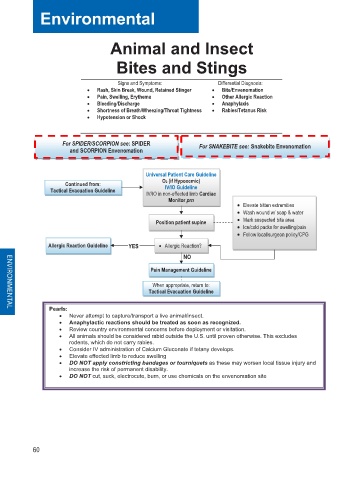
               For SPIDER/SCORPION see: SPIDER   For SNAKEBITE see: Snakebite Envenomation
                and SCOR RPION Envenomation

                                 Universal Patient Care Guideline
               Continued from:      O2 (if Hypoxemic)
            Tactical Evacuation Guideline   IV/IO Guideline
                                 IV/IO in non-effected limb Cardiac
                                      Monitor prn
                                                     • Elevate bitten extremities
                                                     • Wash wound w/ soap & water
                                   Position patient supine   • Mark suspected bite area
                                                     • Ice/cold packs for swelling/pain
                                                     • Follow local/surgeon policy/CPG
            Allergic Reaction Guideline   YES   • Allergic Reaction?
                                         NO
                                  Pain Management Guideline
                                  When appropriate, return to:
                                 Tactical Evacuation Guideline

            Pearls:
   ENVIRONMENTAL
              •  Never attempt to capture/transport a live animal/insect.
              •  Anaphylactic reactions should be treated as soon as recognized.
              •  Review country environmental concerns before deployment or visitation.
              •  All animals should be considered rabid outside the U.S. until proven otherwise. This excludes
                rodents, which do not carry rabies.
              •  Consider IV administration of Calcium Gluconate if tetany develops.
              •  Elevate effected limb to reduce swelling
              •  DO NOT apply constricting bandages or tourniquets as these may worsen local tissue injury and
                increase the risk of permanent disability.
              •  DO NOT cut, suck, electrocute, burn, or use chemicals on the envenomation site


        60

