


Page 22 - 2023 SMOG Digital
P. 22
Trauma


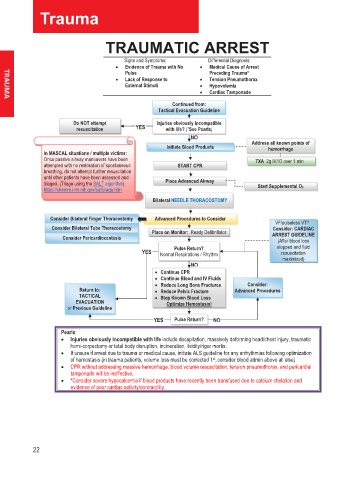
                        TRAUMATIC ARREST

                            Signs and Symptoms:   Differential Diagnosis:
                          •  Evidence of Trauma with No  •  Medical Cause of Arrest
                            Pulse              Preceding Trauma*
                          •  Lack of Response to  •  Tension Pneumothorax
                            External Stimuli  •  Hypovolemia
                                             •  Cardiac Tamponade
                                      Continued from:
                                   Tactical Evacuation Guideline
                 Do NOT attempt    Injuries obviously incompatible
                  resuscitation   YES   with life? (*See Pearls)
                                          NO
                                     Initiate Blood Products   Address all known points of
                                                           hemorrhage
           In MASCAL situations / multiple victims:
           Once passive airway maneuvers have been       TXA  2g IV/IO over 1 min
           attempted with no restoration of spontaneous   START CPR
           breathing, do not attempt further resuscitation
           until other patients have been assessed and
           triaged. (Triage using the SALT algorithm)   Place Advanced Airway   Start Supplemental O2
           https://chemm.nlm.nih.gov/salttriage.htm
                                  Bilateral NEEDLE THORACOSTOMY
            Consider Bilateral Finger Thoracostomy   Advanced Procedures to Consider   VF/pulseless VT?
            Consider Bilateral Tube Thoracostomy   Place on Monitor:  Ready Defibrillator   Consider: CARDIAC
               Consider Pericardiocentesis                  ARREST GUIDELINE
                                                             (After blood loss
                                       Pulse Return?
                                YES   Normal Respirations / Rhythm   stopped and fluid
                                                              resuscitation
                                           NO                 maximized)
                                   • Continue CPR
                                   • Continue Blood and IV Fluids
                                   • Reduce Long Bone Fractures  Consider:
                  Return to:       • Reduce Pelvic Fracture  Advanced Procedures
                  TACTICAL         • Stop Known Blood Loss
                 EVACUATION          Optimize Hemostasis!
                or Previous Guideline
                                  YES   Pulse Return?   NO
              Pearls:
              •  Injuries obviously incompatible with life include decapitation, massively deforming head/chest injury, traumatic
                hemi-corpectomy or total body disruption, incineration, lividity/rigor mortis.
              •  If unsure if arrest due to trauma or medical cause, initiate ALS guideline for any arrhythmias following optimization
                of hemostasis (in trauma patients, volume loss must be corrected 1 st ,   consider blood admin above all else)
              •  CPR without addressing massive hemorrhage, blood volume resuscitation, tension pneumothorax, and pericardial
                tamponade will be ineffective..
              •  *Consider severe hypocalcemia if blood products have recently been transfused due to calcium chelation and
                evidence of poor cardiac activity/contractility.


        22

