


Page 27 - 2023 SMOG Digital
P. 27
Medical


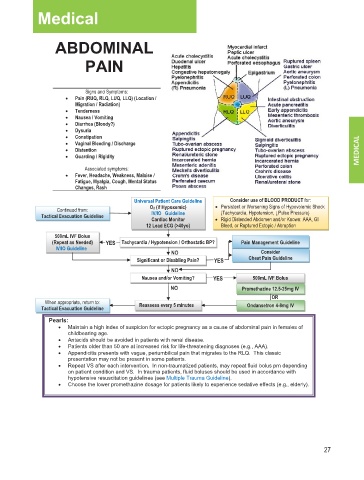
             ABDOMINAL

                    PAIN


                    Signs and Symptoms:
               •  Pain (RUQ, RLQ, LUQ, LLQ) (Location /
                 Migration / Radiation)
               •  Tenderness
               •  Nausea / Vomiting
               •  Diarrhea (Bloody?)
               •  Dysuria
               •  Constipation
               •  Vaginal Bleeding / Discharge
               •  Distention
               •  Guarding / Rigidity
                   Associated symptoms:
               •  Fever, Headache, Weakness, Malaise /
                 Fatigue, Myalgia, Cough, Mental Status
                 Changes, Rash
                              Universal Patient Care Guideline   Consider use of BLOOD PRODUCT for:
             Continued from:      O2 (if Hypoxemic)   • Persistent or Worsening Signs of Hypovolemic Shock
                                                 (Tachycardia, Hypotension, ↓Pulse Pressure)
          Tactical Evacuation Guideline   IV/IO  Guideline   • Rigid Distended Abdomen and/or Known: AAA, GI
                                  Cardiac Monitor
                                 12 Lead ECG (>40yo)   Bleed, or Ruptured Ectopic / Abruption
             500mL IVF Bolus
            (Repeat as Needed)   YES   Tachycardia / Hypotension / Orthostatic BP?   Pain Management Guideline
             IV/IO Guideline
                                      NO                  Consider
                               Significant or Disabling Pain?   YES   Chest Pain Guideline
                                      NO
                                Nausea and/or Vomiting?   YES   500mL IVF Bolus
                                      NO              Promethazine 12.5-25mg IV
                                                            OR
           When appropriate, return to:
          Tactical Evacuation Guideline   Reassess every 5 minutes   Ondansetron 4-8mg IV
            Pearls:
              •  Maintain a high index of suspicion for ectopic pregnancy as a cause of abdominal pain in females of
                childbearing age.
              •  Antacids should be avoided in patients with renal disease.
              •  Patients older than 50 are at increased risk for life-threatening diagnoses (e.g., AAA).
              •  Appendicitis presents with vague, periumbilical pain that migrates to the RLQ.  This classic
                presentation may not be present in some patients.
              •  Repeat VS after each intervention.  In non-traumatized patients, may repeat fluid bolus prn depending
                on patient condition and VS.  In trauma patients, fluid boluses should be used in accordance with
                hypotensive resuscitation guidelines (see Multiple Trauma Guideline).
              •  Choose the lower promethazine dosage for patients likely to experience sedative effects (e.g., elderly).


                                                                        27

