


Page 29 - 2023 SMOG Digital
P. 29
Medical


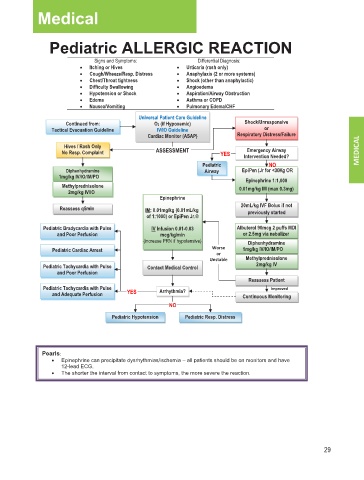
            Pediatric ALLERGIC REACTION

                      Signs and Symptoms:   Differential Diagnosis:
                  •  Itching or Hives  •  Urticaria (rash only)
                  •  Cough/Wheeze/Resp. Distress  •  Anaphylaxis (2 or more systems)
                  •  Chest/Throat tightness   •  Shock (other than anaphylactic)
                  •  Difficulty Swallowing  •  Angioedema
                  •  Hypotension or Shock   •  Aspiration/Airway Obstruction
                  •  Edema             •  Asthma or COPD
                  •  Nausea/Vomiting   •  Pulmonary Edema/CHF
                               Universal Patient Care Guideline
               Continued from:     O2 (if Hypoxemic)   Shock/Unresponsive
            Tactical Evacuation Guideline   IV/IO Guideline   or
                                 Cardiac Monitor (ASAP)   Respiratory Distress/Failure
               Hives / Rash Only
                                                       Emergency Airway
              No Resp. Complaint   ASSESSMENT    YES   Intervention Needed?
                                             Pediatric      NO
                                                        n
                                                             3
                                                               O
                                                              K
                                                       P
                                                        e
                                                             0

                                                              g
               Diphenhydramine                Airway   EpiPen (Jr for <<30Kg OR R
              1mg/kg IV/IO/IM/PO                      Epinephrine 1:1,000
               Methylprednisolone                    0.01mg/kg IM (max 0.3mg)
                2mg/kg IV/IO
                                    Epinephrine
              Reassess q5min     IM: 0.01mg/kg (0.01mL/kg   20mL/kg IVF Bolus if not
                                                       previously started
                                 of 1:1000) or EpiPen Jr.®
          Pediatric Bradycardia with Pulse   IV Infusion 0.01-0.03   Albuterol 90mcg 2 puffs MDI
             and Poor Perfusion     mcg/kg/min        or 2.5mg via nebulizer
                                (increase PRN if hypotensive)   Diphenhydramine
            Pediatric Cardiac Arrest           Worse   1mg/kg IV/IO/IM/PO
                                                or
                                               Unstable   Methylprednisolone
          Pediatric Tachycardia with Pulse   Contact Medical Control   2mg/kg IV
             and Poor Perfusion
                                                       Reassess Patient
          Pediatric Tachycardia with Pulse                  Improved
            and Adequate Perfusion   YES   Arrhythmia?   Continuous Monitoring
                                      NO
                         Pediatric Hypotension   Pediatric Resp. Distress
          Pearls:
            •  Epinephrine can precipitate dysrhythmias/ischemia – all patients should be on monitors and have
              12-lead ECG.
            •  The shorter the interval from contact to symptoms, the more severe the reaction.

                                                                        29

