


Page 18 - JSOM Fall 2022
P. 18
MacGregor et al. suggested that the “combination of comor (Table 1). Although veteran admissions have remained small
bid concussion, psychological disorders, and musculoskeletal in comparison to activeduty admissions, they have been in
pain” may contribute to “greater real or perceived functional creasing steadily. There has also been an upward trend in
limitations relative to other symptom clusters.” 3 length of stay and average number of therapy hours per day.
This cohort includes a number of Special Operations person
nel whose duties and responsibilities require the combination PREP Evolution
of focused attention, physical strength/stamina, emotional sta GWOT conflicts introduced a variety of new types of com
5
bility, and behavioral resilience in the execution of their as bat injury and recovery for those with mTBI. The PREP team
signed missions in extremely highstress situations. In writing continued to learn more about mTBI symptomology and se
about the effects of stress in Navy SEALS training, Smith et qualae resulting from patients’ ongoing and multiple military
al. explained, “stressisenhancing mindsets are relevant and deployments. Diagnoses related to mental health were fre
4
impactful in extreme evaluative settings.” This cohort has a quently noted during assessments, and tailored interventions
unique tempo which energizes their work; however, it may were implemented for advanced and robust care plans. Treat
lead them to ignore individual health challenges. ments included PTSD therapy, intensive vestibular therapy,
cognitive therapy, and sleep hygiene management.
PREP was soon recognized as the rehabilitation program of
choice for active duty and veteran Servicemember patients In 2013, the program was augmented with an optional 8week
recovering from persistent symptoms related to blast and treatment program. This permitted more focused and intensive
combatrelated injuries (inclusive of blastrelated hearing and inpatient treatment modalities. This longer treatment period
vision deficits). Blast injury effects go beyond the physical to without the distractions of military duties or fulltime em
include psychological problems, such as PTSD and depres ployment provided an optimal environment for recovery. The
sion. Considering motor, sensory, cognitive, psychosocial, PREP program received its first Commission on the Accredita
3
and behavioral sequelae, the guidance of one interdisciplinary tion of Rehabilitation Facilities (CARF) certification in 2013.
team in providing an individualized care plan and ongoing fol Having this distinction from an international accrediting body
lowup was beneficial in optimizing recovery. ensures that quality and performance improvement measures
are identified, while meeting the unique needs of Servicemem
Referral sources for PREP vary and include facilities that treat bers and veterans for optimal outcomes. 6
veterans or activeduty Servicemembers in both national and
international locations. Referral agencies include the SOF In late 2019, SOCOM engaged with senior VA PSC leadership
Special Operations Command (SOC), Warrior Care Coalition to consider expansion of the PREP concept to VA facilities in
(US Army), Warrior Transition Units, Air Force, Coast Guard, other geographic regions. SOCOM’s recommendation to ex
Marines, Marine Special Operations Command (MARSOC), pand the PREP program was a result of its successful patient
SEAL teams (US Navy), and the Special Warfare Combat outcomes and positive patient satisfaction ratings (Figures 1 and
antCraft Crewman (SWCIC). 2). The data presented in the figures are derived from surveys
completed by patients at three separate time intervals including
admission, discharge, and 3 months postdischarge. The survey
Demographics
packet contained multiple screening and assessment tools. Pa
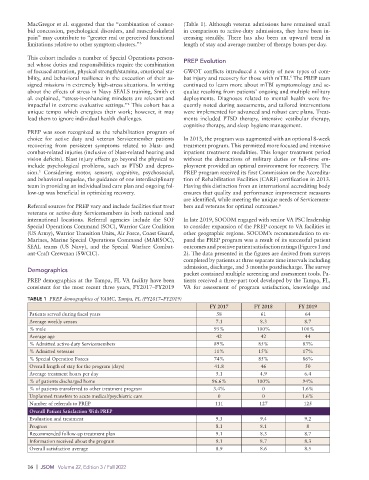
PREP demographics at the Tampa, FL VA facility have been tients received a threepart tool developed by the Tampa, FL,
consistent for the most recent three years, FY2017–FY2019 VA for assessment of program satisfaction, knowledge and
TABLE 1 PREP demographics of VAMC, Tampa, FL (FY2017–FY2019)
FY 2017 FY 2018 FY 2019
Patients served during fiscal years 58 61 64
Average weekly census 7.1 8.3 8.7
% male 95% 100% 100%
Average age 42 42 44
% Admitted activeduty Servicemembers 89% 85% 83%
% Admitted veterans 11% 15% 17%
% Special Operation Forces 74% 85% 86%
Overall length of stay for the program (days) 41.8 46 50
Average treatment hours per day 5.1 4.9 6.4
% of patients discharged home 96.6% 100% 94%
% of patients transferred to other treatment program 3.4% 0 1.6%
Unplanned transfers to acute medical/psychiatric care 0 0 1.6%
Number of referrals to PREP 111 127 125
Overall Patient Satisfaction With PREP
Evaluation and treatment 9.3 9.4 9.2
Progress 8.1 8.1 8
Recommended followup treatment plan 9.1 8.3 8.7
Information received about the program 9.1 8.7 8.3
Overall satisfaction average 8.9 8.6 8.5
16 | JSOM Volume 22, Edition 3 / Fall 2022

