


Page 146 - JSOM Winter 2018
P. 146
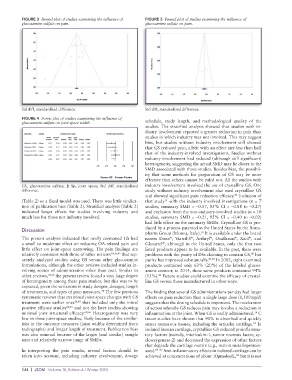
FIGURE 3  Funnel plot of studies examining the influence of   FIGURE 5  Funnel plot of studies examining the influence of
          glucosamine sulfate on pain.                       glucosamine sulfate on pain.


          Std diff, standardized difference.                 Std diff, standardized difference.
          FIGURE 4  Forest plot of studies examining the influence of
          glucosamine sulfate on joint space width.          schedule, study length, and methodological quality of the
                                                             studies. The stratified analysis showed that studies with in-
                                                             dustry involvement reported a greater reduction in pain than
                                                             studies in which industry was not involved. This may suggest
                                                             bias,  but studies without  industry  involvement  still  showed
                                                             that GS reduced pain, albeit with an effect size less than half
                                                             that of the industry-involved investigations. Studies without
                                                             industry involvement had reduced (although still significant)
                                                             heterogeneity, suggesting the actual SMD may lie closer to the
                                                             SMD associated with those studies. Besides bias, the possibil-
                                                             ity that some methods for preparation of GS may be more
                                                             effective than others cannot be ruled out. All the studies with
          GS, glucosamine sulfate; Jt Sp, joint space; Std diff, standardized   industry involvement involved the use of crystalline GS. One
          difference.                                        study without industry involvement also used crystalline GS
                                                             and showed significant pain reduction efficacy.  Inclusion of
                                                                                                  74
          (Table 2) so a fixed model was used. There was little vindica-  that study  with the industry involved investigations (n = 7
                                                                     74
          tion of publication bias (Table 2). Stratified analysis (Table 2)    studies, summary SMD = –0.57, 95% CI = –0.88 to –0.27)
          indicated larger effects for studies involving industry and   and exclusion from the non–industry-involved studies (n = 10
          much less for those not industry involved.         studies, summary SMD = –0.21, 95% CI = –0.40 to –0.02)
                                                             had little effect on the summary SMDs. Crystalline GS is pro-
          Discussion                                         duced by a process patented in the United States by the Rotta-
                                                                                    79
                                                             pharm Group (Monza, Italy).  It is available under the brand
          The present analysis indicated that orally consumed GS had   names Dona , Viatril-S , Arthryl , Osaflexan , Xicil , and
                                                                                ®
                                                                                                  ®
                                                                       ®
                                                                                        ®
                                                                                                        ®
          a small to moderate effect on reducing OA-related pain and   Glusartel , although in the United States, only the first two
                                                                    ®
          little effect on joint-space narrowing. The pain findings are   listed products appear to be available. In the past, there were
          relatively consistent with those of other reviews 34,36,42  that sep-  problems with the purity of DSs claiming to contain GS,  but
                                                                                                         80
          arately analyzed studies using GS versus other glucosamine   purity has improved substantially. 81,82  In 2002, eight examined
          formulations, although the other reviews included studies in-  products contained only 63% (20%) of the labeled glucos-
          volving routes of administration other than oral. Similar to   amine content; in 2014, these same products contained 94%
          other reviews, 34,36  the present review found a very large degree   (13%).  Future studies could examine the efficacy of crystal-
                                                                   81
          of heterogeneity among these pain studies, but this was to be   line GS versus those manufactured in other ways.
          expected, given the variations in study designs, dosages, length
          of treatments, and types of pain measures.  The few previous   The finding that several GS administrations per day had larger
                                           78
          systematic reviews that examined joint-space changes with GS   effects on pain reduction than a single large dose (1,500mg/d)
          treatment were earlier ones 46,48  that included only the initial   suggests that the dosing schedule is important. The mechanism
          positive efficacy studies 64,65  and not the later studies showing   of action whereby GS reduces pain may involve a reduction in
          minimal joint structural efficacy. 60,66  Heterogeneity was very   inflammation at the joint. When GS is orally administered,  C
                                                                                                          14
          low in these joint-space studies, likely because of the similar-  tracer studies have shown that 90% is absorbed and quickly
          ities in the outcome measures (joint widths determined from   enters numerous tissues, including the articular cartilage.  In
                                                                                                          83
          radiographs) and longer length of treatment. Publication bias   isolated human cartilage, crystalline GS reduced proinflamma-
          was also minimal because of the larger (and similar) sample   tory factors (namely, interleukin-1, tumor necrosis factor, cy-
          sizes and relatively narrow range of SMDs.         clooxygenase-2) and decreased the expression of other factors
                                                             that degrade the cartilage matrix (e.g., matrix metalloprotein-
          In interpreting the pain results, several factors should be   ases). 84–87  Anti-inflammatory effects in isolated cartilage can be
          taken  into  account,  including  industry  involvement,  dosage   achieved at concentrations of about 10μmoles/L,  but it is not
                                                                                                   84
          144  |  JSOM   Volume 18, Edition 4 / Winter 2018

