


Page 104 - JSOM Summer 2018
P. 104
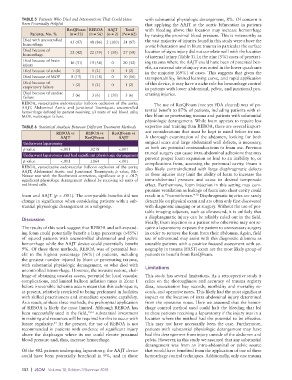
TABLE 5  Patients Who Died and Interventions That Could Have   with substantial physiologic derangement, 8%. Of concern is
          Been Potentially Helpful                           that applying the AAJT at the aortic bifurcation in patients
                             ResQFoam REBOA   AAJT   Total   with bleeding above this location may increase hemorrhage
              Patients, No. %  (n = 52)  (n = 56)  (n = 2)  (N = 62)  by raising the proximal blood pressure. This is noteworthy as
           Died with uncontrolled                            the vast majority of injuries found in this study were above the
           hemorrhage         45 (87)  48 (86)  2 (100)  54 (87)  aortic bifurcation and in blunt trauma in particular the surface
           Died because of    22 (42)  22 (39)  1 (50)  27 (50)  location of signs injury did not correlate well with the location
           hemorrhage                                        of internal injury (Table 3). In the nine (5%) cases of penetrat-
           Died because of brain   16 (31)  19 (34)  0  20 (32)  ing trauma where the AAJT could have been of potential ben-
           injury                                            efit, an external site of injury was noted in the lower quadrants
           Died because of stroke   1 (2)  1 (2)  0  1 (2)   in the majority (69%) of cases. This suggests that given the
           Died because of MOF   8 (15)  10 (18)  0  10 (16)  transportability, limited learning curve, and rapid application
           Died because of                                   of this device, it may have a niche role for hemorrhage control
           respiratory failure  1 (2)  1 (2)   0     1 (2)   in patients with lower abdominal, pelvic, and junctional pen-
           Died because of cardiac   3 (6)  3 (6)  1 (50)  3 (6)  etrating injuries.
           failure
          REBOA, resuscitative endovascular balloon occlusion of the aorta;      The use of ResQFoam (not yet FDA cleared) was of po-
          AAJT, Abdominal Aortic and Junctional Tourniquet; uncontrolled   tential benefit to 87% of patients, including patients with ei-
          hemorrhage defined by patient receiving ≥3 units of red blood cells;
          MOF, multiorgan failure.                           ther blunt or penetrating trauma and patients with substantial
                                                             physiologic derangement. While foam appears to require less
          TABLE 6  Statistical Analysis Between Different Treatment Methods  expertise and training than REBOA, there are several import-
                        REBOA vs    REBOA vs   ResQFoam vs   ant considerations that must be kept in mind before its use.

                          AAJT      ResQFoam      AAJT       A thorough examination of the abdomen, looking for both
           Underwent laparotomy                              surgical scars and large abdominal wall defects, is necessary,
           p value        <.001       .0218       <.001      as both are potential contraindications to foam use. Previous
                                                             truncal surgery can cause intra-abdominal adhesions that may
           Underwent laparotomy and had significant physiologic derangement  prevent proper foam expansion or lead to an inability to, or
           p value        <.001       .1164       <.001      complications from, accessing the peritoneal cavity. Foam is
          REBOA, resuscitative endovascular balloon occlusion of the aorta;   also likely contraindicated with large diaphragmatic defects
          AAJT, Abdominal Aortic  and Junctional Tourniquet;  p value, Mc-
          Nemar test with the Bonferonni correction, significant at p < .017;   as these injuries may limit the ability of foam to increase the
          significant physiologic derangement defined by receiving ≥3 units of   intra-abdominal pressure and cause its desired tamponade
          red blood cells.                                   effect. Furthermore, foam injection in this setting may com-
                                                             promise ventilation as leakage of foam into chest cavity could
          foam and AAJT (p < .001). The comparable benefits did not   result in a “foamothorax.”  Diaphragmatic injuries are rarely
                                                                                  20
          change in significance when considering patients with a sub-  detectable on physical exam and are often only first discovered
          stantial physiologic derangement as a subgroup.    with diagnostic imaging or at surgery. Without the use of por-
                                                             table imaging adjuncts, such as ultrasound, it is unlikely that
                                                             a diaphragmatic injury can be reliably ruled out in the field.
          Discussion
                                                             Finally, foam injection in a patient who otherwise may not re-
          The results of this work suggest that REBOA and self-expand-  quire a laparotomy exposes the patient to unnecessary surgery
          ing foam could potentially benefit a large percentage (>85%)   in order to remove the foam from their abdomen. Again, field

          of  injured patients  with  uncontrolled  abdominal and  pelvic   use of ultrasound may assist with this diagnostic dilemma as
          hemorrhage while the AAJT device could potentially benefit   unstable patients with a positive focused assessment with so-
          9%. Of these three methods, REBOA was of potential ben-  nography in trauma (FAST) exam are the most likely group of
          efit to the highest percentage (96%) of patients, including   patients to benefit from ResQFoam.
          the greatest number injured by blunt or penetrating trauma,
          with substantial physiologic derangement, or who died with   Limitations
          uncontrolled hemorrhage. However, the invasive nature, chal-
          lenge of obtaining vascular access, potential for local vascular   This study has several limitations. As a retrospective study it
          complications, and limited balloon inflation times in Zone 1   relies on the thoroughness and accuracy of trauma registry
          before irreversible ischemia occurs mean that this technique is,   data, resuscitation bay records, morbidity and mortality re-
          at present, relatively restricted to being performed in facilities   cords, and operative notes. This likely had the most significant
          with skilled practitioners and immediate operative capability.   impact on the location of intra-abdominal injury determined
          As a result, of these three methods, the prehospital application   from the operative notes. Here we assumed that the hemor-
          of REBOA is likely the most limited. Although REBOA has   rhage control method used could halt the bleeding that led
          been successfully used in the field, 15,16  substantial investment   to these patients receiving a laparotomy if the injury was in a
          in training and resources will be required for this to occur with   location where the method had the potential to be effective.
          future regularity.  At the present, the use of REBOA is not   This may not have necessarily been the case. Furthermore,
                       23
          recommended in patients with evidence of significant injury   patients with substantial physiologic derangement may have
          above the diaphragm where its use could elevate proximal   had this derangement from injury outside of the abdomen and
          blood pressure and, thus, increase hemorrhage.     pelvis. However, in this study we assumed that any substantial
                                                             derangement  was  from an  intra-abdominal or  pelvic  source
          Of the 402 patients undergoing laparotomy, the AAJT device   that would have benefited from the application of one of these
          could have been potentially beneficial in 9%, and in those   hemorrhage control techniques. Additionally, only one trauma


          102  |  JSOM   Volume 18, Edition 2/Summer 2018

