


Page 72 - Journal of Special Operations Medicine - Winter 2015
P. 72
Unfortunately, gaps exist in the diagnostic criteria. TBIs,   circles is on the role of brain injuries and how they affect
          especially those that lead to chronic conditions, are dif-  PTSD or, if they are TBIs, cause a type of PTSD. 13–15
          ficult to diagnose and can be mistaken for other condi-
          tions,  but the DSM-V now comes with a warning to   Diagnostic criteria for PTSD, as defined by DSM-V,  in-
               12
                                                                                                         11
          clinicians and mental health professionals: “Posttrau-  clude a history of exposure to a traumatic event meeting
          matic stress disorder (PTSD) can occur with the NCD   two of the five criteria (A–E) listed below and symptoms
          [neurocognitive disorder due to TBI] and have overlap-  from each of three symptom clusters: intrusive recollec-
          ping symptoms (e.g., difficulty concentrating, depressed   tions, avoidant/numbing symptoms, and hyperarousal
          mood, aggressive behavioral disinhibition).”  Slowly,   symptoms. A fifth criterion (F) concerns duration of
                                                  11
          the medical community has improved its identification   symptoms and a sixth (H) cautions the diagnosing cli-
          and analysis of the symptoms, applying correct diagnos-  nician to make sure that drugs (prescription or other-
          tic tests and prescribing treatments. As we have learned,   wise) or other disease process are not involved. DSM-IV
          some treatments are standard and accepted, while oth-  has fewer criteria, but DSM-IV was used to diagnose
          ers are not, but should be.                        PTSD in Servicemembers active during the War on Ter-
                                                             ror (which started in 2002) and has been used to diag-
                                                             nose the majority of Servicemembers now suffering with
          Posttraumatic Stress Disorder
                                                             PTSD and/or TBI. A Servicemember who was diagnosed
          Shell  shock,  battle  fatigue, combat  exhaustion,  nostal-  with DSM-IV will definitely need to be re-evaluated.
          gia—these are just a few of the names that have been used   The list of eight criteria in the DSM-V is as follows:
          to describe the mental state of fighting men and women
          over the ages (Figure 1).  Although PTSD is associated   A. Stressor: The person has been exposed to a traumatic
                               12
          with individuals exposed to the trauma of war, it occurs   event that could have resulted in death to others or
          in the civilian population after a single horrific event (e.g.,   wounds/injury to themselves or others, coupled with
          surviving the 9/11 attacks on the World Trade Center or   intense emotions (e.g., fear, helplessness, or horror).
          the Pentagon) or after sustained events (e.g., Hurricane   B.  Intrusive recollection: The traumatic event is persis-
          Katrina), as well.  The concept of psychological or “in-  tently reexperienced (must include at least one reex-
                         12
          visible wounds” associated with the experience of war or   periencing condition).
          trauma (including accidents, domestic violence, sexual   1. Recurrent and intrusive distressing recollections of
          assaults, and so forth) has been part of recorded human   the event, including images, thoughts, or perceptions
          experience since 490 bc and earlier. Over the years, the   2. Recurrent distressing dreams (i.e., nightmares) of
          medical and psychological fields have circled around a   the event
          core set of symptoms and criteria to diagnose this condi-  3. Acting or feeling as if the traumatic event were re-
          tion. The majority of patients with PTSD routinely work   curring in the present (includes a sense of reliving
          through their symptoms in  about 1–3 months without     the experience, illusions, hallucinations, and dis-
          the need for psychoactive drugs, although counseling is   sociative flashback episodes, including those that
          a great help; but a proportion of patients develop longer-  occur upon awakening or when intoxicated)
          term symptoms. The  current  debate within psychological   4. Intense psychological distress at exposure to inter-
                                                                  nal or external cues that symbolize or resemble an
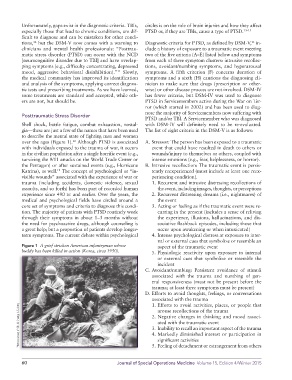
          Figure 1  A grief stricken American infantryman whose   aspect of the traumatic event
          buddy has been killed in action (Korea, circa 1950).  5. Physiologic reactivity upon exposure to internal
                                                                  or external cues that symbolize or resemble  the
                                                                  incident
                                                             C. Avoidant/numbing: Persistent avoidance of stimuli
                                                                associated with the trauma and numbing of gen-
                                                                eral responsiveness (must not be present before the
                                                                trauma; at least three symptoms must be present)
                                                             D. Efforts to avoid thoughts, feelings, or conversations
                                                                associated with the trauma
                                                                1. Efforts to avoid activities, places, or people that
         Photo courtesy of Sfc. Al Chang, U.S. Army             2. Negative  changes  in thinking  and  mood  associ-
                                                                  arouse recollections of the trauma
                                                                  ated with the traumatic event
                                                                3. Inability to recall an important aspect of the trauma
                                                                4. Markedly diminished interest or participation in
                                                                  significant activities
                                                                5. Feeling of detachment or estrangement from others


          60                                     Journal of Special Operations Medicine  Volume 15, Edition 4/Winter 2015

