


Page 42 - Journal of Special Operations Medicine - Winter 2015
P. 42
®
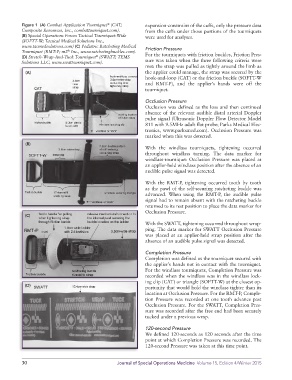
Figure 1 (A) Combat Application Tourniquet (CAT; expansion-constraint of the cuffs, only the pressure data
Composite Resources, Inc., combattourniquet.com). from the cuffs under those portions of the tourniquets
(B) Special Operations Forces Tactical Tourniquet-Wide were used for analyses.
(SOFTT-W; Tactical Medical Solutions Inc.,
www.tacmedsolutions.com) (C) Pediatric Ratcheting Medical Friction Pressure
®
Tourniquet (RMT-P; m2 Inc., www.ratchetingbuckles.com).
®
(D) Stretch-Wrap-And-Tuck Tourniquet (SWATT; TEMS For the tourniquets with friction buckles, Friction Pres-
Solutions LLC, www.swattourniquet.com). sure was taken when the three following criteria were
met: the strap was pulled as tightly around the limb as
(A) the applier could manage, the strap was secured by the
hook-and-loop (CAT) or the friction buckle ( SOFTT-W
and RMT-P), and the applier’s hands were off the
tourniquet.
Occlusion Pressure
Occlusion was defined as the loss and then continued
absence of the relevant audible distal arterial Doppler
pulse signal (Ultrasonic Doppler Flow Detector Model
811 with 9.5MHz adult flat probe; Parks Medical Elec-
tronics, www.parksmed.com). Occlusion Pressure was
marked when this was detected.
(B)
With the windlass tourniquets, tightening occurred
throughout windlass turning. The data marker for
windlass-tourniquet Occlusion Pressure was placed at
an applier-held windlass position after the absence of an
audible pulse signal was detected.
With the RMT-P, tightening occurred tooth by tooth
as the pawl of the self-securing ratcheting buckle was
advanced. When using the RMT-P, the audible pulse
signal had to remain absent with the ratcheting buckle
returned to its rest position to place the data marker for
Occlusion Pressure.
(C)
With the SWATT, tightening occurred throughout wrap-
ping. The data marker for SWATT Occlusion Pressure
was placed at an applier-held strap position after the
absence of an audible pulse signal was detected.
Completion Pressure
Completion was defined as the tourniquet secured with
the applier’s hands not in contact with the tourniquet.
For the windlass tourniquets, Completion Pressure was
recorded when the windlass was in the windlass lock-
ing clip (CAT) or triangle (SOFTT-W) at the closest op-
(D) portunity that would hold the windlass tighter than its
location at Occlusion Pressure. For the RMT-P, Comple-
tion Pressure was recorded at one tooth advance past
Occlusion Pressure. For the SWATT, Completion Pres-
sure was recorded after the free end had been securely
tucked under a previous wrap.
120second Pressure
We defined 120-seconds as 120 seconds after the time
point at which Completion Pressure was recorded. The
120-second Pressure was taken at this time point.
30 Journal of Special Operations Medicine Volume 15, Edition 4/Winter 2015

