


Page 51 - JSOM Winter 2025
P. 51
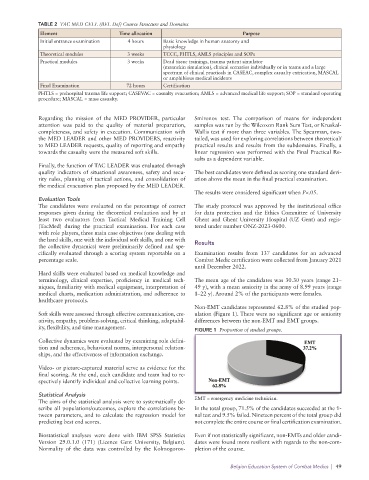
TABLE 2  TAC MED CELL (BEL Def) Course Structure and Domains
              Element                   Time allocation                         Purpose
              Initial entrance examination  4 hours   Basic knowledge in human anatomy and
                                                      physiology
              Theoretical modules          3 weeks    TCCC, PHTLS, AMLS principles and SOPs
              Practical modules            3 weeks    Dead tissue trainings, trauma patient simulator
                                                      (mannekin simulation), clinical scenarios individually or in teams and a large
                                                      spectrum of clinical practicals in CASEAC, complex casualty extrication, MASCAL
                                                      or amphibious medical incidents
              Final Examination           72 hours    Certification
              PHTLS = prehospital trauma life support; CASEVAC = casualty evacuation; AMLS = advanced medical life support; SOP = standard operating
              procedure; MASCAL = mass casualty.

              Regarding  the mission  of  the  MED PROVIDER, particular   Smironov test.  The comparison of means for independent
              attention was paid to the quality of material preparation,   samples was run by the Wilcoxon Rank Sum Test, or Kruskal-
              completeness, and safety in execution. Communication with   Wallis test if more than three variables. The Spearman, two-
              the MED LEADER and other MED PROVIDERS, reactivity   tailed, was used for exploring correlations between theoretical/
              to MED LEADER requests, quality of reporting and empathy   practical results and results from the subdomains. Finally, a
              towards the casualty were the measured soft skills.  linear regression was performed with the Final Practical Re-
                                                                 sults as a dependent variable.
              Finally, the function of TAC LEADER was evaluated through
              quality indicators of situational awareness, safety and secu-  The best candidates were defined as scoring one standard devi-
              rity rules, planning of tactical actions, and consolidation of   ation above the mean in the final practical examination.
              the medical evacuation plan proposed by the MED LEADER.
                                                                 The results were considered significant when P<.05.
              Evaluation Tools
              The candidates were evaluated on the percentage of correct   The study protocol was approved by the institutional office
              responses given during the theoretical evaluation and by at   for data protection and the Ethics Committee of University
              least two evaluators from  Tactical Medical  Training Cell     Ghent and Ghent University Hospital (UZ Gent) and regis-
              ( TacMed) during the practical examination. For each case    tered under number ONZ-2023-0600.
              with role players, three main case objectives (one dealing with
              the hard skills, one with the individual soft skills, and one with   Results
              the collective dynamics) were preliminarily defined and spe-
              cifically evaluated through a scoring system reportable on a   Examination  results  from  137 candidates  for  an advanced
              percentage scale.                                  Combat Medic certification were collected from January 2021
                                                                 until December 2022.
              Hard skills were evaluated based on medical knowledge and
              terminology, clinical expertise, proficiency in medical tech-  The mean age of the candidates was 30.30 years (range 21–
              niques, familiarity with medical equipment, interpretation of   49 y), with a mean seniority in the army of 8.99 years (range
              medical charts, medication administration, and adherence to   1–22 y). Around 2% of the participants were females.
              healthcare protocols.
                                                                 Non-EMT candidates represented 62.8% of the studied pop-
              Soft skills were assessed through effective communication, cre-  ulation (Figure 1). There were no significant age or seniority
              ativity, empathy, problem-solving, critical thinking, adaptabil-  differences between the non-EMT and EMT groups.
              ity, flexibility, and time management.             FIGURE 1  Proportion of studied groups.

              Collective dynamics were evaluated by examining role defini-
              tion and adherence, behavioral norms, interpersonal relation-
              ships, and the effectiveness of information exchange.
              Video- or picture-captured material serve as evidence for the
              final scoring. At the end, each candidate and team had to re-
              spectively identify individual and collective learning points.

              Statistical Analysis
              The aims of the statistical analysis were to systematically de-  EMT = emergency medicine technician.
              scribe all populations/outcomes, explore the correlations be-  In the total group, 71.5% of the candidates succeeded at the fi-
              tween parameters, and to calculate the regression model for   nal test and 9.5% failed. Nineteen percent of the total group did
              predicting best end scores.                        not complete the entire course or final certification examination.

              Biostatistical analyses were done with IBM SPSS Statistics   Even if not statistically significant, non-EMTs and older candi-
              Version 29.0.1.0 (171) (Licence Gent University, Belgium).   dates were found more resilient with regards to the non-com-
              Normality of the data was controlled by the Kolmogorov-   pletion of the course.

                                                                            Belgian Education System of Combat Medics  |  49

