


Page 124 - JSOM Fall 2025
P. 124
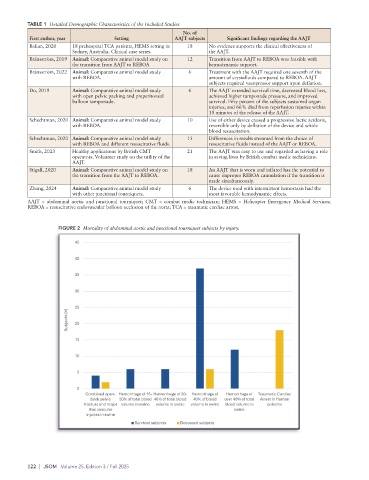
FIGURE 1  Flowchart for study search, selection, and screening for the review.


                                     Records identified
                                  through database search
                                          n=21


                        Duplicates removed         Titles screened
                               n=1                     n=20


                                    Records excluded            Article abstracts
                                      based on title          assessed for eligibility
                                          n=6                        n=14


                                                 Articles excluded          Articles eligible for
                                                 based on abstract           full-text screening
                                                       n=5                        n=9


                                                                                    Records excluded
                                                                                    based on full-text
                                                                                          n=0


                                                                                     Studies included
                                                                                          n=9


              The Australian descriptive case series on AAJT usage in TCA   euthanized at the end of the observation period, which was set
              patients consisted of 18 applications of the AAJT, from which   after the device had been removed. The deceased subjects in
              data were collected and analyzed.                  the animal studies (Figure 2) refer specifically to subjects who
                                                                 died before the end of the observation period. The individual
              A study on the utility of the AAJT was conducted on British   application and observation periods for each study are listed
              CMT volunteers. In this study, the CMTs were first trained   in Table 2. However, a direct comparison of these time periods
              in the use of the AAJT, after which the rate of successful ap-  with the case series of Balian et al. is not possible due to fun-
              plications was studied both in daylight and low-light condi-  damental differences in study design and patient management.
              tions. The CMTs also provided open feedback on the use of
              the AAJT.                                          The Rate of ROSC achieved with the AAJT
                                                                 Data on ROSC achieved were collected from two studies: the
              The Clinical Effectiveness of the AAJT             case series by Balian et al. and a randomized animal study by
              in the Survival of TCA Patients                    Brännström et al. Despite involving only deceased patients,
              Data on the primary parameter—human patient survival—  Balian et al. noted a return of ROSC in two patients, one of
              were obtained from a case series by Balian et al.,  which ex-  whom proceeded to organ donation. Because their findings
                                                    20
              amined AAJT application in TCA patients within an HEMS   were consistent with those of previous animal model studies,
              setting in Sydney, Australia. The study included 18 prehospital   it was theorized that earlier application might increase the rate
              TCA patients treated with AAJT applications. However, the   of ROSC and survival. 20
              intervention did not improve survival, as all patients eventu-
              ally succumbed to their injuries, resulting in a 100% mortality   In Brännström’s study, where  the transition from  AAJT to
              rate (see the last columns in Figure 2).           REBOA was studied, one case of ventricular fibrillation was
                                                                 observed as an unplanned hazard not included in the study’s
              In contrast, all of the animal studies included in this review   initial design. ROSC was achieved in under 30 seconds of re-
              followed a standardized protocol in which the subjects were   suscitation after the AAJT was applied (Figure 3). With no

                                                      Compression of Abdominal Aorta in Hemorrhagic Shock: Systematic Review  |  121

