


Page 126 - JSOM Fall 2025
P. 126
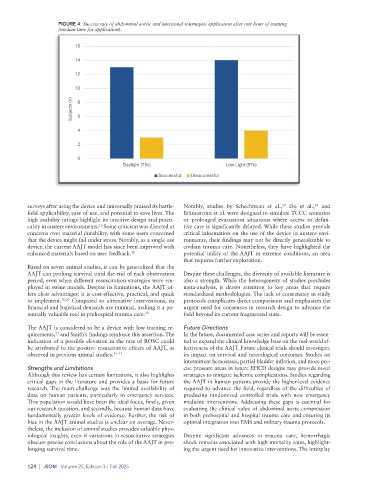
TABLE 2  Abdominal Aortic and Junctional Tourniquet Application   with one animal subject who experienced ventricular fibrilla-
              Durations and Post-Application Observation Periods in Included   tion during their study, aided by the AAJT. Median application
              Publications                                       times for first-timer users handling the AAJT are impressive,
                                  Duration of    Observation     especially considering that the application times became even
              First author, year  application, min  period, min  faster with repeated applications in low-light conditions. These
              Balian, 2020           —               —           findings form the basis for the discussion below.
              Bränsström, 2019    30 or 60*          0
              Bränsström, 2022      240              30          Discussion
              Do, 2019               60              10
              Schechtman, 2020       60             300          Trauma remains a major global health burden, incurring stag-
              Schechtman, 2020       60             360          gering societal costs, particularly due to potentially prevent-
                                                                 able deaths associated with NCTH and hemorrhagic shock.
                                                                                                               6,8
              Smith, 2023            —               —           The urgent need for effective and rapid interventions for these
              Stigall, 2020       60 or 90*          —           conditions is evident, making prehospital devices such as the
              Zhang, 2024           120              60          AAJT an attractive prospect, despite the limited evidence avail-
              *Depending on group.                               able.  However, the current literature on the AAJT lacks ev-
                                                                    22
                                                                 idence. It is both scarce and too heterogeneous to allow for
              further anomalies, the animal was deemed suitable to remain   systematic analysis or definitive conclusions regarding its
              included in the study. 21                          clinical  effectiveness  in  human  hemorrhagic  shock  patients.
                                                                 The only study directly investigating survival in human hem-
              Utility of AAJT                                    orrhagic shock (in this case, TCA patients) reported a mortal-
              Smith et al. found that the AAJT could be successfully applied   ity rate of 100%. Notably, the mean time to application after
              with minimal training in both daylight and low-light condi-  arrest in this case series was 16 minutes, a delay that Balian et
              tions. The criterion for successful application was cessation of   al. acknowledged as severely limiting the chances of successful
              circulation in the femoral artery, as verified by ultrasound. An   resuscitation. 20
              initial success rate of 79% was achieved, with a median appli-
              cation time of just over a minute following a 1-hour training   The AAJT was successfully applied in three cases where ROSC
              session (Figure 4). 10                             was achieved—two human patients in Balian’s case series and
                                                                 one swine model of ventricular fibrillation in Brännström’s
              Summary                                            study. Although these isolated findings do not allow for robust
              Overall, the only study of the AAJT in human TCA patients   conclusions,  they suggest  a  potentially greater  benefit  when
              did not show any mortality benefit; however, it may have had a   applied early in cardiac arrest, potentially improving the out-
              small incidence of improved rates of ROSC, as seen in two out   come of perfusion restoration.
              of the 18 patients in the study by Balian and colleagues. While
              their total rate of ROSC achieved was low, Brännström and his   The greatest strength of the AAJT appears to be its utility. In
              colleagues were able to achieve ROSC immediately when faced   the Smith et al. study, CMTs completed self-reported feedback

                        FIGURE 3  Rate of achieved return of spontaneous circulation with abdominal aortic and junctional tourniquet
                        use by injury.


                                                      Compression of Abdominal Aorta in Hemorrhagic Shock: Systematic Review  |  123

