


Page 54 - JSOM Winter 2021
P. 54
21.  Telles S, Singh N, Balkrishna A. Finger dexterity and visual dis-  24.  Zanesco AP, Denkova E, Rogers SL, et al. Mindfulness training as
             crimination following two yoga breathing practices. Int J Yoga.   cognitive training in high-demand cohorts: an initial study in elite
             2012;5(1):37.                                      military servicemembers. Prog Brain Res. 2019;244:323–354.
          22.  Krupnik V, Nietzold I, Bartsch B, Rassler B.  The effect of   25.  Renkl A. Worked-out examples: instructional explanations support
               motor-respiratory coordination on the precision of tracking   learning by self-explanations. Learn Instr. 2002;12(5):529–556.
             movements: influence of attention, task complexity and training.   26.  Clark RC, Mayer RE. E-learning and the science of instruction:
             Eur J Appl Physiol. 2015;115(12):2543–2556.        Proven  guidelines  for  consumers  and  designers  of  multimedia
          23.  Schöne B, Gruber T, Graetz S, et al. Mindful breath awareness   learning. San Francisco, CA: John Wiley & Sons; 2016.
             meditation facilitates efficiency gains in brain networks: a steady-  27.  Lunasco  T, Chamberlin  RA, Deuster  PA. Human  performance
             state visually evoked potentials study. Sci Rep. 2018;8(1):13687.   optimization: an operational and operator-centric approach. J
             Published 2018 Sep 12.                             Spec Oper Med. 2019;19(3):101–106.


                                           SUPPLEMENTARY MATERIALS

          Catalytics Construction. Unit SMEs are given detailed instructions in   Catalytic narratives (like the above) are presented to the group pro-
          writing occupationally relevant narratives of incidents in which chal-  jected onto a whiteboard, followed by a Scenario Strategy Grid (be-
          lenges to the fight/flight system, psychological and physical perfor-  low) with a partially worked out example of the cognitive skill being
          mance are encountered. These capture the nature of the incident, re-  learned.
          sources (tools, people, etc), timelines of events in which they occurred,
          sensory details (time of day, climate, temperature, environmental   FIGURE 2  Scenario Strategy Grid.
          context -– sight, smell, sound, touch/ kinesthetic, taste), internal ex-
          periences (thoughts and physical sensations), and lastly – outcomes.
          Catalytics are then fully constructed by the Trainer, and integrated (in-
          terchangeably, in specific locations in the materials, Part 2, Figure 1)
          forming the basis for specific education components, including learn-
          ing activities and structured discussions used throughout all phases.
          These components focus on  synthesizing existing knowledge with
          self- and situational-awareness to enhance understanding of the con-
          nections between stressful environmental demands and their effects on
          physiology, cognition (thinking, decision-making, distractibility, etc.),
          emotion, behavior, and performance.
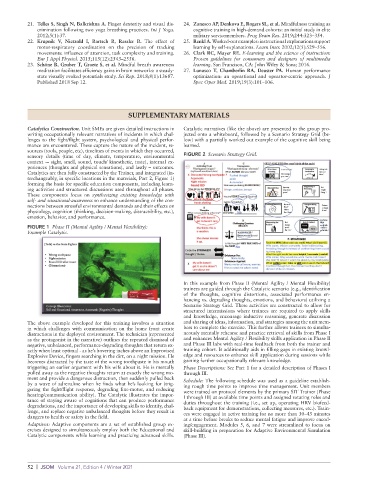
          FIGURE 1  Phase II (Mental Agility / Mental Flexibility):
          Example Catalytic.


                                                             In this example from Phase II (Mental Agility / Mental Flexibility)
                                                             trainees are guided through the Catalytic scenario (e.g., identification
                                                             of  the  thoughts,  cognitive  distortions,  associated  performance  en-
                                                             hancing vs. degrading thoughts, emotions, and behaviors) utilizing a
                                                             Scenario Strategy Grid. These activities are constructed to allow for
                                                             structured intermissions where trainees are required to apply skills
                                                             and  knowledge, encourage  inductive  reasoning, generate  discussion
          The above example developed for this training involves a situation   and sharing of ideas, information, and strategies among the unit mem-
          in which challenges with communication on the home front create   bers to complete the exercise. This further allows trainees to simulta-
          distractions in the deployed environment. The technician (represented   neously mentally rehearse and practice retrieval of skills from Phase I
          as the protagonist in the narrative) outlines the repeated dismissal of   and enhances Mental Agility / Flexibility skills application in Phase II
          negative, unbalanced, performance-degrading thoughts that return ex-  and Phase III labs with real-time feedback from both the trainer and
          actly when least optimal - as he’s hovering inches above an Improvised   training cohort. It additionally aids in filling gaps in existing knowl-
          Explosive Device, fingers searching in the dirt, on a night mission. He   edge and resources to enhance skill application during sessions while
          becomes distracted by the taste of the wrong toothpaste in his mouth   gaining further occupationally relevant knowledge.
          triggering an earlier argument with his wife about it. He is mentally   Phase Descriptions: See Part 1 for a detailed description of Phases I
          pulled away as the negative thoughts return at exactly the wrong mo-  through III.
          ment and provide a dangerous distraction, then suddenly pulled back   Schedule: The following schedule was used as a guideline establish-
          by a wave of adrenaline when he finds what he’s looking for (trig-  ing rough time points to improve time management. Unit members
          gering the fight/flight response, degrading fine-motor, and reducing   were trained on protocol elements by the primary SIT Trainer (Phase
          hearing/communication ability). The Catalytic illustrates the impor-  I through III) at available time points and assigned rotating roles and
          tance of staying aware of cognitions that can produce performance   duties throughout the training (i.e., set up, operating HRV biofeed-
          degradations, and the importance of developing skills to identify, chal-  back equipment for demonstrations, collecting measures, etc.). Train-
          lenge, and replace negative unbalanced thoughts before they result in   ees were engaged in active training for no more than 30–45 minutes
          dangers to health or safety in the field.          at a time before breaks to reduce mental fatigue and improve encod-
          Adaptives: Adaptive components are a set of established group ex-  ing/engagement. Modules 5, 6, and 7 were streamlined to focus on
          ercises designed to simultaneously employ both the Educational and   skill-building in preparation for Adaptive Environmental Simulation
          Catalytic components while learning and practicing advanced skills.   (Phase III).


          52  |  JSOM   Volume 21, Edition 4 / Winter 2021

