


Page 52 - JSOM Winter 2021
P. 52
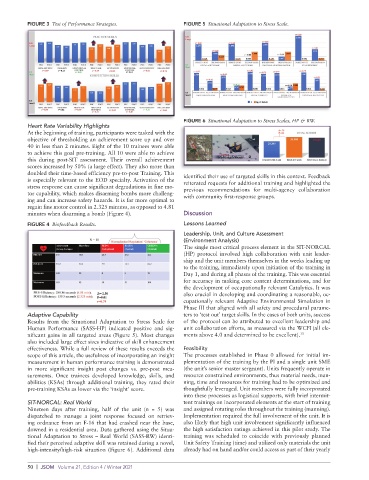
FIGURE 3  Test of Performance Strategies.          FIGURE 5  Situational Adaptation to Stress Scale.


                                                             FIGURE 6  Situational Adaptation to Stress Scales, HP & RW.
          Heart Rate Variability Highlights
          At the beginning of training, participants were tasked with the
          objective of thresholding an achievement score up and over
          40 in less than 2 minutes. Eight of the 10 trainees were able
          to achieve this goal pre-training. All 10 were able to achieve
          this during post-SIT assessment. Their overall achievement
          scores increased by 50% (a large effect). They also more than
          doubled their time-based efficiency pre-to-post Training. This   identified their use of targeted skills in this context. Feedback
          is especially relevant to the EOD specialty. Activation of the   reiterated requests for additional training and highlighted the
          stress response can cause significant degradations in fine mo-  previous  recommendations  for  multi-agency  collaboration
          tor capability, which makes disarming bombs more challeng-  with community first-response groups.
          ing and can increase safety hazards. It is far more optimal to
          regain fine motor control in 2.325 minutes, as opposed to 4.81
          minutes when disarming a bomb (Figure 4).          Discussion
          FIGURE 4  Biofeedback Results.                     Lessons Learned
                                                             Leadership, Unit, and Culture Assessment
                                                             (Environment Analysis)
                                                             The single most critical process element in the SIT-NORCAL
                                                             (HP) protocol involved high collaboration with unit leader-
                                                             ship and the unit members themselves in the weeks leading up
                                                             to the training, immediately upon initiation of the training in
                                                             Day 1, and during all phases of the training. This was essential
                                                             for accuracy in making core content determinations, and for
                                                             the development of occupationally relevant Catalytics. It was
                                                             also crucial in developing and coordinating a reasonable, oc-
                                                             cupationally relevant Adaptive Environmental Simulation in
                                                             Phase III that aligned with all safety and procedural parame-
          Adaptive Capability                                ters to ‘test out’ target skills. In the cases of both units, success
          Results from the Situational Adaptation to Stress Scale for   of the protocol can be attributed to excellent leadership and

          Human Performance (SASS-HP) indicated positive and sig-  unit collaboration efforts, as measured via the WCFI (all ele-
          nificant gains in all targeted areas (Figure 5). Most changes   ments above 4.0 and determined to be excellent). 13
          also included large effect sizes indicative of skill enhancement
          effectiveness. While a full review of these results exceeds the   Feasibility
          scope of this article, the usefulness of incorporating an insight   The processes established in Phase 0 allowed for initial im-
          measurement in human performance training is demonstrated   plementation of the training by the PI and a single unit SME
          in more significant insight post changes vs. pre-post mea-  (the unit’s senior master sergeant). Units frequently operate in
          surements. Once trainees developed knowledge, skills, and   resource constrained environments, thus material needs, man-
          abilities (KSAs) through additional training, they rated their   ning, time and resources for training had to be optimized and
          pre- training KSAs as lower via the ‘insight’ score.  thoughtfully leveraged. Unit members were fully incorporated
                                                             into these processes as logistical supports, with brief intermit-
          SIT-NORCAL: Real World                             tent trainings on incorporated elements at the start of training
          Nineteen days after training, half of the unit (n = 5) was   and assigned rotating roles throughout the training (manning).
          dispatched to manage a joint response focused on retriev-  Implementation required the full involvement of the unit. It is
          ing ordnance from an F-16 that had crashed near the base,   also likely that high unit involvement significantly influenced
          downed in a residential area. Data gathered using the Situa-  the high satisfaction ratings achieved in this pilot study. The
          tional Adaptation to Stress – Real World (SASS-RW) identi-  training  was scheduled  to  coincide  with previously  planned
          fied their perceived adaptive skill was retained during a novel,   Unit Safety Training (time) and utilized only materials the unit
          high-intensity/high-risk situation (Figure 6). Additional data   already had on hand and/or could access as part of their yearly


          50  |  JSOM   Volume 21, Edition 4 / Winter 2021

