


Page 58 - JSOM Winter 2021
P. 58
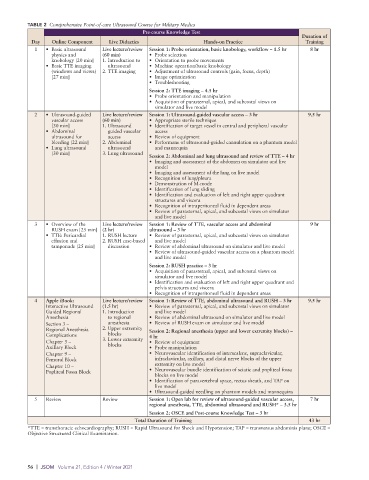
TABLE 2  Comprehensive Point-of-care Ultrasound Course for Military Medics
                                                Pre-course Knowledge Test
                                                                                                    Duration of
           Day    Online Component   Live Didactics                 Hands-on Practice                Training
            1   •  Basic ultrasound   Live lecture/review   Session 1: Probe orientation, basic knobology, workflow – 1.5 hr  8 hr
                  physics and     (60 min)        •  Probe selection
                  knobology [20 min]  1.  Introduction to   •  Orientation to probe movements
                •  Basic TTE imaging   ultrasound  •  Machine operation/basic knobology
                  (windows and views)   2. TTE imaging  •  Adjustment of ultrasound controls (gain, focus, depth)
                  [27 min]                        •  Image optimization
                                                  •  Troubleshooting
                                                  Session 2: TTE imaging – 4.5 hr
                                                  •  Probe orientation and manipulation
                                                  •  Acquisition of parasternal, apical, and subcostal views on
                                                    simulator and live model
            2   •  Ultrasound-guided   Live lecture/review   Session 1: Ultrasound-guided vascular access – 3 hr  9.5 hr
                  vascular access    (60 min)     •  Appropriate sterile technique
                  [30 min]        1.  Ultrasound   •  Identification of target vessel in central and peripheral vascular
                •  Abdominal        guided vascular   access
                  ultrasound for    access        •  Review of equipment
                  bleeding [22 min]  2.  Abdominal   •  Performane of ultrasound-guided cannulation on a phantom model
                •  Lung ultrasound    ultrasound    and mannequin
                  [30 min]        3. Lung ultrasound  Session 2: Abdominal and lung ultrasound and review of TTE – 4 hr
                                                  •  Imaging and assessment of the abdomen on simulator and live
                                                    model
                                                  •  Imaging and assessment of the lung on live model
                                                  •  Recognition of lung/pleura
                                                  •  Demonstration of M-mode
                                                  •  Identification of lung sliding
                                                  •  Identification and evaluation of left and right upper quadrant
                                                    structures and viscera
                                                  •  Recognition of intraperitoneal fluid in dependent areas
                                                  •  Review of parasternal, apical, and subcostal views on simulator
                                                    and live model
            3   •  Overview of the   Live lecture/review   Session 1: Review of TTE, vascular access and abdominal    9 hr
                  RUSH exam [25 min]  (2 hr)      ultrasound – 3 hr
                •  TTE: Pericardial   1. RUSH lecture  •  Review of parasternal, apical, and subcostal views on simulator
                  effusion and    2.  RUSH case-based   and live model
                  tamponade [25 min]  discussion  •  Review of abdominal ultrasound on simulator and live model
                                                  •  Review of ultrasound-guided vascular access on a phantom model
                                                    and live model
                                                  Session 2: RUSH practice – 3 hr
                                                  •  Acquisition of parasternal, apical, and subcostal views on
                                                    simulator and live model
                                                  •  Identification and evaluation of left and right upper quadrant and
                                                    pelvis structures and viscera
                                                  •  Recognition of intraperitoneal fluid in dependent areas
            4   Apple iBook:      Live lecture/review   Session 1: Review of TTE, abdominal ultrasound and RUSH – 3 hr  9.5 hr
                Interactive Ultrasound   (1.5 hr)  •  Review of parasternal, apical, and subcostal views on simulator
                Guided Regional   1.  Introduction   and live model
                Anesthesia          to regional   •  Review of abdominal ultrasound on simulator and live model
                Section 3 –         anesthesia    •  Review of RUSH exam on simulator and live model
                Regional Anesthesia   2.  Upper extremity   Session 2: Regional anesthesia (upper and lower extremity blocks) –
                Complications       blocks        4 hr
                Chapter 5 –       3.  Lower extremity   •  Review of equipment
                Axillary Block      blocks        •  Probe manipulation
                Chapter 9 –                       •  Neurovascular identification of interscalene, supraclavicular,
                Femoral Block                       infraclavicular, axillary, and distal nerve blocks of the upper
                Chapter 10 –                        extremity on live model
                Popliteal Fossa Block             •  Neurovascular bundle identification of sciatic and popliteal fossa
                                                    blocks on live model
                                                  •  Identification of paravertebral space, rectus sheath, and TAP on
                                                    live model
                                                  •  Ultrasound-guided needling on phantom models and mannequins
            5   Review            Review          Session 1: Open lab for review of ultrasound-guided vascular access,   7 hr
                                                  regional anesthesia, TTE, abdominal ultrasound and RUSH* – 3.5 hr
                                                  Session 2: OSCE and Post-course Knowledge Test – 3 hr
                                             Total Duration of Training                               43 hr
          *TTE = transthoracic echocardiography; RUSH = Rapid Ultrasound for Shock and Hypotension; TAP = transversus abdominis plane; OSCE =
          Objective Structured Clinical Examination.


          56  |  JSOM   Volume 21, Edition 4 / Winter 2021

