


Page 97 - JSOM Winter 2018
P. 97
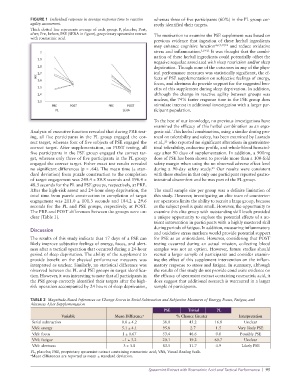
FIGURE 1  Individual response in average response time to reactive   whereas three of five participants (60%) in the PL group cor-
              agility assessment.                                rectly identified their targets.
              Thick dotted line represents average of each group. P, placebo; Post,
              after; Pre, before; PSE (SERA in figure), proprietary spearmint extract   The motivation to examine the PSE supplement was based on
              with rosmarinic acid.
                                                                 previous evidence that ingestion of these herbal ingredients
                                                                 may enhance cognitive function 4,6,7,17,18  and reduce oxidative
                                                                 stress and inflammation. 5,19-21  It was thought that the combi-
                                                                 nation of these herbal ingredients could potentially offset the
                                                                 negative sequelae associated with sleep restriction and/or sleep
                                                                 deprivation. Though none of the outcomes in any of the phys-
                                                                 ical performance measures was statistically significant, the ef-
                                                                 fects of PSE supplementation on subjective feelings of energy,
                                                                 focus, and alertness do provide support for the suggested ben-
                                                                 efits of this supplement during sleep deprivation. In addition,
                                                                 although the change in reactive agility between groups was
                                                                 unclear, the 74% faster response time in the PSE group does
                                                                 stimulate interest in additional investigation with a larger par-
                                                                 ticipant population.
                                                                 To the best of our knowledge, no previous investigations have
                                                                 examined the efficacy of this herbal combination as an ergo-
              Analysis of executive function revealed that during PRE test-  genic aid. This herbal combination, using a similar dosing pro-
              ing, all five participants in the PL group engaged the cor-  tocol on tolerability and safety, has been examined by Lasrado
              rect target, whereas four of five subjects of PSE engaged the   et al.,  who reported no significant alterations in gastrointes-
                                                                     22
              correct target. After supplementation, on POST testing, all   tinal tolerability, endocrine profile, and whole-blood hematol-
              five participants in the PSE group engaged the correct tar-  ogy after 90 days of supplementation. In addition, a 900mg
              get, whereas only three of five participants in the PL group   dose of PSE has been shown to provide more than a 100-fold
              engaged the correct target. Fisher exact test results revealed   safety margin when using the no observed adverse effect level
              no significant differences (p = .64). The mean time (± stan-  during a 90-day safety study.  Our results were consistent
                                                                                        23
              dard deviation) from puzzle construction to the completion   with these studies in that only one participant reported gastro-
              of target engagement was 249.4 ± 89.8 seconds and 196.4 ±   intestinal discomfort and he was part of the PL group.
              48.3 seconds for the PL and PSE groups, respectively, at PRE.
              After the high-risk arrest and 24-hour sleep deprivation, the   The small sample size per group was a definite limitation of
              total time from puzzle construction to completion of target   this study. However, investigating an elite team of counterter-
              engagement was 211.0 ± 101.3 seconds and 184.2 ± 29.6   ror operators limits the ability to recruit a large group, because
              seconds for the PL and PSE groups, respectively, at POST.   as the subject pool is quite small. However, the opportunity to
              The PRE and POST differences between the groups were un-  examine this elite group with outstanding skill levels provided
              clear (Table 1).                                   a unique opportunity to explore the potential effects of a nu-
                                                                 trient intervention in participants with a highly mastered skill
                                                                 during periods of fatigue. In addition, measuring inflammatory
              Discussion
                                                                 and oxidative stress markers would provide potential support
              The results of this study indicate that 17 days of a PSE can   for PSE as an antioxidant. However, considering that POST
              likely improve subjective feelings of energy, focus, and alert-  testing  occurred  during an  actual mission,  collecting  blood
              ness after a tactical operation that occurred during a 24-hour   samples was not an option. However, future studies should
              period of sleep deprivation. The ability of the supplement to   recruit a larger sample of participants and consider examin-
              provide benefit on the physical performance measures was   ing the effect of this supplement intervention on the inflam-
              interpreted as unclear. Similarly, no statistical difference was   matory response to stress and fatigue. In summary, although
              observed between the PL and PSE groups in target identifica-  the results of this study do not provide conclusive evidence on
              tion. However, it was interesting to note that all participants in   the efficacy of spearmint extract containing rosmarinic acid, it
              the PSE group correctly identified their targets after the high-  does suggest that additional research is warranted in a larger
              risk operation accompanied by 24 hours of sleep deprivation,   sample of participants.


              TABLE 2  Magnitude-Based Inferences on Change Scores in Serial Subtraction and Subjective Measures of Energy, Focus, Fatigue, and
              Alertness After Supplementation
                                                                     PSE       Trivial     PL
                          Variable              Mean Difference a         % Chance Greater          Interpretation
              Serial subtraction                   0.8 ± 4.2        38.0       45.2       16.8        Unclear
              VAS: energy                          5.1 ± 4.1        95.8        2.7       1.5      Very likely PSE
              VAS: focus                            1 ± 0.67        53.4       46.6       0.0       Possibly PSE
              VAS: fatigue                          −1 ± 3.2        20.1       19.2       60.7        Unclear
              VAS: alertness                        3 ± 3.8         83.5       11.7       4.9        Likely PSE
              PL, placebo; PSE, proprietary spearmint extract containing rosmarinic acid; VAS, Visual Analog Scale.
              a Mean differences are reported as mean ± standard deviation.

                                                              Spearmint Extract with Rosmarinic Acid and Tactical Performance  |  95

