


Page 64 - JSOM Winter 2018
P. 64
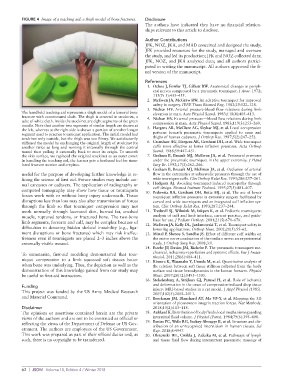
FIGURE 4  Image of a teaching aid: a thigh model of bone fractures.  Disclosure
                                                             The authors have indicated they have no financial relation-
                                                             ships relevant to this article to disclose.

                                                             Author Contributions
                                                             JFK, NOZ, JKA, and MAD conceived and designed the study;
                                                             JFK provided resources for the study, managed and oversaw
                                                             the study, and led its production; JFK and NOZ collected data;
                                                             JFK, NOZ, and JKA analyzed data; and all authors partici-
                                                             pated in writing the manuscript. All authors approved the fi-
                                                             nal version of the manuscript.
                                                             References
                                                              1.  Ochoa J, Fowler TJ, Gilliatt RW. Anatomical changes in periph-
                                                                eral nerves compressed by a pneumatic tourniquet. J Anat. 1972;
                                                                113(Pt 3):433–455.
                                                              2.  McEwen JA, McGraw RW. An adaptive tourniquet for improved
                                                                safety in surgery. IEEE Trans Biomed Eng. 1982;29:122–128.
                                                              3.  Nielsen HV. Arterial pressure-blood flow relations during limb
          The handheld teaching aid represents a thigh model of a femoral bone   elevation in man. Acta Physiol Scand. 1983;118(4):405–413.
          fracture with comminuted shaft. The thigh is covered in stockinet, a   4.  Nielsen HV. External pressure—blood flow relations during limb
          tube of white cloth. Inside the stockinet are eight segments of the green   compression in man. Acta Physiol Scand. 1983;119(3):253–260.
          noodle. Note that another two segments of similar length are shown at   5.  Hargens AR, McClure AG, Skyhar MJ, et al. Local compression
          the left, whereas at the right side is shown a portion of another longer
          segment used to practice tourniquet application. The initial model had   patterns beneath pneumatic tourniquets applied to arms and
          stockinet only outside, but the thigh was too flimsy. We satisfactorily   thighs of human cadavera. J Orthop Res. 1987;5(2):247–252.
          stiffened the model by exchanging the original length of stockinet for   6.  Crenshaw AG, Hargens AR, Gershuni DH, et al. Wide tourniquet
          another twice as long and running it internally through the central   cuffs  more  effective  at  lower  inflation  pressures.  Acta  Orthop
          tunnel then pulling it externally back to meet its origin. To smooth   Scand. 1988;59:447–451.
          the skin surface, we replaced the original stockinet as an outer cover.   7.  Graham B, Breault MJ, McEwen JA, et al. Perineural pressures
          In handling the teaching aid, the learner gets a firsthand feel for simu-  under the pneumatic tourniquet in the upper extremity. J Hand
          lated fracture motion and crepitus.                   Surg Br. 1992;17(3):262–266.
                                                              8.  Graham B, Breault MJ, McEwen JA, et al. Occlusion of arterial
          useful for the purpose of developing further knowledge in re-  flow in the extremities at subsystolic pressures through the use of
          fining the science of first aid. Future studies may include ani-  wide tourniquet cuffs. Clin Orthop Relat Res. 1993;286:257–261.
          mal carcasses or cadavers. The application of radiography or   9.  Hodgson AJ. Avoiding tourniquet-induced neuropathy through
                                                                cuff design. Biomed Instrum Technol. 1993;27(5):401–407.
          computed tomography may show how tissue or tourniquets   10.  Pedowitz RA, Gershuni DH, Botte MJ, et al. The use of lower
          forces work with or without bony injury underneath. Tissue   tourniquet inflation pressures in extremity surgery facilitated by
          disruptions less than loss may also alter transmission of forces   curved and wide tourniquets and an integrated cuff inflation sys-
          through the limb so that tourniquet compression may not   tem. Clin Orthop Relat Res. 1993;287:237–244.
          work  normally through  lacerated  skin,  burned fat,  crushed   11.  Tredwell SJ, Wilmink M, Inkpen K, et al. Pediatric tourniquets:
          muscle, ruptured tendons, or fractured bone. The two-bone   analysis of cuff and limb interface, current practice, and guide-
          limb segments, forearm and calf, may be complex because of   lines for use. J Pediatr Orthop. 2001;21(5):671–676.
          difficulties in detecting hidden skeletal instability (e.g., liga-  12.  McEwen JA, Kelly DL, Jardanowski T, et al. Tourniquet safety in
                                                                lower leg applications. Orthop Nurs. 2002;21(5):55–62.
          ment disruptions or bone fractures) which may risk ineffec-  13.  Mittal P, Shenoy S, Sandhu JS. Effect of different cuff widths on
          tiveness even if tourniquets are placed 2–3 inches above the   the motor nerve conduction of the median nerve: an experimental
          externally visible wound.                             study. J Orthop Surg Res. 2008;3:1.
                                                             14.  Estebe JP, Davies JM, Richebe P. The pneumatic tourniquet: me-
          To summarize, first-aid modeling demonstrated  that tour-  chanical, ischaemia-reperfusion and systemic effects. Eur J Anaes-
                                                                thesiol. 2011;28(6):404–411.
          niquet compression to a limb squeezed  soft tissues better   15.  Kimura K, Watanabe Y, Umeda M, et al. Quantitative analysis of
          when bone was underlying. Thus, the depiction as well as the   the relation between soft tissue stiffness palpated from the body
          demonstration of this knowledge gained from our study may   surface and tissue hemodynamics in the human forearm. Physiol
          be useful to first-aid instructors.                   Meas. 2007;28(12):1495–1505.
                                                             16.  Stekelenburg A, Strijkers GJ, Parusel H, et al. Role of ischemia
          Funding                                               and deformation in the onset of compression-induced deep tissue
          This project was funded by the US Army Medical Research   injury: MRI-based studies in a rat model. J Appl Physiol (1985).
                                                                2007;102(5):2002–2011.
          and Materiel Command.                              17.  Brockman JM, Blanchard AT, Ma VP-Y, et al. Mapping the 3D
                                                                orientation of piconewton integrin traction forces. Nat Methods.
          Disclaimer                                            2018;15(2):115–118.
          The opinions or assertions contained herein are the private   18.  Aukland K. Distribution of body fluids: local mechanisms guarding
          views of the authors and are not to be construed as official or   interstitial fluid volume. J Physiol (Paris). 1984;79(6):395–400.
          reflecting the views of the Department of Defense or US Gov-  19.  Benias PC, Wells RG, Sackey-Aboagye B, et al. Structure and dis-
          ernment. The authors are employees of the US Government.   tribution of an unrecognized interstitium in human tissues. Sci
                                                                Rep. 2018;8:4947.
          This work was prepared as part of their official duties and, as   20.  Olszewski WL, Cwikla J, Zaleska M, et al. Pathways of lymph
          such, there is no copyright to be transferred.        and tissue fluid flow during intermittent pneumatic massage of


          62  |  JSOM   Volume 18, Edition 4 / Winter 2018

