


Page 62 - JSOM Winter 2018
P. 62
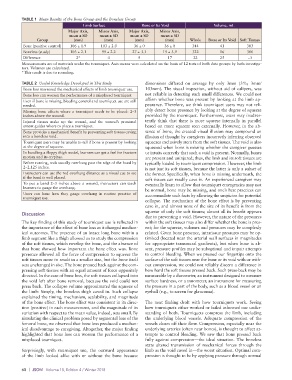
TABLE 1  Mean Results of the Bone Group and the Boneless Group
                                   Limb Surface            Bone or Its Void              Volume, mL
                             Major Axis,   Minor Axis,   Major Axis,   Minor Axis,
                              mean ± SD   mean ± SD    mean ± SD   mean ± SD
                Group          (mm)         (mm)         (mm)        (mm)      Whole   Bone or Its Void  Soft Tissues
           Bone (positive control)  106 ± 1.9  103 ± 2.0  36 ± 0     36 ± 0     344         41         303
           Boneless (study)   103 ± 2.1    99 ± 2.2     27 ± 3.3    19 ± 3.9    322         16         306
           Difference           2*            4           9           17         22         25         −3
          Measurements are of materials under the tourniquet. Axis means were calculated on the basis of 12 tests of both data groups by both investiga-
          tors. Volumes are calculated.
          *This result is due to rounding.

          TABLE 2  Useful Knowledge Developed in This Study  dimensions differed on average by only 3mm (3%; 3mm/
           Bone loss worsened the mechanical effects of limb tourniquet use.  103mm). The visual inspection, without aid of calipers, was
           Bone loss can worsen the performance of a misplaced tourniquet.  not reliable in detecting such small differences. We could not
           Even if bone is missing, bleeding control and tourniquet use are still   affirm whether bone was present by looking at the limb ap-
           needed.                                           pearance. Therefore, we think tourniquet users may not reli-
           Missing bone  affects where  a tourniquet  needs to  be placed: 2–3   ably detect bone presence by looking at the degree of squeeze
           inches above the wound.                           provided by the tourniquet. Furthermore, users may inadver-
           Injured  tissues  make  up  the  wound,  and  the  wound’s  proximal   tently think that there is more squeeze internally in parallel
           extent guides where to place a tourniquet.        based on more squeeze seen externally. However, in the ab-
           Bone provides a mechanical benefit by preventing soft tissues caving   sence of bone, the created visual illusion may compound an
           into a boneless void.                             illusion of thought by caregivers incorrectly inferring observed
           Tourniquet users may be unable to tell if bone is present by looking   squeezes exclusively stem from the soft tissues. The void is also
           at the degree of squeeze.                         squeezed when bone is missing whether the caregiver guesses
           In handling a floppy thigh model, learners can get a feel for fracture   or intuits correctly that such a void is present. Normally, bones
           motion and its crepitus.                          are present and uninjured; thus, the limb and its soft tissues are
           Before turning, rods usually overhang past the edge of the band by   typically loaded by tourniquet compression. However, the limb
           2–2.125 inches.                                   is not just its soft tissues, because the latter is only a subset of
           Instructors can use the rod overhang distance as a visual cue to see   the former. Specifically, when bone is missing underneath, the
           if the band is well placed.                       soft tissues can readily cave in. An experienced caregiver may
           To put a band 2–3 inches above a wound, instructors can teach   eventually learn to allow that tourniquet emergencies may not
           learners to gauge the overhang.                   be normal, bone may be missing, and one’s best practices can
           Users  can hone how  they gauge  overhang in routine  practice  of   accommodate such facts by allowing the suspicion for potential
           tourniquet use.
                                                             collapse. The mechanism of the bone effect is by preventing
                                                             cave in, and almost none of the size of its benefit is from the
                                                             squeeze of only the soft tissues; almost all its benefit appears
          Discussion
                                                             due to preventing a void. However, the nature of the pressures
          The key finding of this study of tourniquet use is reflected in   within the soft tissues may also differ whether the bone is pres-
          the importance of the effect of bone loss as it changed mechan-  ent; for the squeeze, volumes and pressures may be complexly
          ical outcomes. The presence of an intact long bone within a   related. Given bone presence, intratissue pressures may be op-
          limb segment like a thigh allowed us to study the compression   timized (located near the arterial wall surfaces in magnitudes
          of the soft tissues, which envelop the bone, and the absence of   for appropriate transmural gradients), but when bone is ab-
          that bone showed how important the bone effect was. Bone   sent, pressure profiles may be suboptimal and impair attempts
          presence allowed all the force of compression to squeeze the   to control bleeding. When we pressed our fingertips onto the
          soft tissues more to result in a smaller size, but the bone itself   surface of the soft tissues near the bone or its void with or with-
          was unchanged in size. The bone pressed back against the com-  out compression, we could not reliably discern a difference in
          pressing soft tissues with an equal amount of force oppositely   how hard the soft tissues pressed back. Such press-back may be
          directed. In the case of bone loss, the soft tissues collapsed into   measurable by a durometer, an instrument designed to measure
          the void left after bone removal, because the void could not   surface hardness, or a tonometer, an instrument for measuring
          press back. The collapse volume approximated the squeeze of   the pressure in a part of the body, such as a blood vessel or an
          the limb: Simply, the boneless thigh caved in. Such collapse   eyeball (e.g., to screen for glaucoma).
          explained the timing, mechanism, scalability, and magnitude
          of the bone effect. The bone effect was consistent in its direc-  The  next  finding  dealt  with  how  tourniquets  work.  Seeing
          tion (positive) in each measurement, and the magnitude of its   how tourniquets either worked or failed informed our under-
          variation with respect to the mean value, indeed, was small. By   standing of both. Tourniquets compress the limb, including
          simulating the clinical problem posed by segmental loss of the   the underlying blood vessels. Adequate compression of the
          femoral bone, we observed that bone loss produced a mechan-  vessels closes off their flow. Compression, especially near the
          ical disadvantage to caregiving. Altogether, the major finding   underlying arteries (often near bones), is thought to affect at-
          highlighted that bone loss can worsen the performance of a   tempts to control bleeding. We saw that bone pressed back
          misplaced tourniquet.                              fully against compression—the ideal situation. The boneless
                                                             state  altered transmission  of  mechanical  forces through  the
          Surprisingly, with tourniquet use, the outward appearance   limb as the void caved in—the worst situation. Optimal com-
          of the limb looked alike with or without the bone because   pression is thought to be by applying pressure through normal


          60  |  JSOM   Volume 18, Edition 4 / Winter 2018

