


Page 132 - JSOM Fall 2018
P. 132
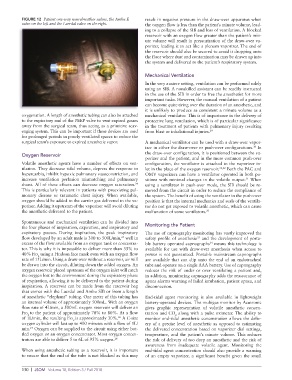
FIGURE 12 Patient one-way nonrebreather valves, the Ambu E result in negative pressure in the drawover apparatus when
valve on the left and the Laerdal valve on the right. the oxygen flow is less than the patient’s minute volume, lead
ing to a collapse of the SIB and loss of ventilation. A blocked
reservoir with an oxygen flow greater than the patient’s min
ute volume will result in pressurization of the drawover va
porizer, leading it to act like a plenum vaporizer. The end of
the reservoir should also be secured to avoid it dropping onto
the floor where dust and contamination may be drawn up into
the system and delivered to the patient’s respiratory system.
Mechanical Ventilation
In the very austere setting, ventilation can be performed solely
using an SIB. A nonskilled assistant can be readily instructed
in the use of the SIB in order to free the anesthetist for more
important tasks. However, the manual ventilation of a patient
can become quite tiring over the duration of an anesthetic, and
it is unlikely to produce as consistent a minute volume as a
oxygenation. A length of anesthetic tubing can also be attached mechanical ventilator. This is of importance in the delivery of
to the expiratory end of the PEEP valve to vent expired gasses protective lung ventilation, which is of particular significance
away from the surgical team, thus acting as a primitive scav in the treatment of patients with pulmonary injury resulting
enging system. This can be important if these devices are used from blast or inhalational injuries. 29
for prolonged periods in poorly ventilated spaces to reduce the
surgical team’s exposure to expired anesthetic vapor. A mechanical ventilator can be used with a drawover vapor
izer in either the drawover or pushover configurations. In
30
the drawover configuration, it is positioned between the va
Oxygen Reservoir
porizer and the patient, and in the more common pushover
Volatile anesthetic agents have a number of effects on ven configuration, the ventilator is attached to the vaporizer in
tilation. They decrease tidal volume, depress the response to let in the place of the oxygen reservoir. 31,32 Both the PAC and
hypercarbia, inhibit hypoxic pulmonary vasoconstriction, and OMV vaporizers can have a ventilator operated in both po
increase ventilation perfusion mismatching and pulmonary sitions with minimal changes in the volatile output. When
31
24
shunt. All of these effects can decrease oxygen saturation. using a ventilator in pushover mode, the SIB should be re
This is particularly relevant in patients with preexisting pul moved from the circuit in order to reduce the compliance of
monary disease or traumatic chest injury. When available, the system. The benefit of using the ventilator in the pushover
oxygen should be added to the carrier gas delivered to the va position is that the internal mechanics and seals of the ventila
porizer. Adding it upstream of the vaporizer will avoid diluting tor do not get exposed to volatile anesthetic, which can cause
the anesthetic delivered to the patient. malfunction of some ventilators. 32
Spontaneous and mechanical ventilation can be divided into Monitoring the Patient
the four phases of inspiration, expiration, and inspiratory and
expiratory pauses. During inspiration, the peak inspiratory The use of capnography monitoring has vastly improved the
flow developed by an adult male is 300 to 500L/min, well in safety profile of anesthesia and the development of porta
25
33
excess of the flow available from an oxygen tank or concentra ble battery operated capnographs means this technology is
34
tor. This is why it is impossible to deliver more than 35% to available for use with drawover anesthesia when access to
40% Fio using a Hudson face mask even with an oxygen flow power is not guaranteed. Portable mainstream capnographs
2
rate of 15L/min. Using a drawover without a reservoir, air will are available that can clip onto the end of an endotracheal
be drawn into the circuit, diluting down the added oxygen. An tube and operate on a single AAA battery. Use of capnography
oxygen reservoir placed upstream of the oxygen inlet will catch reduces the risk of under or over ventilating a patient and,
the oxygen lost to the environment during the expiratory phase in addition, monitoring capnography adds the reassurance of
of respiration, allowing it to be delivered to the patient during apnea alarms warning of failed intubation, patient apnea, and
inspiration. A reservoir can be made from the reservoir bag disconnection.
that comes with the Laerdal and Ambu SIB or from a length
of anesthetic “elephant” tubing. One meter of this tubing has Endtidal agent monitoring is also available in lightweight
an internal volume of approximately 500mL. With an oxygen batteryoperated devices. The multigas monitor by Acutronic
flow rate of 4L/min, a 500mL oxygen reservoir will deliver an gives graphic representation of volatile anesthetic concen
Fio to the patient of approximately 70% to 80%. At a flow tration and CO along with a pulse oximeter. The ability to
2
2
of 1L/min, the resulting Fio is approximately 30%. A Csize monitor endtidal anesthetic concentration allows the deliv
26
2
oxygen cylinder will last up to 400 minutes with a flow of 1L/ ery of a precise level of anesthetic as opposed to estimating
min. Oxygen can be supplied to the circuit using either bot the delivered concentration based on vaporizer dial settings,
27
tled oxygen or an oxygen concentrator. Most oxygen concen temperature, and the patient’s minute volume. This reduces
trators are able to deliver 5 to 6L of 95% oxygen. 28 the risk of delivery of too deep an anesthetic and the risk of
awareness from inadequate volatile agent. Monitoring the
When using anesthetic tubing as a reservoir, it is important endtidal agent concentration should also provide a warning
to ensure that the end of the tube is not blocked as this may of an empty vaporizer, a significant benefit given the small
130 | JSOM Volume 18, Edition 3 / Fall 2018

