


Page 131 - JSOM Fall 2018
P. 131
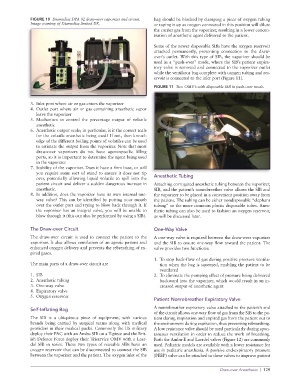
FIGURE 10 Diamedica DPA 02 draw-over vaporizer and circuit. bag should be blocked by clamping a piece of oxygen tubing
Image courtesy of Diamedica limited UK. or taping it up as oxygen connected in this position will dilute
the carrier gas from the vaporizer, resulting in a lower concen
tration of anesthetic agent delivered to the patient.
Some of the newer disposable SIBs have the oxygen reservoir
attached permanently, preventing connection to the draw
over’s outlet. With this type of SIB, the vaporizer should be
used in a “pushover” mode, where the SIB’s patient expira
tory valve is removed and connected to the vaporizer outlet
while the ventilator bag complete with oxygen tubing and res
ervoir is connected to the inlet port (Figure 11).
FIGURE 11 Two OMV’s with disposable SIB in push-over mode.
3. Inlet port where air or gas enters the vaporizer
4. Outlet port where air or gas containing anesthetic vapor
leave the vaporizer
5. Mechanism to control the percentage output of volatile
anesthetic
6. Anesthetic output scale; in particular, is it the correct scale
for the volatile anesthetic being used? If not, then knowl
edge of the different boiling points of volatiles can be used
to estimate the output from the vaporizer. Note that most
drawover vaporizers do not have agentspecific filling
ports, so it is important to determine the agent being used
in the vaporizer.
7. Stability of the vaporizer. Does it have a firm base, or will
you require some sort of stand to ensure it does not tip
over, potentially allowing liquid volatile to spill into the Anesthetic Tubing
patient circuit and deliver a sudden dangerous increase in Attaching corrugated anesthetic tubing between the vaporizer,
anesthetic. SIB, and the patient’s nonrebreather valve allows the SIB and
8. In addition, does the vaporizer have its own internal one the vaporizer to be placed in a convenient position away from
way valve? This can be identified by putting your mouth the patient. The tubing can be either nondisposable “elephant
over the outlet port and trying to blow back through it. If tubing” or the more common plastic disposable tubes. Anes
the vaporizer has an integral valve, you will be unable to thetic tubing can also be used to fashion an oxygen reservoir,
blow through it (this can also be performed by using a SIB). as will be discussed later.
The Draw-over Circuit One-Way Valve
The drawover circuit is used to connect the patient to the A oneway valve is required between the drawover vaporizer
vaporizer. It also allows ventilation of an apneic patient and and the SIB to ensure oneway flow toward the patient. The
enhanced oxygen delivery and prevents the rebreathing of ex valve provides two functions:
pired gases.
1. To stop backflow of gas during positive pressure ventila
The main parts of a drawover circuit are tion when the bag is squeezed, enabling the patient to be
ventilated
1. SIB 2. To eliminate the pumping effect of pressure being delivered
2. Anesthetic tubing backward into the vaporizer, which would result in an in
3. Oneway valve creased output of anesthetic agent
4. Expiratory valve
5. Oxygen reservoir
Patient Nonrebreather Expiratory Valve
Self-Inflating Bag A nonrebreather expiratory valve attached to the patient’s end
of the circuit allows oneway flow of gas from the SIB to the pa
The SIB is a ubiquitous piece of equipment, with various tient during inspiration and expired gas from the patient out to
brands being carried by surgical teams along with medical the environment during expiration, thus preventing rebreathing.
providers in their medical packs. Commonly the US military A low resistance valve should be used particularly during spon
deploy their PAC with an Ambu SIB on a Tpiece and the Brit taneous ventilation in order to reduce the work of breathing.
ish Defence Force deploy their Triservice OMV with a Laer Both the AmbuE and Laerdel valves (Figure 12) are commonly
dal SIB in series. These two types of reusable SIBs have an used. Pediatric models are available with a lower resistance for
oxygen reservoir that can be disconnected to connect the SIB use in pediatric anesthesia. A positive endexpiratory pressure
between the vaporizer and the patient. The oxygen inlet of the (PEEP) valve can be attached to these valves to improve patient
Draw-over Anesthesia | 129

