


Page 130 - JSOM Fall 2018
P. 130
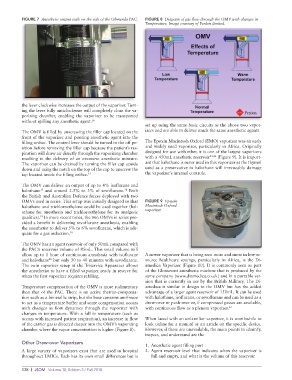
FIGURE 7 Anesthetic output scale on the side of the Ohmenda PAC. FIGURE 8 Diagram of gas flow through the OMV with changes in
Temperature. Image courtesy of Penlon limited.
the lever clockwise increases the output of the vaporizer. Turn
ing the lever fully anticlockwise will completely close the va
porizing chamber, enabling the vaporizer to be transported
without spilling any anesthetic agent. 16
set up using the same basic circuits as the above two vapor
The OMV is filled by unscrewing the filler cap located on the izers and are able to deliver much the same anesthetic agents.
front of the vaporizer and pouring anesthetic agent into the
filling orifice. The control lever should be turned to the off po The Epstein Macintosh Oxford (EMO) vaporizer was an early
sition before removing the filler cap because the patient’s res and widely used vaporizer, particularly in Africa. Originally
piration will draw air directly through the vaporizing chamber designed for use with ether, it is one of the largest vaporizers
resulting in the delivery of an excessive anesthetic mixture. with a 450mL anesthetic reservoir 21,22 (Figure 9). It is import
The vaporizer can be drained by turning the filler cap upside ant that halothane is never used in this vaporizer as the thymol
down and using the notch on the top of the cap to unscrew the used as a preservative in halothane will irrevocably damage
tap located inside the filling orifice. 17 the vaporizer’s internal controls.
The OMV can deliver an output of up to 4% isoflurane and
halothane and around 2.5% to 3% of sevoflurane. Both
17
18
the British and Australian Defence forces deployed with two
OMVs used in series. This setup was initially designed so that FIGURE 9 Epstein
halothane and trichloroethylene could be used together (hal Macintosh Oxford
othane for anesthesia and trichloroethylene for its analgesic vaporizer.
qualities). In more recent times, the two OMVs in series pro
19
vided a benefit in delivering sevoflurane anesthesia, enabling
the anesthetist to deliver 5% to 6% sevoflurane, which is ade
quate for a gas induction. 18
The OMV has an agent reservoir of only 50mL compared with
the PAC’s reservoir volume of 85mL. This small volume will
allow up to 1 hour of continuous anesthesia with isoflurane A newer vaporizer that is being seen more and more in lowre
and halothane but only 30 to 40 minutes with sevoflurane. source healthcare settings, particularly in Africa, is the Di
20
The twin vaporizer setup of the Triservice Apparatus allows amedica Vaporizer (Figure 10). It is commonly seen as part
the anesthetist to have a filled vaporizer ready in reserve for of the Glostavent anesthesia machine that is produced by the
when the first vaporizer requires refilling. same company (www.diamedica.co.uk) and in a portable ver
sion that is currently in use by the British Military. The Di
Temperature compensation of the OMV is more rudimentary amedica is similar in design to the OMV but has the added
than that of the PAC. There is no active thermocompensa advantage of a larger agent reservoir of 150mL. It can be used
tion such as a bimetallic strip, but the base contains antifreeze with halothane, isoflurane, or sevoflurane and can be used as a
to act as a temperature buffer and some compensation occurs drawover or pushover or, if compressed gasses are available,
with changes in flow dynamics through the vaporizer with with continuous flow as a plenum vaporizer. 23
changes in temperature. With a fall in temperature (such as
occurs with increased patient respiration), an increase in flow When faced with an unfamiliar vaporizer, it is worthwhile to
of the carrier gas is directed deeper into the OMV’s vaporizing look online for a manual or an article on the specific device.
chamber where the vapor concentration is higher (Figure 8). However, if these are unavailable, the main points to identify,
inspect, and understand are the
Other Draw-over Vaporizers
1. Anesthetic agent filling port
A large variety of vaporizers exist that are used in hospital 2. Agent reservoir level that indicates when the vaporizer is
throughout LMICs. Each has its own small differences but is full and empty, and what is the volume of this reservoir
128 | JSOM Volume 18, Edition 3 / Fall 2018

