


Page 26 - Journal of Special Operations Medicine - Spring 2016
P. 26
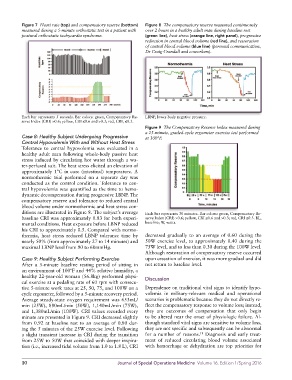
Figure 7  Heart rate (top) and compensatory reserve (bottom)   Figure 8  The compensatory reserve measured continuously
          measured during a 5-minute orthostatic test in a patient with   over 2 hours in a healthy adult man during baseline rest
          postural orthostatic tachycardia syndrome.         (green line), heat stress (orange line, right panel), progressive
                                                             reduction in central blood volume (red line), and restoration
                                                             of central blood volume (blue line) (personal communication,
                                                             Dr Craig Crandall and coworkers).


          Each bar represents 5 seconds. Bar colors: green, Compensatory Re-  LBNP, lower-body negative pressure.
          serve Index (CRI) >0.6; yellow, CRI ≤0.6 and >0.3; red, CRI, ≤0.3.
                                                             Figure 9  The Compensatory Reserve Index measured during
                                                             a 25-minute, graded-cycle ergometer exercise test performed
          Case 8: Healthy Subject Undergoing Progressive     at 100°F.
          Central Hypovolemia With and Without Heat Stress
          Tolerance to central hypovolemia was evaluated in a
          healthy  adult  man  following  whole-body  passive  heat
          stress induced by circulating hot water through a wa-
          ter-perfused suit. The heat stress elicited an elevation of
          approximately 1°C in core (intestinal) temperature. A
          normothermic  trial performed  on a separate day was
          conducted as the control condition. Tolerance to cen-
          tral hypovolemia was quantified as the time to hemo-
          dynamic decompensation during progressive LBNP. The
          compensatory reserve and tolerance to reduced central
          blood volume under normothermic and heat stress con-
          ditions are illustrated in Figure 8. The subject’s average   Each bar represents 30 minutes. Bar colors: green, Compensatory Re-
          baseline CRI was approximately 0.83 for both experi-  serve Index (CRI) >0.6; yellow, CRI ≤0.6 and >0.3; red, CRI ≤0.3. BL,
          mental conditions. Heat exposure before LBNP reduced   baseline; W, watts.
          his CRI to approximately 0.5. Compared with normo-
          thermia, heat stress reduced LBNP tolerance time by   decreased gradually to an average of 0.60 during the
          nearly 50% (from approximately 27 to 14 minutes) and   50W exercise level, to approximately 0.40 during the
          maximal LBNP level from 90 to 60mmHg.              75W level, and to less than 0.30 during the 100W level.
                                                             Although restoration of compensatory reserve occurred
          Case 9: Healthy Subject Performing Exercise        upon cessation of exercise, it was more gradual and did
          After a 5-minute baseline resting period of sitting in   not return to baseline level.
          an environment of 100ºF and 44% relative humidity, a
          healthy 22-year-old woman (56.8kg) performed physi-  Discussion
          cal exercise at a pedaling rate of 60 rpm with consecu-
          tive 5-minute work rates at 25, 50, 75, and 100W on a   Dependence on traditional vital signs to identify hypo-
          cycle ergometer, followed by a 5-minute recovery period.   volemia in military-relevant medical and operational
          Average steady-state oxygen requirement was 653mL/  scenarios is problematic because they do not directly re-
          min (25W), 880mL/min (50W), 1,140mL/min (75W),     flect the compensatory response to volume loss; instead,
          and 1,380mL/min (100W). CRI values recorded every   they are outcomes of compensation that only begin
          minute are presented in Figure 9. CRI decreased slightly   to be altered near the onset of physiologic failure. Al-
          from 0.92 at baseline rest to an average of 0.80 dur-  though standard vital signs are sensitive to volume loss,
          ing the 5 minutes of the 25W exercise level. Following   they are not specific and subsequently can be abnormal
                                                                                    11
          a slight transient increase in CRI during the transition   for  a  number  of  reasons.   Diagnosis  and  early  treat-
          from 25W to 50W that coincided with deeper inspira-  ment of reduced circulating blood volume associated
          tion (i.e., increased tidal volume from 1.0 to 1.8 L), CRI   with hemorrhage or dehydration are top priorities for


          10                                      Journal of Special Operations Medicine  Volume 16, Edition 1/Spring 2016

