


Page 25 - Journal of Special Operations Medicine - Spring 2016
P. 25
Case 5: Healthy Woman During Active Labor          one dose of epinephrine via the endotracheal tube. He
              A healthy, normotensive (baseline BP, 115/75mmHg),   was transported to a nearby Level I adult trauma cen-
              34-year-old woman (71.67kg, 157.5cm) was admitted   ter, where chest compressions were continued and a
              to labor and delivery at 37.9 weeks’ gestation of her first   DataOx device was applied to the patient’s index finger,
              child. CRI measures were continuously recorded and   revealing a CRI of 0.75 with active cardiopulmonary
              averaged over approximately 10-minute periods (Figure   resuscitation (CPR). CPR was briefly halted when the
              5). The patient’s baseline average CRI was 0.83 and re-  patient was transferred from the medics’ stretcher to a
              mained at 0.83 after she received an epidural anesthetic   gurney in the trauma bay. Since CRI is calculated in a
              at around 137 minutes. She began active labor at 257   beat-to-beat fashion using a sliding 30-beat window,
              minutes. After the onset of active labor, CRI showed   an anticipated drop of CPR to 0 during approximately
              slight elevation as the patient experienced more frequent   10 seconds of chest compression termination (i.e., no
              and  intense  contractions.  At  365  minutes,  the  patient   perfusing rhythm) was buffered by previous CRI values,
              experienced  a  5-minute  uterine  contraction  associated   resulting in a transient drop in CRI to a low of 0.55.
              with a reduction in CRI from 0.82 to 0.76. Immediately   CRI returned to approximately 0.75 with continued ac-
              following IV administration of 0.25mg terbutaline (a   tive compressions (Figure 6). A FAST examination con-
              β -adrenergic receptor agonist) as a tocolytic, the pa-  firmed no cardiac activity. The patient was pronounced
               2
              tient’s HR increased (Figure 5, top panel); coincident BP   dead within 5 minutes of arrival, and the DataOx device
              fluctuations were between hypertensive (approximately   was then removed. Unfortunately, when the patient was
              130/75mmHg) and baseline levels. With terbutaline   pronounced dead and CPR stopped, the data collection
              administration, CRI initially decreased to 0.38 and re-  device was immediately removed, preventing the dem-
              mained low (>0.4) for the following 150 minutes. After   onstration of CRI to 0.
              4 hours of active pushing, the patient delivered a viable
              male infant (3.38kg) via vaginal birth at 772 minutes,   Figure 6  Continuous Compensatory Reserve Index values
              with an estimated blood loss of 250mL. The CRI re-  during 2.25 minutes of CPR in an asystolic man with a self-
              turned to >0.7 as the patient recovered and underwent   inflicted gunshot wound to the chest.
              repair of a second-degree perineal laceration. There was
              no postpartum hemorrhage or further complications.

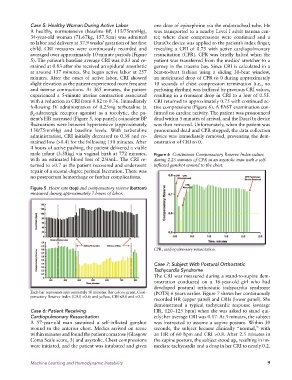
              Figure 5  Heart rate (top) and compensatory reserve (bottom)
              measured during approximately 7 hours of labor.


                                                                 CPR, cardiopulmonary resuscitation.

                                                                 Case 7: Subject With Postural Orthostatic
                                                                 Tachycardia Syndrome
                                                                 The CRI was measured during a stand-to-supine dem-
                                                                 onstration conducted on a 16-year-old girl who had
                                                                 developed postural orthostatic tachycardia syndrome
              Each bar represents approximately 10 minutes. Bar colors: green, Com-  (POTS) 6 years earlier. Figure 7 shows her continuously
              pensatory Reserve Index (CRI) >0.6; and yellow, CRI ≤0.6 and >0.3.
                                                                 recorded HR (upper panel) and CRIs (lower panel). She
                                                                 demonstrated a typical tachycardic response (average
              Case 6: Patient Receiving                          HR, 120–125 bpm) when she was asked to stand qui-
              Cardiopulmonary Resuscitation                      etly; her average CRI was 0.17. At 3 minutes, the subject
              A 57-year-old man sustained a self-inflicted gunshot   was instructed to assume a supine posture. Within 30
              wound to the anterior chest. Medics arrived on scene   seconds, the subject became clinically “normal,” with
              within minutes and found the patient comatose (Glasgow   an HR of 60 bpm and CRI >0.8. After 2.5 minutes in
              Coma Scale score, 3) and asystolic. Chest compressions   the supine posture, the subject stood up, resulting in im-
              were initiated, and the patient was intubated and given   mediate tachycardia and a drop in her CRI to nearly 0.2.


              Machine Learning and Hemodynamic Instability                                                     9

