


Page 36 - Journal of Special Operations Medicine - Winter 2014
P. 36
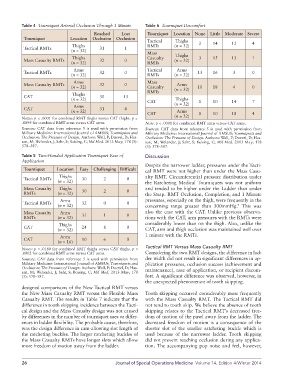
Table 4  Tourniquet Arterial Occlusion Through 1 Minute  Table 6  Tourniquet Discomfort
                                        Reached    Lost       Tourniquet  Location  None  Little  Moderate Severe
           Tourniquet         Location  Occlusion  Occlusion
                                                              Tactical    Thighs
                               Thighs                         RMTs       (n = 32)  2     14      12      4
           Tactical RMTs                  31        1
                              (n = 32)
                                                              Mass
                               Thighs                         Casualty   Thighs    3     15      13      1
           Mass Casualty RMTs             32        0                    (n = 32)
                              (n = 32)                        RMTs
                               Arms                           Tactical    Arms
           Tactical RMTs                  32        0                              13    16      3       0
                              (n = 32)                        RMTs       (n = 32)
                               Arms                           Mass
           Mass Casualty RMTs             32        0                     Arms
                              (n = 32)                        Casualty   (n = 32)  10    18      4       0
                                                              RMTs
                               Thighs
           CAT                            30        13
                              (n = 32)                                    Thighs
                                                              CAT                  1     10      14      7
                               Arms                                      (n = 32)
           CAT                            31        4
                              (n = 32)                                    Arms
                                                              CAT                  0     10      18      4
          Notes: p < .0001 for combined RMT thighs versus CAT thighs. p =   (n = 32)
          .0099 for combined RMT arms versus CAT arms.       Note: p < .0001 for combined RMT arms versus CAT arms.
          Sources:  CAT data from reference 5 is used with permission from   Sources:  CAT data from reference 5 is used with permission from
          Military Medicine: International Journal of AMSUS; Tourniquets and   Military Medicine: International Journal of AMSUS; Tourniquets and
          Occlusion: The Pressure of Design. Authors: Wall, P; Duevel, D; Has-  Occlusion: The Pressure of Design. Authors: Wall, P; Duevel, D; Has-
          san, M; Welander, J; Sahr, S; Buising, C; Mil Med. 2013 May; 178 (5):    san, M; Welander, J; Sahr, S; Buising, C; Mil Med. 2013 May; 178
          578–587.                                           (5): 578–587.
          Table 5  Two-Handed Application Tourniquet Ease of   Discussion
          Application
                                                             Despite the narrower ladder, pressures under the Tacti-
           Tourniquet    Location  Easy  Challenging Difficult  cal RMT were not higher than under the Mass Casu-
                         Thighs                              alty RMT. Circumferential pressure distribution under
           Tactical RMTs           30       2        0
                         (n = 32)                            the Ratcheting Medical Tourniquets was not uniform
           Mass Casualty   Thighs    30     2        0       and tended to be higher under the Ladder than under
           RMTs          (n = 32)                            the Strap. RMT Occlusion, Completion, and 1 Minute
                          Arms                               pressures, especially on the thigh, were frequently in the
           Tactical RMTs           32       0        0
                         (n = 32)                            concerning range greater than 300mmHg.  This was
                                                                                                   7
           Mass Casualty   Arms    31       1        0       also the case with the CAT. Unlike previous observa-
           RMTs          (n = 32)                            tions with the CAT, arm pressures with the RMTs were
                         Thighs                              considerably lower than on the thigh. Also, unlike the
           CAT                     24       8        0
                         (n = 32)                            CAT, arm and thigh occlusion was maintained well over
                          Arms                               1 minute with the RMTs.
           CAT                     10       6        0
                         (n = 16)
                                                             Tactical RMT Versus Mass Casualty RMT
          Notes: p = .0180 for combined RMT thighs versus CAT thighs. p =
          .0002 for combined RMT arms versus CAT arms.       Considering the two RMT designs, the difference in lad-
          Sources:  CAT data from reference 5 is used with permission from   der width did not result in significant differences in ap-
          Military Medicine: International Journal of AMSUS; Tourniquets and   plication pressures, occlusion success (achievement and
          Occlusion: The Pressure of Design. Authors: Wall, P; Duevel, D; Has-  maintenance), ease of application, or recipient discom-
          san, M; Welander, J; Sahr, S; Buising, C; Mil Med. 2013 May; 178
          (5): 578–587.                                      fort. A significant difference was observed, however, in
                                                             the unexpected phenomenon of tooth skipping.
          designed comparisons of the New Tactical RMT versus
          the New Mass Casualty RMT versus the Flexible Mass   Tooth skipping occurred considerably more frequently
            Casualty RMT. The results in Table 7 indicate that the   with the Mass Casualty RMT. The Tactical RMT did
          difference in tooth skipping incidence between the Tacti-  not tend to tooth skip. We believe the absence of tooth
          cal design and the Mass Casualty design was not caused   skipping relates to the Tactical RMT’s decreased free-
          by differences in the number of tourniquet uses or differ-  dom of motion of the pawl away from the ladder. The
          ences in ladder flexibility. The probable cause, therefore,   decreased freedom of motion is a consequence of the
          was the design difference in cam-allowing slot length of   shorter slot of the smaller ratcheting buckle which is
          the ratcheting buckles. The larger ratcheting buckles of   used because of  the narrower ladder. Tooth  skipping
          the Mass Casualty RMTs have longer slots which allow   did not prevent reaching occlusion during any applica-
          more freedom of motion away from the ladder.       tion. The accompanying pop noise and feel, however,


          26                                     Journal of Special Operations Medicine  Volume 14, Edition 4/Winter 2014

