


Page 130 - Journal of Special Operations Medicine - Winter 2014
P. 130
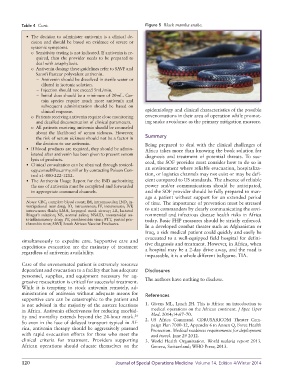
Table 4  Cont.                                     Figure 5  Black mamba snake.

            •  The decision to administer antivenin is a clinical de-
              cision and should be based on evidence of severe or
              systemic symptoms.
                 o Sensitivity testing is not indicated. If antivenin is re-
                quired, then the provider needs to be prepared to
                deal with anaphylaxis.
                 o Antivenin dosing: these guidelines refer to SAVP and
                Sanofi Pasteur polyvalent antivenin.
                   –  Antivenin should be dissolved in sterile water or
                  diluted in isotonic solution.
                   –  Injection should not exceed 5mL/min.
                   –  Initial dose should be a minimum of 20mL. Cer-
                  tain species require much more antivenin and
                  subsequent administration should be based on
                  clinical response.                         epidemiology and clinical characteristics of the possible
                 o Patients receiving antivenin require close monitoring     envenomations in their area of operation while promot-
                and detailed documentation of clinical parameters.  ing snake avoidance as the primary mitigation measure.
                 o All patients receiving antivenin should be counseled
                about the  likelihood  of serum  sickness.  However,
                the risk of serum sickness should not be a factor in   Summary
                the decision to use antivenin.               Being prepared to deal with the clinical challenges of
            •  If blood products are required, they should be admin-  Africa takes more than knowing the book solution for
              istered after antivenin has been given to prevent venom   diagnosis and treatment of potential threats. To suc-
              lysis of products.
            •  Clinical consultation can be obtained through toxicol-  ceed, the SOF provider must consider how to do so in
              ogy.consult@us.army.mil or by contacting Poison Con-  an environment where reliable evacuation, hospitaliza-
              trol +1-800-222-1212.                          tion, or logistics channels may not exist or may be defi-
            •  The Antivenin Usage Report for the IND authorizing   cient compared to US standards. The absence of reliable
              the use of antivenin must be completed and forwarded   power and/or communications should be anticipated,
              to appropriate command channels.               and the SOF provider should be fully prepared to man-
                                                             age a patient without support for an extended period
            Notes: CBC, complete blood count; IM, intramuscular; IND, in-  of time. The importance of prevention must be stressed
            vestigational new drug; IO, intraosseous; IV, intravenous; IVF,
            intravenous fluids; LMA, laryngeal mask airway; LR, lactated   to unit commanders by clearly communicating the envi-
            Ringer’s solution; NS, normal saline; NSAID, nonsteroidal an-  ronmental and infectious disease health risks in Africa
            ti-inflammatory drug; PT, prothrombin time; PTT, partial pro-  today. Basic FHP measures should be strictly enforced.
            thrombin time; SAVP, South African Vaccine Producers.
                                                             In a developed combat theater such as Afghanistan or
                                                             Iraq, a sick medical patient could quickly and easily be
                                                             evacuated to a well-equipped field hospital for defini-
          simultaneously  to  expedite  care.  Supportive  care  and   tive diagnosis and treatment. However, in Africa, when
          expeditious evacuation are the mainstay of treatment   a hospital may be a 2-day drive away, and the road is
          regardless of antivenin availability.
                                                             impassable, it is a whole different ballgame. TIA.
          Care of the envenomated patient is extremely resource
          dependent and evacuation to a facility that has adequate   Disclosures
          personnel,  supplies,  and  equipment  necessary  for  ag-
          gressive resuscitation is critical for successful treatment.   The authors have nothing to disclose.
          While it is tempting to stock antivenin remotely, ad-
          ministration of antivenin without adequate means for   References
          supportive care can be catastrophic to the patient and
          is not advised in the majority of the austere locations   1.  Givens ML, Lynch JH. This is Africa: an introduction to
          in Africa. Antivenin effectiveness for reducing morbid-  medical operations on the African continent. J Spec Oper
                                                               Med. 2014;14:67–70.
          ity and mortality extends beyond the 24-hour mark.    2.  US Africa Command. CDRUSARICOM Theater Cam-
                                                         24
          So even in the face of delayed transport typical in Af-  paign Plan 7000-12, Appendix 6 to Annex Q, Force Health
          rica, antivenin therapy should be aggressively pursued   Protection. Medical readiness requirements for deployment
          with  rapid  evacuation  efforts  for  those  who  meet  the   and travel. June 29 2012.
          clinical criteria for treatment.  Providers supporting   3.  World Health Organization. World malaria report 2013.
          African operations should educate themselves on the   Geneva, Switzerland; WHO Press; 2013.


          120                                    Journal of Special Operations Medicine  Volume 14, Edition 4/Winter 2014

