


Page 129 - Journal of Special Operations Medicine - Winter 2014
P. 129
a practical method to guide treatment. Epidemiologic   Table 4  Snakebite Management Guidelines
              awareness and clinical assessment, supplemented by the
              20-minute whole-blood clotting test (20MWBCT; Fig-   •  Notify evacuation authority.
              ure 4) is sufficient to determine  an appropriate treat-  •  Notify medical chain of command.
              ment algorithm.                                      •  Move all suspected envenomation patients to a level of
                                                                     care capable of resuscitation/antivenin administration,
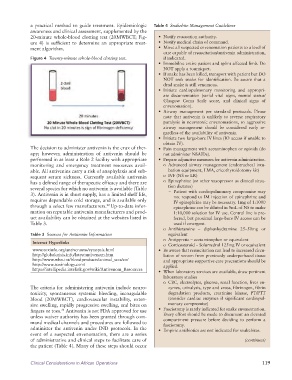
              Figure 4  Twenty-minute whole-blood clotting test.     if indicated.
                                                                   •  Immobilize entire patient and splint affected limb. Do
                                                                     NOT apply a tourniquet.
                                                                   •  If snake has been killed, transport with patient but DO
                                                                     NOT  seek  snake  for  identification.  Be  aware  that  a
                                                                     dead snake is still venomous.
                                                                   •  Initiate cardiopulmonary monitoring and appropri-
                                                                     ate documentation (serial vital signs, mental status/
                                                                     Glasgow Coma Scale score, and clinical signs of
                                                                       envenomation).
                                                                   •  Airway management per standard protocols. Please
                                                                     note that antivenin is unlikely to reverse respiratory
                                                                     paralysis in neurotoxic envenomations, so aggressive
                                                                     airway management should be considered early re-
                                                                     gardless of the availability of antivenin.
                                                                   •  Initiate two large-bore IV lines (IO access if unable to
                                                                     obtain IV).
              The decision to administer antivenin is the crux of ther-  •  Pain management with acetaminophen or opioids (do
              apy; however, administration of antivenin should be    not administer NSAIDs).
              performed in at least a Role 2 facility with appropriate   •  Prepare adjunctive measures for antivenin administration.
              monitoring and emergency  treatment resources avail-      o Advanced airway management (endotracheal intu-
              able. All antivenins carry a risk of anaphylaxis and sub-  bation equipment, LMA, cricothyroidotomy kit)
              sequent  serum  sickness.  Currently  available  antivenin     o IVF (NS or LR)
              has a defined range of therapeutic efficacy and there are     o Epinephrine (or other vasopressor as clinical situa-
              several species for which no antivenin is available (Table   tion dictates)
                                                                          –  Patient with cardiopulmonary compromise may
              3). Antivenin is in short supply, has a limited shelf life,   not respond to IM injection of epinephrine and
              requires dependable cold storage, and is available only    IV epinephrine may be necessary. 1mg of 1:1000
              through a select few manufacturers. Up-to-date infor-      epinephrine can be diluted in 9mL of NS to make
                                             22
              mation on reputable antivenin manufacturers and prod-      1:10,000 solution for IV use. Central line is pre-
              uct availability can be obtained at the websites listed in   ferred, but proximal large-bore IV access can be
              Table 3.                                                   used if emergent.
                                                                        o Antihistamine – diphenhydramine 25–50mg or
              Table 3  Sources for Antivenin Information              equivalent
                                                                        o Antipyretic – acetaminophen or equivalent
              Internet Hyperlinks
                                                                       o Corticosteroid – Solumedrol 125mg IV or equivalent
              www.toxinfo.org/antivenoms/synopsis.html             •  Be aware that resuscitation can lead to increased circu-
              http://globalcrisis.info/latestantivenom.htm           lation of venom from previously underperfused tissue
              http://www.who.int/bloodproducts/animal_sera/en/       and appropriate supportive care precautions should be
              http://www.toxinology.com/                             applied.
              https://intellipedia.intelink.gov/wiki/Antivenom_Resources
                                                                   •  When laboratory services are available, draw pertinent
                                                                     laboratory studies
                                                                        o CBC, electrolytes, glucose, renal function, liver en-
              The criteria for administering antivenin include neuro-  zymes, urinalysis, type and cross, fibrinogen, fibrin
              toxicity, spontaneous systemic bleeding, incoagulable   degradation products, creatinine kinase, PT/PTT
              blood (20MWBCT), cardiovascular instability, exten-     (consider cardiac enzymes if significant cardiopul-
              sive swelling, rapidly progressive swelling, and bites on   monary compromise)
              fingers or toes.  Antivenin is not FDA approved for use   •  Fasciotomy is rarely indicated for snake envenomation.
                          23
              unless waiver authority has been granted through com-  Every effort should be made to document an elevated
                                                                     compartment pressure before deciding to perform a
              mand medical channels and procedures are followed to   fasciotomy.
              administer  the  antivenin  under  IND  protocols.  In  the   •  Empiric antibiotics are not indicated for snakebites.
              event of a suspected envenomation, there are a series
              of administrative and clinical steps to facilitate care of                              (continues)
              the patient (Table 4). Many of these steps should occur


              Clinical Considerations in African Operations                                                  119

