


Page 68 - 2023 SMOG Digital
P. 68
Environmental


              Widow Spider Envenomation

           Patients may or may not feel a pinprick upon the initial bite. A pair of small red spots at the envenomation site may be visible;
           however, the bite site is often not located. Some patients do not develop systemic toxicity. In those patients who do, symptoms
           typically begin 15 to 60 minutes following the envenomation. The primary symptom is painful muscle cramping, starting at the bite
           site and progressing towards the center of the body. Patients may develop a painful, rigid abdomen secondary to abdominal muscle
           spasm which may be mistaken for peritonitis. The pain increases over time and may occur in waves. In some cases, the patient
           develops a temporary diaphoretic, grimaced, and contorted appearance of the face referred to as “facies latrodectismica.” Other
           symptoms include vomiting, diaphoresis, tachycardia, hypertension (often profound), and restlessness. Symptoms of Latrodectus
           envenomation last hours to days. Fatalities from Latrodectus envenomation are exceedingly rare and, when they do occur, are
           secondary to cardiac arrest (presumably from severe hypertension in patients with predisposing medical conditions) and wound
           infection.
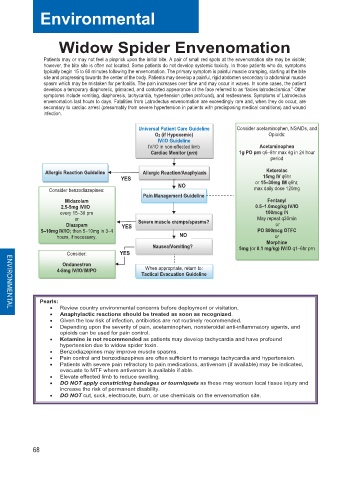
                               Universal Patient Care Guideline   Consider acetaminophen, NSAIDs, and
                                   O2 (if Hypoxemic)       Opioids:
                                   IV/IO Guideline
                                 IV/IO in non-effected limb   Acetaminophen
                                  Cardiac Monitor (prn)   1g PO prn q6–8hr max 4g in 24 hour
                                                            period
           Allergic Reaction Guideline   Allergic Reaction/AAnaphylaxis  s  Ketorolac
                                           y
                                            a
                                            l
                                          a
                                         n
                                           h
                                          p
                                             x
                                             i
                                                          15mg IV q6hr
                           YES                           or 15–30mg IM q6hr,
                                                           –
                                        NO
            Consider benzodiazepines:                   max daily dose 120mg
                                Pain Management Guideline
               Midazolam                                   Fentanyl
              2.5-5mg IV/IO                              0.5–1.0mcg/kg IV/IO
               every 15–30 prn                             100mcg IN
                 or            Severe muscle cramps/spasms?   May repeat q30min
               Diazepam     YES                               or
          5–10mg IV/IO; then 5–10mg in 3–4               PO 800mcg OTFC
          –
             hours, if necessary.       NO                   or
                                                           Morphine
                                  Nausea/Vomiting?   5mg (or 0.1 mg/kg) IV/IO q1–6hr prn
                Consider:   YES
               Ondanestron
             4-8mg IV/IO/IM/PO   When appropriate, return to:
                                Tactical Evacuation Guideline
          Pearls:
            •  Review country environmental concerns before deployment or visitation.
   ENVIRONMENTAL
            •  Anaphylactic reactions should be treated as soon as recognized.
            •  Given the low risk of infection, antibiotics are not routinely recommended.
            •  Depending upon the severity of pain, acetaminophen, nonsteroidal anti-inflammatory agents, and
              opioids can be used for pain control.
            •  Ketamine is not recommended as patients may develop tachycardia and have profound
              hypertension due to widow spider toxin.
            •  Benzodiazepines may improve muscle spasms.
            •  Pain control and benzodiazepines are often sufficient to manage tachycardia and hypertension.
            •  Patients with severe pain refractory to pain medications, antivenom (if available) may be indicated,
              evacuate to MTF where antivenom is available if able.
            •  Elevate effected limb to reduce swelling.
            •  DO NOT apply constricting bandages or tourniquets as these may worsen local tissue injury and
              increase the risk of permanent disability.
            •  DO NOT cut, suck, electrocute, burn, or use chemicals on the envenomation site.

        68

