


Page 53 - 2023 SMOG Digital
P. 53
Cardiac


              PEDIATRIC BRADYCARDIA with
                   Pulse and Poor Perfusion

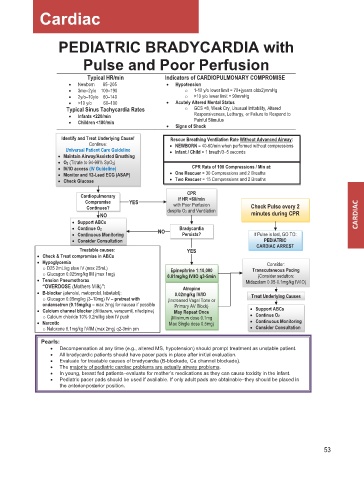
                    Typical HR/min   Indicators of CARDIOPULMONARY COMPROMISE
                •  Newborn       85–205  •  Hypotension
                •  3mo–2y/o    100–190   o  1-10 y/o lower limit = 70+(years oldx2)mmHg
                •  2y/o–10y/o    60–140  o  >10 y/o lower limit = 90mmHg
                •  >10 y/o      60–100   •  Acutely Altered Mental Status
               Typical Sinus Tachycardia Rates   o  GCS <8, Weak Cry, Unusual Irritability, Altered
                •  Infants <220/min        Responsiveness, Lethargy, or Failure to Respond to
                •  Children <180/min       Painful Stimulus
                                     •  Signs of Shock
              Identify and Treat Underlying Cause!   Rescue Breathing Ventilation Rate Without Advanced Airway:
                    Continue:         • NEWBORN = 40-60/min when performed without compressions
               Universal Patient Care Guideline   • Infant / Child = 1 breath/3–5 seconds
              • Maintain Airway/Assisted Breathing
              • O2 (Titrate to 94-99% SpO2)
              • IV/IO access (IV Guideline)  CPR Rate of 100 Compressions / Min at:
              • Monitor and 12-Lead ECG (ASAP)  • One Rescuer = 30 Compressions and 2 Breaths
              • Check Glucose         • Two Rescuer = 15 Compressions and 2 Breaths
                                          CPR
                   Cardiopulmonary      if HR <60/min
                    Compromise   YES   with Poor Perfusion
                    Continues?       despite O2 and Ventilation   Check Pulse every 2
                       NO                               minutes during CPR
                 • Support ABCs
                 • Continue O2     NO   Bradycardia
                 • Continuous Monitoring  Persists?     If Pulse is lost, GO TO:
                 • Consider Consultation                  PEDIATRIC
                  Treatable causes:       YES            CARDIAC ARREST
         • Check & Treat compromise in ABCs
         • Hypoglycemia                                    Consider:
          o D25 2mL/kg slow IV (max 25mL)  Epinephrine 1:10,000   Transcutaneous Pacing
          o Glucagon 0.025mg/kg IM (max 1mg)  0.01mg/kg IV/IO q3-5min   (Consider sedation:
         • Tension Pneumothorax                        Midazolam 0.05-0.1mg/kg IV/IO)
          “OVERDOSE (Mothers Milk)”:     Atropine
         • B-blocker (atenolol, metoprolol, labetalol):  0.02mg/kg IV/IO
          o Glucagon 0.05mg/kg (3–10mg) IV – pretreat with   (Increased Vagal Tone or   Treat Underlying Causes
          ondansetron (0.15mg/kg – max 2mg) for nausea if possible  Primary AV Block)
         • Calcium channel blocker (dilitiazem, verapamil, nifedipine)  May Repeat Once   • Support ABCs
          o Calcium chloride 10% 0.2ml/kg slow IV push  (Minimum dose 0.1mg   • Continue O2
         • Narcotic                   Max Single dose 0.5mg)   • Continuous Monitoring
          o Naloxone 0.1mg/kg IV/IM (max 2mg) q2-3min prn  • Consider Consultation
          Pearls:
            •  Decompensation at any time (e.g., altered MS, hypotension) should prompt treatment as unstable patient.
            •  All bradycardic patients should have pacer pads in place after initial evaluation.
            •  Evaluate for treatable causes of bradycardia (B-blockade, Ca channel blockade).
            •  The majority of pediatric cardiac problems are actually airway problems.
            •  In young, breast fed patients–evaluate for mother’s medications as they can cause toxicity in the infant.
            •  Pediatric pacer pads should be used if available. If only adult pads are obtainable–they should be placed in
              the anterior-posterior position.


                                                                        53

