


Page 130 - 2023 SMOG Digital
P. 130
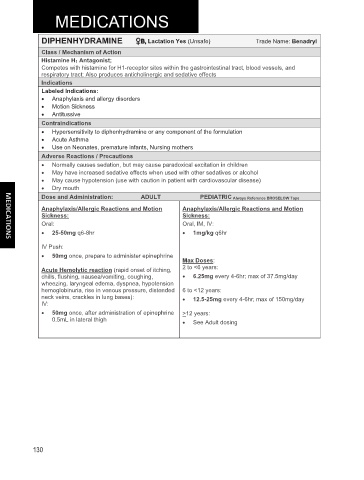
DIPHENHYDRAMINE        Lactation Yes (Unsafe)   Trade Name: Benadryl
          Class / Mechanism of Action
          Histamine H1 Antagonist;
          Competes with histamine for H1-receptor sites within the gastrointestinal tract, blood vessels, and
          respiratory tract; Also produces anticholinergic and sedative effects
          Indications
          Labeled Indications:
          •  Anaphylaxis and allergy disorders
          •  Motion Sickness
          •  Antitussive
          Contraindications
          •  Hypersensitivity to diphenhydramine or any component of the formulation
          •  Acute Asthma
          •  Use on Neonates, premature infants, Nursing mothers
          Adverse Reactions / Precautions
          •  Normally causes sedation, but may cause paradoxical excitation in children
          •  May have increased sedative effects when used with other sedatives or alcohol
          •  May cause hypotension (use with caution in patient with cardiovascular disease)
          •  Dry mouth
          Dose and Administration:    ADULT    PEDIATRIC Always Reference BROSELOW Tape
          Anaphylaxis/Allergic Reactions and Motion   Anaphylaxis/Allergic Reactions and Motion
          Sickness:                      Sickness:
          Oral:                          Oral, IM, IV:
          •  25-50mg q6-8hr              •  1mg/kg q6hr
          IV Push:
          •  50mg once, prepare to administer epinephrine
                                         Max Doses:
          Acute Hemolytic reaction (rapid onset of itching,   2 to <6 years:
          chills, flushing, nausea/vomiting, coughing,   •  6.25mg every 4-6hr; max of 37.5mg/day
          wheezing, laryngeal edema, dyspnea, hypotension
          hemoglobinuria, rise in venous pressure, distended   6 to <12 years:
          neck veins, crackles in lung bases):   •  12.5-25mg every 4-6hr; max of 150mg/day
          IV:
          •  50mg once, after administration of epinephrine  >12 years:
            0.5mL in lateral thigh       •  See Adult dosing


        130

