


Page 36 - JSOM Summer 2025
P. 36
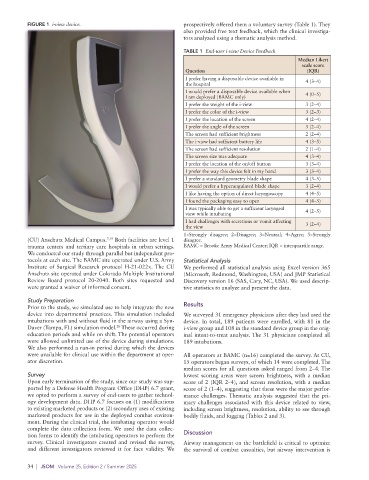
FIGURE 1  i-view device.                           prospectively offered them a voluntary survey (Table 1). They
                                                             also provided free text feedback, which the clinical investiga-
                                                             tors analyzed using a thematic analysis method.

                                                             TABLE 1  End-user i-view Device Feedback
                                                                                                  Median Likert
                                                                                                    scale score
                                                              Question                               (IQR)
                                                              I prefer having a disposable device available in
                                                              the hospital                           4 (3–4)
                                                              I would prefer a disposable device available when
                                                              I am deployed (BAMC only)              4 (0–5)
                                                              I prefer the weight of the i-view      3 (2–4)
                                                              I prefer the color of the i-view       3 (2–3)
                                                              I prefer the location of the screen    4 (2–4)
                                                              I prefer the angle of the screen       3 (2–4)
                                                              The screen had sufficient brightness   2 (2–4)
                                                              The i-view had sufficient battery life  4 (3–5)
                                                              The screen had sufficient resolution   2 (1–4)
                                                              The screen size was adequate           4 (3–4)
                                                              I prefer the location of the on/off button  3 (3–4)
                                                              I prefer the way this device felt in my hand  3 (3–4)
                                                              I prefer a standard geometry blade shape  4 (3–5)
                                                              I would prefer a hyperangulated blade shape  3 (2–4)
                                                              I like having the option of direct laryngoscopy  4 (4–5)
                                                              I found the packaging easy to open     4 (4–5)
                                                              I was typically able to get a sufficient laryngeal   4 (2–5)
                                                              view while intubating
                                                              I had challenges with secretions or vomit affecting
                                                              the view                               3 (2–4)
                                                             1=Strongly disagree; 2=Disagree; 3=Neutral; 4=Agree; 5=Strongly
          (CU) Anschutz Medical Campus. 7,19  Both facilities are level 1   disagree.
          trauma centers and tertiary care hospitals in urban settings.   BAMC = Brooke Army Medical Center; IQR = interquartile range.
          We conducted our study through parallel but independent pro-
          tocols at each site. The BAMC site operated under U.S. Army   Statistical Analysis
          Institute of Surgical Research protocol H-21-022x. The CU   We performed all statistical analysis using Excel version 365
          Anschutz site operated under Colorado Multiple Institutional   (Microsoft, Redmond, Washington, USA) and JMP Statistical
          Review Board protocol 20-2040. Both sites requested and   Discovery version 16 (SAS, Cary, NC, USA). We used descrip-
          were granted a waiver of informed consent.         tive statistics to analyze and present the data.

          Study Preparation
          Prior to the study, we simulated use to help integrate the new   Results
          device into departmental practices. This simulation included   We surveyed 31 emergency physicians after they had used the
          intubations with and without fluid in the airway using a Syn-  device. In total, 189 patients were enrolled, with 81 in the
          Daver (Tampa, FL) simulation model.  These occurred during   i-view group and 108 in the standard device group in the orig-
                                       20
          education periods and while on shift. The potential operators   inal intent-to-treat analysis. The 31 physicians completed all
          were allowed unlimited use of the device during simulations.   189 intubations.
          We also performed a run-in period during which the devices
          were available for clinical use within the department at oper-  All operators at BAMC (n=16) completed the survey. At CU,
          ator discretion.                                   15 operators began surveys, of which 14 were completed. The
                                                             median scores for all questions asked ranged from 2–4. The
          Survey                                             lowest scoring areas were screen brightness, with a median
          Upon early termination of the study, since our study was sup-  score of 2 (IQR 2–4), and screen resolution, with a median
          ported by a Defense Health Program Office (DHP) 6.7 grant,   score of 2 (1–4), suggesting that these were the major perfor-
          we opted to perform a survey of end-users to gather technol-  mance  challenges. Thematic analysis  suggested  that the  pri-
          ogy development data. DHP 6.7 focuses on (1) modifications   mary challenges associated with this device related to view,
          to existing marketed products or (2) secondary uses of existing   including screen brightness, resolution, ability to see through
          marketed products for use in the deployed combat environ-  bodily fluids, and fogging (Tables 2 and 3).
          ment. During the clinical trial, the intubating operator would
          complete the data collection form. We used the data collec-
          tion forms to identify the intubating operators to perform the   Discussion
          survey. Clinical investigators created and revised the survey,   Airway management on the battlefield is critical to optimize
          and  different  investigators  reviewed  it  for  face  validity.  We   the survival of combat casualties, but airway intervention is

          34  |  JSOM   Volume 25, Edition 2 / Summer 2025

