


Page 29 - JSOM Spring 2023
P. 29
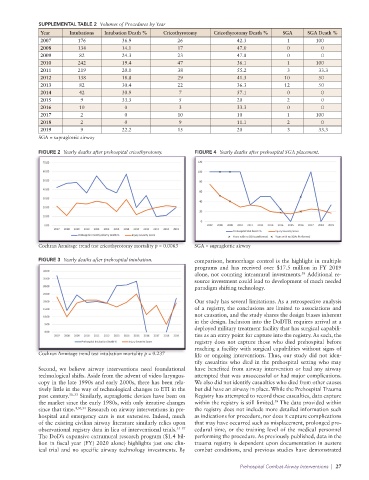
SUPPLEMENTAL TABLE 2  Volumes of Procedures by Year
              Year      Intubations  Intubation Death %  Cricothyrotomy  Cricothyrotomy Death %  SGA  SGA Death %
              2007        176            36.9              26                 42.3             1        100
              2008        134            14.1              17                 47.0             0          0
              2009         82            24.3              23                 47.8             0          0
              2010        242            19.4              47                 36.1             1        100
              2011        219            20.0              38                 55.2             3         33.3
              2012        138            18.8              29                 41.3            10         50
              2013         82            30.4              22                 36.3            12         50
              2014         42            30.9              7                  57.1             0          0
              2015         9             33.3              5                  20               2          0
              2016         10             0                3                  33.3             0          0
              2017         2              0                10                 10               1        100
              2018         2              0                9                  11.1             2          0
              2019         9             22.2              15                 20               3         33.3
              SGA = supraglottic airway

              FIGURE 2  Yearly deaths after prehospital cricothyrotomy.  FIGURE 4  Yearly deaths after prehospital SGA placement.


              Cochran Armitage trend test cricothyrotomy mortality p = 0.0063  SGA = supraglottic airway
              FIGURE 3  Yearly deaths after prehospital intubation.  comparison, hemorrhage control is the highlight in multiple
                                                                 programs and has received over $17.5 million in FY 2019
                                                                 alone, not counting intramural investments.  Additional re-
                                                                                                    38
                                                                 source investment could lead to development of much needed
                                                                 paradigm shifting technology.

                                                                 Our study has several limitations. As a retrospective analysis
                                                                 of a registry, the conclusions are limited to associations and
                                                                 not causation, and the study shares the design biases inherent
                                                                 in the design. Inclusion into the DoDTR requires arrival at a
                                                                 deployed military treatment facility that has surgical capabili-
                                                                 ties as an entry point for capture into the registry. As such, the
                                                                 registry does not capture those who died prehospital before
                                                                 reaching a facility with surgical capabilities without signs of
              Cochran Armitage trend test intubation mortality p = 0.237  life or ongoing interventions. Thus, our study did not iden-
                                                                 tify casualties who died in the prehospital setting who may
              Second, we believe airway interventions need foundational   have benefited from airway intervention or had any airway
              technological shifts. Aside from the advent of video laryngos-  attempted that was unsuccessful or had major complications.
              copy in the late 1990s and early 2000s, there has been rela-  We also did not identify casualties who died from other causes
              tively little in the way of technological changes to ETI in the   but did have an airway in place. While the Prehospital Trauma
              past century. 30–33  Similarly, supraglottic devices have been on   Registry has attempted to record these casualties, data capture
              the market since the early 1980s, with only iterative changes   within the registry is still limited.  The data provided within
                                                                                           39
              since that time. 4,30,34  Research on airway interventions in pre-  the registry does not include more detailed information such
              hospital and emergency care is not extensive. Indeed, much   as indications for procedure, nor does it capture complications
              of the existing civilian airway literature similarly relies upon   that may have occurred such as misplacement, prolonged pro-
              observational registry data in lieu of interventional trials. 35–37    cedural time, or the training level of the medical personnel
              The DoD’s expansive extramural research program ($1.4 bil-  performing the procedure. As previously published, data in the
              lion in fiscal year (FY) 2020 alone) highlights just one clin-  trauma registry is dependent upon documentation in austere
              ical trial and no specific airway technology investments. By   combat conditions, and previous studies have demonstrated

                                                                               Prehospital Combat Airway Interventions  |  27

