


Page 27 - JSOM Spring 2023
P. 27
increase from 2012–2013 for prehospital intubation (Tables   SUPPLEMENTAL TABLE 1  Summary of Tactical Combat Casualty
              2, 3). In both unadjusted and adjusted regression models, we   Care Guideline Changes Throughout Study Period
              identified no year-to-year differences in survival after prehos-  2007  1. Airway management
              pital cricothyrotomy nor SGA placement (Table 4).           •  Chin lift or jaw thrust
                                                                          •  Unconscious casualty without airway obstruction:
                                                                           nasopharyngeal airway
              TABLE 1  Description of Casualties Included in the Analysis  •  Unconscious casualty with airway obstruction:
                              Cricothyrotomy  Intubation  Supraglottic     cricothyroidotomy
                                 N = 251   N = 1,149  N = 35              •  Cervical spine immobilization is not necessary for
                                                                           casualties with penetrating head or neck trauma
              Demographics                                       2014   a.  Unconscious casualty without airway obstruction:
              Age               25 (21–30)  24 (21–30)  28 (22–33)        •  Chin lift or jaw thrust maneuver
              Male              98% (246)  98% (1,127)  97% (34)          •  Nasopharyngeal airway
                                                                          •  Place casualty in the recovery position
              Affiliation                                               b.   Casualty with airway obstruction or impending airway
              US Military       27% (68)  23% (270)   25% (9)             obstruction:
              NATO Military      5% (15)   9% (112)    5% (2)             •  Chin lift or jaw thrust maneuver
              Non-NATO Military  35% (88)  37% (431)  37% (13)            •  Nasopharyngeal airway
                                                                          •  Allow casualty to assume any position that best
              Humanitarian      31% (80)  29% (336)   31% (11)             protects the airway, to include sitting up
              Mechanism of Injury                                         •  Place unconscious casualty in the recovery position
              Explosive         54% (138)  57% (663)  45% (16)            •  If previous measures unsuccessful: Surgical
                                                                           cricothyroidotomy (with lidocaine if conscious)
              Firearm           33% (83)  30% (349)   48% (17)   2016   a.  Unconscious casualty without airway obstruction:
              Motor vehicle      9% (23)   7% (88)     5% (2)             •  Chin lift or jaw thrust maneuver
              Other              2% (7)    4% (49)     0% (0)             •  Nasopharyngeal airway
                                                                          •  Place casualty in the recovery position
              Military Operation                                        b.   Casualty with airway obstruction or impending airway
              OEF               67% (170)  75% (863)  74% (26)            obstruction:
              OFS               12% (32)   1% (19)    14% (5)             •  Chin lift or jaw thrust maneuver
                                                                          •  Nasopharyngeal airway
              OIF               14% (37)  21% (240)    2% (1)             •  Allow a conscious casualty to assume any position
              OIR                3% (10)   1% (16)     8% (3)              that best protects the airway, to include sitting up.
                                                                          •  Place unconscious casualty in the recovery position.
              OND                1% (2)    1% (11)     0% (0)           c.   If the previous measures are unsuccessful, perform a
              Injury Severity Score                                       surgical cricothyroidotomy using one of the following:
              Composite         24 (14–30)  18 (10–26)  25 (16–33)        •  Cric-Key technique (preferred option)
              Serious injuries by body region                             •  Bougie-aided open surgical technique using a flanged
                                                                           and cuffed airway cannula of less than 10mm outer
              Head/neck         61% (154)  37% (435)  42% (15)             diameter, 6–7mm internal diameter, and 5–8cm of
              Facial             3% (10)   1% (9)      2% (1)              intratracheal length
              Thorax            23% (58)  19% (225)   42% (15)            •  Standard open surgical technique using a flanged
                                                                           and cuffed airway cannula of less than 10mm outer
              Abdomen            9% (24)  12% (141)   22% (8)              diameter, 6–7mm internal diameter, and 5–8cm of
              Extremities       25% (63)  38% (438)   22% (8)              intra-tracheal length (least desirable option)
              Skin               7% (20)   5% (59)     2% (1)             •  Use lidocaine if the casualty is conscious
                                                                 August  a.   Conscious casualty with no airway problem identified:
              Outcome                                            2017     •  No airway intervention required
              Ventilator days    2 (1–5)    2 (1–4)   1 (1–1)           b.  Unconscious casualty without airway obstruction:
              ICU days           2 (0–6)    2 (1–6)   1 (0–3)             •  Place casualty in the recovery position
              Hospital days      2 (1–8)    3 (1–7)   4.5 (1–8)           •  Chin lift or jaw thrust maneuver or nasopharyngeal
                                                                           airway or extraglottic airway
              Survival          60% (152)  76% (883)  54% (19)          c.   Casualty with airway obstruction or impending airway

              NATO = North Atlantic Treaty Organization, OEF = Operation En-  obstruction:
              during Freedom, OFS = Operation Freedom’s Sentinel, OIF = Opera-  •  Allow a conscious casualty to assume any position
              tion Iraqi Freedom, OIR = Operation Inherent Resolve, OND = Op-  that best protects the airway, to include sitting up
              eration New Dawn                                            •  Use a chin lift or jaw thrust maneuver
                                                                          •  Use suction if available and appropriate
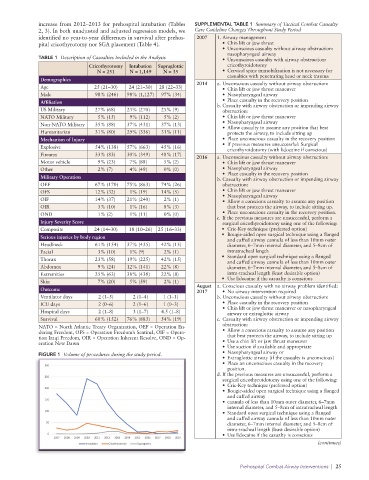
              FIGURE 1  Volume of procedures during the study period.     •  Nasopharyngeal airway or
                                                                          •  Extraglottic airway (if the casualty is unconscious)
                                                                          •  Place an unconscious casualty in the recovery
                                                                           position.
                                                                        d.   If the previous measures are unsuccessful, perform a
                                                                          surgical cricothyroidotomy using one of the following:
                                                                          •  Cric-Key technique (preferred option)
                                                                          •  Bougie-aided open surgical technique using a flanged
                                                                           and cuffed airway
                                                                          •  cannula of less than 10mm outer diameter, 6–7mm
                                                                           internal diameter, and 5–8cm of intratracheal length
                                                                          •  Standard open surgical technique using a flanged
                                                                           and cuffed airway cannula of less than 10mm outer
                                                                           diameter, 6–7mm internal diameter, and 5–8cm of
                                                                           intra-tracheal length (least desirable option)
                                                                          •  Use lidocaine if the casualty is conscious
                                                                                                         (continues)


                                                                               Prehospital Combat Airway Interventions  |  25

