


Page 100 - JSOM Winter 2022
P. 100
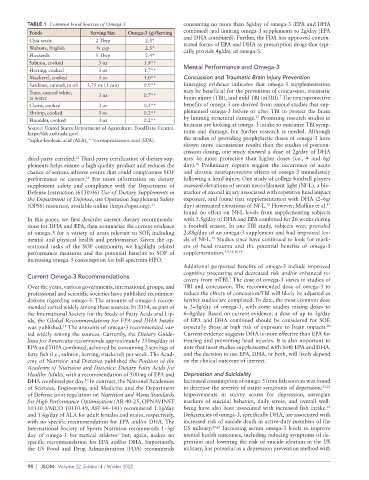
TABLE 1  Common Food Sources of Omega-3            consuming no more than 3g/day of omega-3 (EPA and DHA
           Foods               Serving Size  Omega-3 (g)/Serving  combined) and limiting omega-3 supplements to 2g/day (EPA
           Chia seeds           2 Tbsp           2.5*        and DHA combined). Further, the FDA has approved concen-
                                                             trated forms of EPA and DHA as prescription drugs that typi-
           Walnuts, English      ¼ cup           2.5*        cally provide 4g/day of omega-3.
           Flaxseeds            1 Tbsp           2.4*
           Salmon, cooked        3 oz           1.8**        Mental Performance and Omega-3
           Herring, cooked       3 oz           1.7**
           Mackerel, cooked      3 oz           1.0**        Concussion and Traumatic Brain Injury Prevention
           Sardines, canned, in oil  3.75 oz (1 can)  0.9**  Emerging  evidence indicates  that omega-3  supplementation
           Tuna, canned white,                               may be beneficial for the prevention of concussion, traumatic
                                                                                            7
           in water              3 oz           0.7**        brain injury (TBI), and mild TBI (mTBI).  The neuroprotective
           Clams, cooked         3 oz           0.2**        benefits of omega-3 are derived from animal studies that sup-
           Shrimp, cooked        3 oz           0.2**        plemented omega-3 before or after TBI to protect the brain
                                                                                     15
           Flounder, cooked      3 oz           0.2**        by limiting structural damage.  Promising research studies in
          Source: United States Department of Agriculture. FoodData Central.   humans are looking at omega-3 intake to minimize TBI symp-
          https://fdc.nal.usda.gov/.                         toms and damage, but further research is needed. Although
          *alpha-linolenic acid (ALA), **eicosapentaenoic acid (EPA).  the studies of providing prophylactic doses of omega-3 have
                                                             shown more inconsistent results than the studies of postcon-
                                                             cussion dosing, one study showed a dose of 2g/day of DHA
          third-party certified.  Third-party certification of dietary sup-  may be more protective than higher doses (i.e., 4 and 6g/
                          12
                                                                 16
          plements helps ensure a high-quality product and reduces the   day).  Preliminary reports suggest the occurrence of acute
          chance of serious adverse events that could compromise SOF   and chronic neuroprotective effects of omega-3 immediately
          performance or careers.  For more information on dietary   following a head injury. One study of college football players
                             12
          supplement  safety  and compliance  with  the Department  of   assessed elevations of serum neurofilament light (Nf-L), a bio-
          Defense Instruction (6130.06) Use of Dietary Supplements in   marker of axonal injury associated with repetitive head impact
          the Department of Defense, use Operation Supplement Safety   exposure, and found that supplementation with DHA (2–6g/
                                                                                                            17
          (OPSS) resources, available online (https://opss.org). 13  day) attenuated elevations of Nf-L.  However, Mullins et al.
                                                                                        16
                                                             found no effect on Nf-L levels from supplementing subjects
          In this paper, we first describe current dietary recommenda-  with 3.5g/day of DHA and EPA combined for 26 weeks during
          tions for DHA and EPA, then summarize the current evidence   a football season. In one TBI study, subjects were provided
          of omega-3 for a variety of areas relevant to SOF, including   2.88g/day of an omega-3 supplement and had improved lev-
          mental and physical health and performance. Given the op-  els of Nf-L.  Studies since have continued to look for mark-
                                                                      18
          erational tasks of  the SOF community, we highlight related   ers of head trauma and the potential benefits of omega-3
          performance  measures and the potential benefits to SOF of   supplementation. 3,4,16,18,19
          increasing omega-3 consumption for full-spectrum HPO.
                                                             Additional purported benefits of omega-3 include improved
                                                             cognitive processing and decreased risk and/or enhanced re-
          Current Omega-3 Recommendations
                                                                            7
                                                             covery from mTBI.  The dose of omega-3 varies in studies of
          Over the years, various governments, international groups, and   TBI and concussion. The recommended dose of omega-3 to
          professional and scientific societies have published recommen-  reduce the effects of concussion/TBI will likely be adjusted as
          dations regarding omega-3. The amounts of omega-3 recom-  further studies are completed. To date, the most common dose
          mended varied widely among these sources. In 2014, as part of   is 2–3g/day of omega-3, with some studies raising doses to
          the International Society for the Study of Fatty Acids and Lip-  6–8g/day. Based on current evidence, a dose of up to 3g/day
          ids, the Global Recommendations for EPA and DHA Intake   of EPA and DHA combined should be considered for SOF,
          was published.  The amounts of omega-3 recommended var-  especially those at high risk of exposure to brain impacts.
                                                                                                            20
                      14
          ied widely among the sources. Currently, the Dietary Guide-  Current evidence suggests DHA is more effective than EPA for
          lines for Americans recommends approximately 250mg/day of   treating and preventing head injuries. It is also important to
          EPA and DHA combined, achieved by consuming 2 servings of   note that most studies supplemented with both EPA and DHA,
          fatty fish (i.e., salmon, herring, mackerel) per week. The Acad-  and the decision to use EPA, DHA, or both, will likely depend
          emy of Nutrition and Dietetics published the Position of the   on the clinical outcome of interest.
          Academy of Nutrition and Dietetics: Dietary Fatty Acids for
          Healthy Adults, with a recommendation of 500mg of EPA and   Depression and Suicidality
          DHA combined per day.  In contrast, the National Academies   Increased consumption of omega-3 from fish sources was found
                             10
          of Sciences, Engineering, and Medicine and the Department   to decrease the severity of major symptoms of depression. 21,22
          of Defense joint regulation on Nutrition and Menu Standards   Improvements  in  survey  scores  for  depression,  surrogate
          for High Performance Optimization (AR 40-25, OPNAVINST   markers of suicidal behavior, daily stress, and overall well-
                                                                                                            23
          10110.1/MCO 10110.49, AFI 44–141) recommend 1.1g/day   being have also been associated with increased fish intake.
          and 1.6g/day of ALA for adult females and males, respectively,   Deficiencies of omega-3, specifically DHA, are associated with
          with no specific recommendation for EPA and/or DHA. The   increased risk of suicide death in active-duty members of the
          International Society of Sports Nutrition recommends 1–3g/  US military. 20,24  Increasing serum omega-3 levels to improve
          day of omega-3 for tactical athletes  but, again, makes no   mental health outcomes, including reducing symptoms of de-
                                       1
          specific recommendation for EPA and/or DHA. Importantly,   pression and lowering the risk of suicide ideation in the US
          the US Food and Drug  Administration (FDA) recommends   military, has potential as a depression prevention method with

          98  |  JSOM   Volume 22, Edition 4 / Winter 2022

