


Page 61 - JSOM Summer 2022
P. 61
time. This dynamic nature of TBI means prehospital provid-  cricothyroidotomy. Consider intubating TBI patients with GCS
              ers must frequently reassess the patient and adjust their treat-  ≤ 8 who are unable to maintain their airway or those who re-
              ments. The objective of this section is to highlight some of the   main hypoxic despite supplemental O . This GCS cutoff is not
                                                                                              2
              most critical TBI treatments in the hospital setting, and discuss   a hard and fast rule and the decision to ‘take an airway’ must
              them in light of the TBI pathophysiology (Table 4). 21,22  be based on clinical exam and patient status. Aim to achieve
                                                                 Spo  > 95% and end-tidal CO (EtCO ) 35–40mmHg. 25,26
                                                                                           2
                                                                                                 2
                                                                    2
              Hemodynamics                                       Note that EtCO reading is normally 2–5 points lower than
                                                                              2
              A systolic blood pressure (SBP) < 90mmHg or decrease in MAP   the actual Paco  due to the anatomical dead space (i.e., the
                                                                             2
              below 60mmHg, even if momentary, can significantly increase   airway and ventilator circuit), and this difference can increase
              one’s mortality risk after TBI. 23–25  This is not surprising given   in trauma patients with lung injury. Prophylactic hyperventi-
              the brain’s dependence on CBF. Traumatic brain injury alone   lation (Paco  ≤ 25mmHg or EtCO ) is not recommended be-
                                                                          2
                                                                                            2
              rarely causes hypotension unless the patient is already in the   cause it artificially lowers Paco  (recall that this triggers the
                                                                                          2
              last stages of brain herniation. Since the average adult human   brain blood vessels to constrict), leading to the possibility of
                                                                                                     27
              skull volume is 1.5L with little room to spare, intracranial   brain ischemia, stroke, and worsened outcome.  Furthermore,
              hemorrhage will lead to signs and symptoms of high ICP long   unless clinically indicated (see “Intracranial Pressure”), hyper-
              before hemorrhagic shock is present. Importantly, bleeding is   ventilation should be avoided in the first 24 hours after TBI,
              an enemy of TBI patients. Every red blood cell (RBC) is needed   during which CBF is compromised the most. 25
              to carry oxygen to the injured brain. Therefore, expeditiously
              control all hemorrhage sources, including scalp hemorrhages,   Sedation and Paralysis
              to keep the RBCs inside the patient. Do not neglect scalp blood   Analgesics, sedatives, and paralytics help manage anxiety and
              vessel injuries; they often continue to bleed without treatment,   agitation and assist greatly with procedures and transport.
              due to the vessels’ inability to constrict well. Use whole blood   However, routine use of sedatives and paralytics in TBI pa-
              (if the patient has lost blood volume) or normal saline for re-  tients has been associated with higher incidence of pneumonia,
              suscitation to maintain normal osmolality (to avoid harmful   longer duration in intensive care, and sepsis. 25,28  They also im-
              fluid shifts) and blood viscosity (to improve circulation and   pair clinical examination. Therefore, early use of sedatives and
              O  delivery to the brain). Aim to achieve SBP > 110mmHg. 26,27    paralytics should be reserved for those who require invasive
               2
              Again, CBF is determined more by CPP and MAP than by   airway procedures, exhibit clinical evidence of high ICP, or
              ICP. Therefore, treatment of hypotension should be a priority.   have agitation and psychosis that are very difficult to manage.
              Fluid ins and outs (I&Os) become important for assessing vol-  Neuromuscular blockade (paralytics) should be reserved for
              ume status and responses to ICP treatments. Therefore, place   when sedation alone is inadequate.
              an indwelling catheter or use a graduated cylinder to measure
              urine output (UOP). Goal UOP is 30–50 mL/hour.     Elevated Intracranial Pressure
                                                                 Prehospital providers should always attempt to minimize ICP
              Airway, Oxygenation, and Ventilation               elevation in TBI patients. Optimizing CBF and improving ve-
              The brain is sensitive to both O and CO  levels. O keeps the   nous drainage (so as to match blood flow in and out of the
                                                     2
                                      2
                                              2
              brain cells alive and CO  controls how much O  is delivered to   head) will help maintain normal ICP and mitigate secondary
                                2
                                                  2
              them (because the brain’s blood vessels adjust their diameter   injuries. General ICP reduction measures should be considered
              based on the CO  levels). Therefore, both need to be tightly   in all TBI patients (see Table 3).
                           2
              controlled after TBI. Oxygen saturation (Spo ) < 90% or Pao
                                                2
                                                             2
              < 60mmHg significantly worsens the risk of death after TBI   When high ICP is suspected based on clinical exam (see “Di-
              by nearly 3-fold when combined with SBP < 90mmHg. 23,24    agnostics”), prehospital providers should first ensure that all
              Consider all options, including nasopharyngeal airway, bag-  the general measures have been followed (Table 3). Many of
              valve mask, endotracheal or nasotracheal intubation, and   them can help rapidly lower the ICP. Hyperosmolar therapy
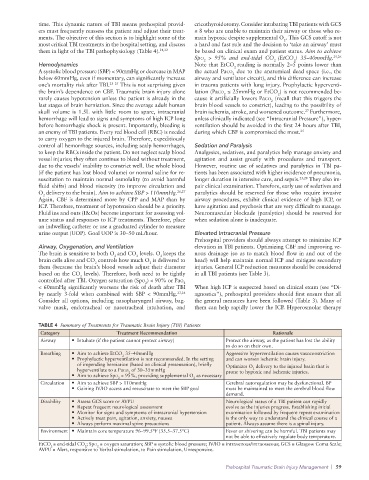
              TABLE 4  Summary of Treatments for Traumatic Brain Injury (TBI) Patients
              Category                 Treatment Recommendation                           Rationale
              Airway    •  Intubate (if the patient cannot protect airway)  Protect the airway, as the patient has lost the ability
                                                                           to do so on their own.
              Breathing  •  Aim to achieve EtCO  35–40mmHg                 Aggressive hyperventilation causes vasoconstriction
                                         2
                        •  Prophylactic hyperventilation is not recommended. In the setting   and can worsen ischemic brain injury.
                          of impending herniation (based on clinical presentation), briefly   Optimizes O  delivery to the injured brain that is
                                                                                    2
                          hyperventilate to a Paco  of 30–35mmHg           prone to hypoxic and ischemic injuries.
                                           2
                        •  Aim to achieve Spo  > 95%, providing supplemental O  as necessary
                                        2                       2
              Circulation  •  Aim to achieve SBP > 110mmHg                 Cerebral autoregulation may be dysfunctional. BP
                        •  Gaining IV/IO access and resuscitate to meet the SBP goal  must be maintained to meet the cerebral blood flow
                                                                           demand.
              Disability  •  Assess GCS score or AVPU                      Neurological status of a TBI patient can rapidly
                        •  Repeat frequent neurological assessment         evolve as the injuries progress. Establishing initial
                        •  Monitor for signs and symptoms of intracranial hypertension  examination followed by frequent repeat examination
                        •  Actively treat pain, agitation, anxiety, nausea  is the only way to understand the clinical course of a
                        •  Always perform maximal spine precautions        patient. Always assume there is a spinal injury.
              Environment •  Maintain core temperature 96–99.5°F (35.5–37.5°C)  Fever or shivering can be harmful. TBI patients may
                                                                           not be able to effectively regulate body temperature.
              EtCO = end-tidal CO ; Spo  = oxygen saturation; SBP = systolic blood pressure; IV/IO = intravenous/intraosseous; GCS = Glasgow Coma Scale;
                                 2
                             2
                  2
              AVPU = Alert, responsive to Verbal stimulation, to Pain stimulation, Unresponsive.
                                                                           Prehospital Traumatic Brain Injury Management  |  59

