


Page 54 - JSOM Summer 2022
P. 54
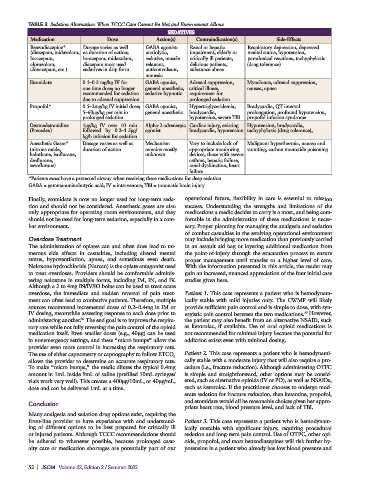
TABLE 3  Sedation Alternatives When TCCC Care Cannot Be Met and Environment Allows
                                                       SEDATIVES
           Medication               Dose            Action(s)    Contraindication(s)       Side-Effects
           Benzodiazepine*   Dosage varies as well   GABA agonist:   Renal or hepatic   Respiratory depression, depressed
           (diazepam, midazolam,  as duration of action;   anxiolytic,   impairment, elderly or   mental status, hypotension,
           lorazepam,       lorazepam, midazolam,   sedative, muscle   critically ill patients,   paradoxical reactions, tachyphylaxis
           alprazolam,      diazepam most used   relaxant,     delirious patients,   (drug tolerance)
           clonazepam, etc.)  sedatives in drip form  anticonvulsant,   substance abuse
                                                amnesic
           Etomidate        0.1–0.3 mg/kg IV for   GABA agonist,   Adrenal suppression,   Myoclonus, adrenal suppression,
                            one time dose; no longer   general anesthetic,  critical illness,   nausea, apnea
                            recommended for sedation  sedative hypnotic   requirement for
                            due to adrenal suppression         prolonged sedation
           Propofol*        0.5–2mg/kg IV initial dose;  GABA agonist,   Hypertriglyceridemia,   Bradycardia, QT interval
                            5–60μg/kg per min in   general anesthetic   bradycardia,   prolongation, profound hypotension,
                            prolonged sedation                 hypotension, severe TBI  propofol infusion syndrome
           Dexmedetomidine   1μg/kg  IV  over  10  min   Alpha-2 adrenergic  Cardiac injury, existing   Hypotension, bradycardia,
           (Precedex)       followed  by  0.2–1.5μg/  agonist  bradycardia, hypotension tachyphylaxis (drug tolerance),
                            kg/h infusion for sedation
           Anesthetic Gases*   Dosage varies as well as   Mechanism   Vary to include lack of   Malignant hyperthermia, nausea and
           (nitrous oxide,   duration of action  remains mostly   appropriate monitoring   vomiting, carbon monoxide poisoning
           halothane, isoflurane,               unknown        devices, those with severe
           desflurane,                                         asthma, hepatic failure,
           sevoflurane)                                        renal dysfunction, heart
                                                               failure
          *Patients must have a protected airway when receiving these medications for deep sedation.
          GABA = gamma-aminobutyric acid; IV = intravenous; TBI = traumatic brain injury.

          Finally, etomidate is now no longer used for long-term seda-  operational future, flexibility in care is essential to mission
          tion and should not be considered. Anesthetic gases are also   success. Understanding the strengths and limitations of the
          only appropriate for operating room environments, and they   medications a medic decides to carry is a must, and being com-
          should not be used for long-term sedation, especially in a com-  fortable in the administration of these medications is neces-
          bat environment.                                   sary. Proper planning for managing the analgesia and sedation
                                                             of combat casualties in the evolving operational environment
          Overdose Treatment                                 may include bringing more medication than previously carried
          The administration of opiates can and often does lead to nu-  in an assault aid bag or layering additional medication from
          merous side effects in casualties, including altered mental   the point-of-injury through the evacuation process to ensure
          status, hypoventilation, apnea, and sometimes even death.   proper management until transfer to a higher level of care.
          Naloxone hydrochloride (Narcan) is the opiate antagonist used   With the information presented in this article, the reader may
          to treat overdoses. Providers should be comfortable adminis-  gain an increased, nuanced appreciation of the four initial case
          tering naloxone in multiple forms, including IM, IN, and IV.   studies given here.
          Although a 2 to 4mg IN/IV/IO bolus can be used to treat acute
          overdose, the immediate and sudden reversal of pain treat-  Patient 1. This case represents a patient who is hemodynam-
          ment can often lead to combative patients. Therefore, multiple   ically  stable  with  mild  injuries  only.  The  CWMP  will  likely
          sources recommend incremental doses of 0.2–0.4mg in IM or   provide sufficient pain control and is simple to dose, with syn-
          IV dosing, meanwhile assessing response to each dose prior to   ergistic pain control between the two medications.  However,
                                                                                                    27
                           26
          administering another.  The end goal is to improve the respira-  the patient may also benefit from an alternative NSAID, such
          tory rate while not fully reversing the pain control of the opioid   as ketorolac, if available. Use of oral opioid medications is
          medication itself. Even smaller doses (e.g., 40mg) can be used   not recommended for minimal injury because the potential for
          in nonemergency settings, and these “micro bumps” allow the   addiction exists even with minimal dosing.
          provider even more control in increasing the respiratory rate.
          The use of either capnometry or capnography to follow ETCO    Patient 2. This case represents a patient who is hemodynami-
                                                         2
          allows the provider to determine an accurate respiratory rate.   cally stable with a moderate injury that will also require a pro-
          To make “micro bumps,” the medic dilutes the typical 0.4mg   cedure (i.e., fracture reduction). Although administering OTFC
          amount in 1mL inside 9mL of saline (prefilled 10mL syringes/  is simple and straightforward, other options may be consid-
          vials work very well). This creates a 400mg/10mL, or 40mg/mL,   ered, such as alternative opioids (IV or PO), as well as NSAIDs,
          dose and can be delivered 1mL at a time.           such as ketorolac. If the practitioner chooses to undergo mod-
                                                             erate sedation for fracture reduction, then ketamine, propofol,
                                                             and etomidate would all be reasonable choices given her appro-
          Conclusion
                                                             priate heart rate, blood pressure level, and lack of TBI.
          Many analgesia and sedation drug options exist, requiring the
          front-line provider to have experience with and understand-  Patient 3. This case represents a patient who is hemodynam-
          ing of different options to be best prepared for critically ill   ically unstable with significant injury, requiring procedural
          or injured patients. Although TCCC recommendations should   sedation and long-term pain control. Use of OTFC, other opi-
          be adhered to whenever possible, because prolonged casu-  oids, propofol, and most benzodiazepines will risk further hy-
          alty care or medication shortages are potentially part of our   potension in a patient who already has low blood pressure and


          52  |  JSOM   Volume 22, Edition 2 / Summer 2022

