


Page 52 - JSOM Summer 2022
P. 52
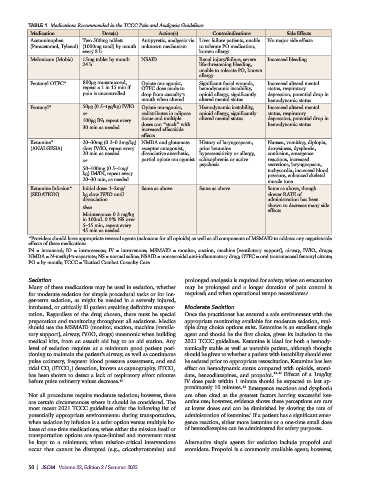
TABLE 1  Medications Recommended in the TCCC Pain and Analgesia Guidelines
           Medication             Dose(s)            Action(s)        Contraindications       Side Effects
           Acetaminophen    Two 500mg tablets   Antipyretic, analgesic via  Liver failure patients, unable   No major side effects
           (Paracetamol, Tylenol) (1000mg total) by mouth  unknown mechanism  to tolerate PO medication,
                            every 8 h                             known allergy
           Meloxicam (Mobic)  15mg tablet by mouth   NSAID        Renal injury/failure, severe   Increased bleeding
                            24 h                                  life-threatening bleeding,
                                                                  unable to tolerate PO, known
                                                                  allergy
           Fentanyl OTFC*   800μg transmucosal,   Opiate mu-agonist,   Significant facial wounds,   Increased altered mental
                            repeat × 1 in 15 min if   OTFC dose made to   hemodynamic instability,   status, respiratory
                            pain is uncontrolled  drop from casualty’s   opioid allergy, significantly   depression, potential drop in
                                               mouth when altered  altered mental status  hemodynamic status
           Fentanyl*        50μg (0.5–1μg/kg) IV/IO   Opiate mu-agonist,   Hemodynamic instability,   Increased altered mental
                            or                 redistributes in adipose   opioid allergy, significantly   status, respiratory
                            100μg IN; repeat every   tissue and multiple   altered mental status  depression, potential drop in
                            30 min as needed   doses can “stack” with                   hemodynamic status
                                               increased effect/side
                                               effects
           Ketamine*        20–30mg (0.2–0.3mg/kg)  NMDA and glutamate   History of laryngospasm,   Nausea, vomiting, diplopia,
           (ANALGESIA)      slow IV/IO, repeat every   receptor antagonist,   prior ketamine   drowsiness, dysphoria,
                            20 min as needed   dissociative anesthetic,   hypersensitivity or allergy,   confusion, emergence
                            or                 partial opiate mu agonist  schizophrenia or active   reactions, increased
                                                                  psychosis
                                                                                        secretions, laryngospasm,
                            50–100mg (0.5–1mg/                                          tachycardia, increased blood
                            kg) IM/IN, repeat every                                     pressure, enhanced skeletal
                            20–30 min, as needed                                        muscle tone
           Ketamine Infusion*   Initial dose: 1–2mg/  Same as above  Same as above      Same as above, though
           (SEDATION)       kg slow IV/IO until                                         slower RATE of
                            dissociation                                                administration has been
                            then                                                        shown to decrease many side
                                                                                        effects
                            Maintenance: 0.3 mg/kg
                            in 100mL 0.9% NS over
                            5–15 min, repeat every
                            45 min as needed
          *Providers should have appropriate reversal agents (naloxone for all opioids) as well as all components of MSMAID to address any negative side
          effects of these medications.
          IN = intranasal; IO = intraosseous; IV = intravenous; MSMAID = monitor, suction, machine [ventilatory support], airway, IV/IO, drugs;
          NMDA = N-methyl-d-aspartate; NS = normal saline; NSAID = nonsteroidal anti-inflammatory drug; OTFC = oral transmucosal fentanyl citrate;
          PO = by mouth; TCCC = Tactical Combat Casualty Care.

          Sedation                                           prolonged analgesia is required for safety; when an evacuation
          Many of these medications may be used in sedation, whether   may be prolonged and a longer duration of pain control is
          for moderate sedation for simple procedural tasks or for lon-  required; and when operational tempo necessitates. 4
          ger-term sedation, as might be needed in a severely injured,
          intubated, or critically ill patient awaiting definitive transpor-  Moderate Sedation
          tation. Regardless of the drug chosen, there must be special   Once the practitioner has ensured a safe environment with the
          preparation and monitoring throughout all sedations. Medics   appropriate monitoring available for moderate sedation, mul-
          should use the MSMAID (monitor, suction, machine [ventila-  tiple drug choice options exist. Ketamine is an excellent single
          tory support], airway, IV/IO, drugs) mnemonic when building   agent and should be the first choice, given its inclusion in the
          medical kits, from an assault aid bag to an aid station. Any   2021 TCCC guidelines. Ketamine is ideal for both a hemody-
          level of sedation requires at a minimum good patient posi-  namically stable as well as unstable patient, although thought
          tioning to maintain the patient’s airway, as well as continuous   should be given to whether a patient with instability should ever
          pulse oximetry, frequent blood pressure assessment, and end   be sedated prior to appropriate resuscitation. Ketamine has less
          tidal CO  (ETCO ) detection, known as capnography. ETCO    effect on hemodynamic status compared with opioids, etomi-
                        2
                 2
                                                         2
          has been shown to detect a lack of respiratory effort minutes   date, benzodiazepines, and propofol. 13–16  Effects of a 1mg/kg
          before pulse oximetry values decrease. 12          IV dose peak within 1 minute should be expected to last ap-
                                                             proximately 10 minutes.  Emergence reactions and dysphoria
                                                                                13
          Not all procedures require moderate sedation; however, there   are  often  cited  as  the  greatest  factors  barring  successful  ket-
          are certain circumstances where it should be considered. The   amine use; however, evidence shows these perceptions are rare
          most recent 2021 TCCC guidelines offer the following list of   at lower doses and can be diminished by slowing the rate of
          potentially appropriate environments: during transportation,   administration of ketamine.  If a patient has a significant emer-
                                                                                  6
          when sedation by infusion is a safer option versus multiple bo-  gence reaction, either more ketamine or a one-time small dose
          luses of one-time medications; when either the mission itself or   of benzodiazepine can be administered for safety purposes.
          transportation options are space-limited and movement must
          be kept to a minimum; when mission-critical interventions   Alternative single agents for sedation include propofol and
          occur that cannot be disrupted (e.g., cricothyrotomies) and   etomidate. Propofol is a commonly available agent; however,


          50  |  JSOM   Volume 22, Edition 2 / Summer 2022

