


Page 53 - JSOM Summer 2022
P. 53
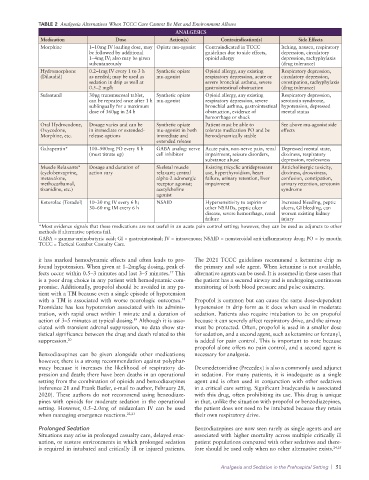
TABLE 2  Analgesia Alternatives When TCCC Care Cannot Be Met and Environment Allows
                                                          ANALGESICS
              Medication               Dose             Action(s)        Contraindication(s)       Side Effects
              Morphine        1–10mg IV loading dose, may  Opiate mu-agonist  Contraindicated in TCCC   Itching, nausea, respiratory
                              be followed by additional             guidelines due to side effects,   depression, circulatory
                              1–4mg IV; also may be given           opioid allergy           depression, tachyphylaxis
                              subcutaneously                                                 (drug tolerance)
              Hydromorphone   0.2–1mg IV every 1 to 3 h   Synthetic opiate    Opioid allergy, any existing   Respiratory depression,
              (Dilaudid)      as needed; may be used as   mu-agonist  respiratory depression, acute or   circulatory depression,
                              sedation in drip as well at           severe bronchial asthma, severe   constipation, tachyphylaxis
                              0.5–2 mg/h                            gastrointestinal obstruction  (drug tolerance)
              Sufentanil      30mg transmucosal tablet,   Synthetic opiate    Opioid allergy, any existing   Respiratory depression,
                              can be repeated once after 1 h  mu-agonist  respiratory depression, severe   serotonin syndrome,
                              sublingually for a maximum            bronchial asthma, gastrointestinal  hypotension, depressed
                              dose of 360mg in 24 h                 obstruction, evidence of   mental status
                                                                    hemorrhage or shock
              Oral Hydrocodone,   Dosage varies and can be   Synthetic opiate   Patient must be able to   See above mu-agonist side
              Oxycodone,      in immediate or extended-  mu-agonist in both   tolerate medication PO and be   effects
              Morphine, etc.  release options       immediate and   hemodynamically stable
                                                    extended release
              Gabapentin*     100–900mg PO every 8 h   GABA analog: nerve  Acute pain, non-nerve pain, renal  Depressed mental state,
                              (must titrate up)     cell inhibitor   impairment, seizure disorders,   dizziness, respiratory
                                                                    substance abuse          depression, restlessness
              Muscle Relaxants*   Dosage and duration of   Skeletal muscle   Existing tricyclic antidepressant   Anticholinergic toxicity,
              (cyclobenzaprine,   action vary       relaxant; central   use, hyperthyroidism, heart   dizziness, drowsiness,
              metaxalone,                           alpha-2 adrenergic   failure, urinary retention, liver   confusion, constipation,
              methocarbamol,                        receptor agonist;   impairment           urinary retention, serotonin
              tizanidine, etc.)                     acetylcholine                            syndrome
                                                    agonist
              Ketorolac (Toradol)  10–30 mg IV every 6 h;   NSAID   Hypersensitivity to aspirin or   Increased bleeding, peptic
                              30–60 mg IM every 6 h                 other NSAIDs, peptic ulcer   ulcers, GI bleeding, can
                                                                    disease, severe hemorrhage, renal  worsen existing kidney
                                                                    failure                  injury
              *Most evidence signals that these medications are not useful in an acute pain control setting; however, they can be used as adjuncts to other
              methods if alternative options fail.
              GABA = gamma-aminobutyric acid; GI = gastrointestinal; IV = intravenous; NSAID = nonsteroidal anti-inflammatory drug; PO = by mouth;
              TCCC = Tactical Combat Casualty Care.

              it has marked hemodynamic effects and often leads to pro-  The 2021 TCCC guidelines recommend a ketamine drip as
              found hypotension. When given at 1–2mg/kg dosing, peak ef-  the primary and sole agent. When ketamine is not available,
              fects occur within 0.5–3 minutes and last 3–5 minutes.  This   alternative agents can be used. It is assumed in these cases that
                                                        17
              is a poor drug choice in any patient with hemodynamic com-  the patient has a secured airway and is undergoing continuous
              promise. Additionally, propofol should be avoided in any pa-  monitoring of both blood pressure and pulse oximetry.
              tient with a TBI because even a single episode of hypotension
              with a TBI is associated with worse neurologic outcomes.    Propofol is common but can cause the same dose-dependent
                                                            18
              Etomidate has less hypotension associated with its adminis-  hypotension in drip form as it does when used in moderate
              tration, with rapid onset within 1 minute and a duration of   sedation. Patients also require intubation to be on propofol
              action of 3–5 minutes at typical dosing.  Although it is asso-  because it can severely affect respiratory drive, and the airway
                                             19
              ciated with transient adrenal suppression, no data show sta-  must be protected. Often, propofol is used in a smaller dose
              tistical significance between the drug and death related to this     for sedation, and a second agent, such as ketamine or fentanyl,
              suppression. 20                                    is added for pain control. This is important to note because
                                                                 propofol alone offers no pain control, and a second agent is
              Benzodiazepines can be given alongside other medications;   necessary for analgesia.
              however, there is a strong recommendation against polyphar-
              macy because it increases the likelihood of respiratory de-  Dexmedetomidine (Precedex) is also a commonly used adjunct
              pression and death; there have been deaths in an operational   in sedation. For many patients, it is inadequate as a single
              setting from the combination of opioids and benzodiazepines   agent and is often used in conjunction with other sedatives
              (reference 21 and Frank Butler, e-mail to author, February 28,   in a critical care setting. Significant bradycardia is associated
              2020). These authors do not recommend using benzodiaze-  with this drug, often prohibiting its use. This drug is unique
              pines with opioids for moderate sedation in the operational   in that, unlike the situation with propofol or benzodiazepines,
              setting. However, 0.5–2.0mg of midazolam IV can be used   the patient does not need to be intubated because they retain
              when managing emergence reactions. 22,23           their own respiratory drive.

              Prolonged Sedation                                 Benzodiazepines are now seen rarely as single agents and are
              Situations may arise in prolonged casualty care, delayed evac-  associated with higher mortality across multiple critically ill
              uation, or austere environments in which prolonged sedation   patient populations compared with other sedatives and there-
              is required in intubated and critically ill or injured patients.   fore should be used only when no other alternative exists. 24,25

                                                                         Analgesia and Sedation in the Prehospital Setting  |  51

