


Page 102 - JSOM Winter 2021
P. 102
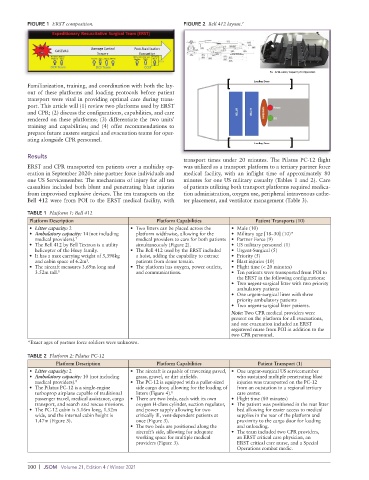
FIGURE 1  ERST composition.                        FIGURE 2  Bell 412 layout. 7


          Familiarization, training, and coordination with both the lay-
          out of these platforms and loading protocols before patient
          transport were vital in providing optimal care during trans-
          port. This article will (1) review two platforms used by ERST
          and CPR; (2) discuss the configurations, capabilities, and care
          rendered on these platforms; (3) differentiate the two units’
          training and capabilities; and (4) offer recommendations to
          prepare future austere surgical and evacuation teams for oper-
          ating alongside CPR personnel.

          Results
                                                             transport times under 20 minutes. The Pilatus PC-12 flight
          ERST and CPR transported ten patients over a multiday op-  was utilized as a transport platform to a tertiary partner force
          eration in September 2020: nine partner force individuals and   medical facility, with an inflight time of approximately 80
          one US Servicemember. The mechanisms of injury for all ten   minutes for one US military casualty (Tables 1 and 2). Care
          casualties included both blunt and penetrating blast injuries   of patients utilizing both transport platforms required medica-
          from improvised explosive devices. The ten transports on the   tion administration, oxygen use, peripheral intravenous cathe-
          Bell 412 were from POI to the ERST medical facility, with   ter placement, and ventilator management (Table 3).

          TABLE 1  Platform 1: Bell 412
           Platform Description                     Platform Capabilities            Patient Transports (10)
           •  Litter capacity: 2            •  Two litters can be placed across the   •  Male (10)
           •  Ambulatory capacity: 14 (not including   platform widthwise, allowing for the   •  Military age [18–30] (10)*

            medical providers). 7            medical providers to care for both patients  •  Partner Force (9)
           •  The Bell 412 by Bell Textron is a utility   simultaneously (Figure 2).  •  US military personnel (1)
            helicopter of the Huey family.  •  The Bell 412 used by the ERST included   •  Urgent-Surgical (5)
           •  It has a max carrying weight of 5,398kg   a hoist, adding the capability to extract   •  Priority (5)
            and cabin space of 6.2m³.        patients from dense terrain.    •  Blast injuries (10)
           •  The aircraft measures 3.69m long and   •  The platform has oxygen, power outlets,   •  Flight time (< 20 minutes)
            3.52m tall. 8                    and communications.             •  Ten patients were transported from POI to
                                                                              the ERST in the following configurations:
                                                                             •  Two urgent-surgical litter with two priority
                                                                              ambulatory patients
                                                                             •  One urgent-surgical litter with three
                                                                              priority ambulatory patients
                                                                             •  Two urgent-surgical litter patients.
                                                                             Note: Two CPR medical providers were
                                                                             present on the platform for all evacuations,
                                                                             and one evacuation included an ERST
                                                                             registered nurse from POI in addition to the
                                                                             two CPR personnel.
          *Exact ages of partner force soldiers were unknown.

          TABLE 2  Platform 2: Pilatus PC-12
                   Platform Description             Platform Capabilities            Patient Transport (1)
           •  Litter capacity: 2            •  The aircraft is capable of traversing paved,  •  One urgent-surgical US servicemember
           •  Ambulatory capacity: 10 (not including   grass, gravel, or dirt airfields.  who sustained multiple penetrating blast
            medical providers). 8           •  The PC-12 is equipped with a pallet-sized   injuries was transported on the PC-12
           •  The Pilatus PC-12 is a single-engine   side cargo door, allowing for the loading of   from an outstation to a regional tertiary
            turboprop airplane capable of traditional   litters (Figure 4). 8  care center.
            passenger travel, medical assistance, cargo   •  There are two beds, each with its own   •  Flight time (80 minutes)
            transport, and search and rescue missions.  oxygen H-class cylinder, suction regulator,  •  The patient was positioned in the rear litter
           •  The PC-12 cabin is 5.16m long, 1.52m   and power supply allowing for two   bed allowing for easier access to medical
            wide, and the internal cabin height is   critically ill, vent-dependent patients at   supplies in the rear of the platform and
            1.47m (Figure 3).                once (Figure 3).                 proximity to the cargo door for loading
                                            •  The two beds are positioned along the   and unloading.
                                             aircraft’s side, allowing for adequate   •  The team included two CPR providers,
                                             working space for multiple medical   an ERST critical care physician, an
                                             providers (Figure 3).            ERST critical care nurse, and a Special
                                                                              Operations combat medic.


          100  |  JSOM   Volume 21, Edition 4 / Winter 2021

