


Page 133 - JSOM Fall 2021
P. 133
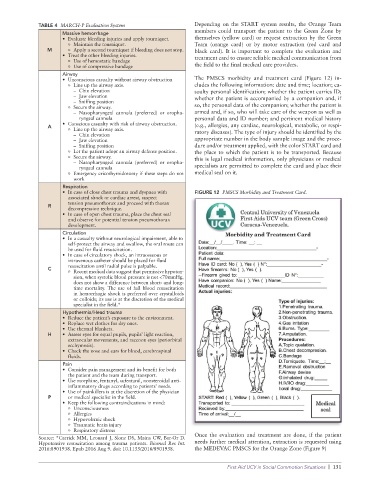
TABLE 4  MARCH-P Evaluation System                 Depending on the START system results, the Orange Team
                                                                 members could transport the patient to the Green Zone by
                     Massive hemorrhage
                     •  Evaluate bleeding injuries and apply tourniquet.  themselves (yellow card) or request extraction by the Green
                          o Maintain the tourniquet.             Team (orange card)  or  by motor extraction  (red card  and
                 M        o Apply a second tourniquet if bleeding does not stop.  black card). It is important to complete the evaluation and
                     •  Treat the other bleeding injuries.       treatment card to ensure reliable medical communication from
                          o Use of hemostatic bandage
                          o Use of compressive bandage           the field to the final medical care providers.
                     Airway
                     •  Unconscious casualty without airway obstruction  The PMSCS morbidity and treatment card (Figure 12) in-
                          o Line up the airway axis.             cludes the following information: date and time; location; ca-
                            – Chin elevation                     sualty personal identification; whether the patient carries ID;
                            – Jaw elevation                      whether the patient is accompanied by a companion and, if
                            – Sniffing position
                          o Secure the airway.                   so, the personal data of the companion; whether the patient is
                            – Nasopharyngeal cannula (preferred) or oropha-  armed and, if so, who will take care of the weapon as well as
                           ryngeal cannula                       personal data and ID number; and pertinent medical history
                     •  Conscious casualty with risk of airway obstruction.  (e.g., allergies, any cardiac, neurological, metabolic, or respi-
                 A        o Line up the airway axis.
                            – Chin elevation                     ratory diseases). The type of injury should be identified by the
                            – Jaw elevation                      appropriate number in the body sample image and the proce-
                            – Sniffing position                  dure and/or treatment applied, with the color START card and
                          o Let the patient adopt an airway defense position.  the place to which the patient is to be transported. Because
                          o Secure the airway.                   this is legal medical information, only physicians or medical
                            – Nasopharyngeal cannula (preferred) or oropha-
                           ryngeal cannula                       specialists are permitted to complete the card and place their
                          o Emergency cricothyroidotomy if these steps do not   medical seal on it.
                         work
                     Respiration
                     •  In case of close chest trauma and dyspnea with   FIGURE 12  PMSCS Morbidity and Treatment Card.
                       associated shock or cardiac arrest, suspect
                       tension pneumothorax and proceed with thorax
                 R
                       decompression technique.
                     •  In case of open chest trauma, place the chest seal
                       and observe for potential tension pneumothorax
                       development.
                     Circulation
                     •  In a casualty without neurological impairment, able to
                       self-protect the airway and swallow, the oral route can
                       be used for fluid resuscitation.
                     •  In case of circulatory shock, an intraosseous or
                       intravenous catheter should be placed for fluid
                       resuscitation until radial pulse is palpable.
                 C        o Recent medical data suggest that permissive hypoten-
                         sion, when systolic blood pressure is not <70mmHg,
                         does not show a difference between short- and long-
                         time mortality. The use of full blood resuscitation
                         in hemorrhagic shock is preferred over crystalloids
                         or colloids; its use is at the discretion of the medical
                         specialist in the field.*
                     Hypothermia/Head trauma
                     •  Reduce the patient’s exposure to the environment.
                     •  Replace wet clothes for dry ones.
                     •  Use thermal blankets.
                 H   •  Assess eyes for equal pupils, pupils’ light reaction,
                       extraocular movements, and raccoon eyes (periorbital
                       ecchymosis).
                     •  Check the nose and ears for blood, cerebrospinal
                       fluids.
                     Pain
                     •  Consider pain management and its benefit for both
                       the patient and the team during transport.
                     •  Use morphine, fentanyl, sufentanil, nonsteroidal anti-
                       inflammatory drugs according to patients’ needs.
                     •  Use of painkillers is at the discretion of the physician
                 P     or medical specialist in the field.
                     •  Keep the following contraindications in mind:
                          o Unconsciousness
                          o Allergies
                          o Hypovolemic shock
                          o Traumatic brain injury
                          o Respiratory distress
              Source: *Carrick MM, Leonard J, Slone DS, Mains CW, Bar-Or D.   Once the evaluation and treatment are done, if the patient
              Hypotensive  resuscitation  among  trauma  patients.  Biomed  Res  Int.   needs further medical attention, extraction is requested using
              2016:8901938. Epub 2016 Aug 9. doi: 10.1155/2016/8901938.  the MEDEVAC PMSCS for the Orange Zone (Figure 9)

                                                                           First Aid UCV in Social Commotion Situations  |  131

