


Page 135 - JSOM Fall 2021
P. 135
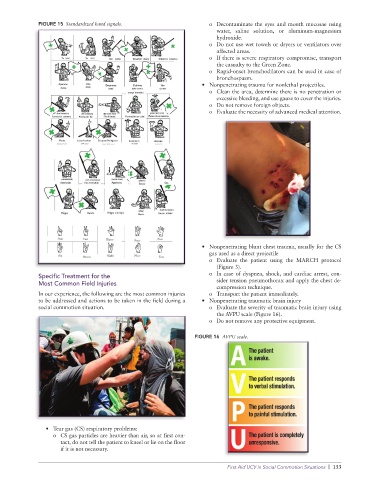
FIGURE 15  Standardized hand signals.                     o Decontaminate the eyes and mouth mucosae using
                                                                        water, saline solution, or aluminum-magnesium
                                                                        hydroxide.
                                                                        o Do not use wet towels or dryers or ventilators over
                                                                        affected areas.
                                                                        o If there is severe respiratory compromise, transport
                                                                        the casualty to the Green Zone.
                                                                        o Rapid-onset bronchodilators can be used in case of
                                                                        bronchospasm.
                                                                   •  Nonpenetrating trauma for nonlethal projectiles.
                                                                        o Clean the area, determine there is no penetration or
                                                                        excessive bleeding, and use gauze to cover the injuries.
                                                                        o Do not remove foreign objects.
                                                                        o Evaluate the necessity of advanced medical attention.


                                                                   •  Nonpenetrating blunt chest trauma, usually for the CS
                                                                     gas used as a direct projectile
                                                                        o Evaluate  the  patient  using  the  MARCH  protocol
                                                                        (Figure 3).
                                                                        o In case of dyspnea, shock, and cardiac arrest, con-
              Specific Treatment for the                                sider tension pneumothorax and apply the chest de-
              Most Common Field Injuries
                                                                        compression technique.
              In our experience, the following are the most common injuries     o Transport the patient immediately.
              to be addressed and actions to be taken in the field during a   •  Nonpenetrating traumatic brain injury
              social commotion situation.                               o Evaluate the severity of traumatic brain injury using
                                                                        the AVPU scale (Figure 16).
                                                                        o Do not remove any protective equipment.

                                                                 FIGURE 16  AVPU scale.


                •  Tear gas (CS) respiratory problems:
                     o CS gas particles are heavier than air, so at first con-
                     tact, do not tell the patient to kneel or lie on the floor
                     if it is not necessary.

                                                                           First Aid UCV in Social Commotion Situations  |  133

