


Page 91 - JSOM Summer 2019
P. 91
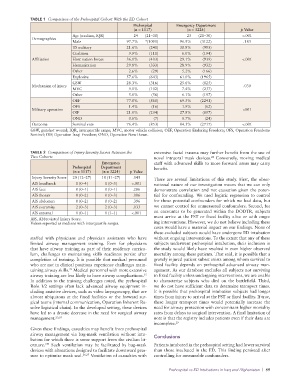
TABLE 1  Comparison of the Prehospital Cohort With the ED Cohort
                                                        Prehospital       Emergency Department
                                                        (n = 1117)            (n = 3224)            p Value
                               Age (median, IQR)        24    (21–30)         25    (21–30)          <.001
              Demographics
                               Male                   97.7%    *(1091)      96.9%    (3122)           .183
                               US military            21.6%    (241)        30.8%    (993)
                               Coalition               9.9%    (111)        6.0%     (194)
              Affiliation      Host nation forces     36.1%    (403)        29.1%    (939)           <.001
                               Humanitarian           29.8%    (333)        28.9%    (932)
                               Other                   2.6%     (29)        5.2%     (166)
                               Explosive              57.6%    (643)        61.0%    (1965)
                               GSW                    28.3%    (316)        25.6%    (825)
              Mechanism of injury                                                                     .030
                               MVC                     9.1%    (102)        7.4%     (237)
                               Other                   5.0%     (56)        6.1%     (197)
                               OEF                    77.0%    (860)        69.5%    (2241)
                               OFS                     1.4%     (16)        1.9%      (62)
              Military operation                                                                     <001
                               OIF                    21.0%    (234)        27.8%    (897)
                               OND                     0.6%     (7)         0.7%      (24)
              Outcome          Survival rate          76.4%    (853)        84.3%    (2717)          <.001
              GSW, gunshot wound; IQR, interquartile range; MVC, motor vehicle collision; OEF, Operation Enduring Freedom; OFS, Operation Freedoms
              Sentinel; OIF, Operation Iraqi Freedom; OND, Operation New Dawn.


              TABLE 2  Comparison of Injury Severity Scores Between the    extensive facial trauma may further benefit from the use of
              Two Cohorts                                        novel intraoral mask devices.  Conversely, moving medical
                                                                                        28
                                           Emergency             staff with advanced skills to more forward areas may carry
                               Prehospital  Department           benefit.
                               (n = 1117)  (n = 3224)  p Value
              Injury Severity Score  20 (12–27)  18 (11–27)  .045  There are several limitations of this study. First, the obser-
              AIS head/neck     1 (0–4)     1 (0–3)    <.001     vational nature of our investigation means that we can only
              AIS face          0 (0–1)     0 (0–1)     .286     demonstrate correlation and not causation given the poten-
              AIS thorax        0 (0–2)     0 (0–3)     .006     tial for confounding. We used logistic regression to control
              AIS abdomen       0 (0–2)     0 (0–2)     .396     for those potential confounders for which we had data, but
              AIS extremity     2 (0–3)     2 (0–3)     .033     we cannot control for unmeasured confounders. Second, for
              AIS external      1 (0–1)     1 (1–1)    <.001     an encounter to be generated within the DODTR, subjects
              AIS, Abbreviated Injury Score.                     must arrive at the FST or fixed facility alive or with ongo-
              Values reported as medians with interquartile ranges.  ing interventions. However, we do not believe including these
                                                                 cases would have a material impact on our findings. None of
                                                                 these excluded subjects would have undergone ED intubation
              staffed with physicians and physician assistants who have   without ongoing interventions. To the extent that any of these
              limited  airway  management  training.  Even  for  physicians   subjects underwent prehospital intubation, their inclusion in
              that have airway training as part of their residency curricu-  the study would likely have resulted in even higher observed
              lum, challenges to maintaining skills readiness persist after   mortality among these patients. That said, it is possible that a
              completion of training. It is possible that medical personnel   gravely injured patient subset exists among whom survival to
              who are not in clinical positions experience challenges main-  fixed facility depends on prehospital advanced airway man-
                              22
              taining airway skills.  Medical personnel with more extensive   agement. As our database excludes all subjects not surviving
                                                            15
              airway training are less likely to have airway complications.    to fixed facility unless undergoing interventions, we are unable
              In addition to the training challenges noted, the prehospital   to characterize subjects who died on the battlefield. Third,
              Role 1/2 settings often lack advanced airway equipment in-  we do not have sufficient data to determine transport times.
              cluding assistive devices, such as video laryngoscopy, that are   It is possible that prehospital intubation subjects had longer
              almost ubiquitous at the fixed facilities or the forward sur-  times from injury to arrival at the FST or fixed facility. If true,
              gical teams (internal communication, Operation Inherent Re-  these longer transport times would potentially increase the
              solve logistical chain). In the developed setting, these devices   need for airway protection with concomitant higher mortality
              have led to a drastic decrease in the need for surgical airway   rates from delays to surgical intervention. A final limitation of
              management. 23,24                                  note is that the registry includes patients even if their data are
                                                                 incomplete. 29
              Given these findings, casualties may benefit from prehospital
              airway management via bag-mask ventilation without intu-  Conclusions
              bation for which there is some support from the civilian lit-
                    254
              erature.  Such ventilation may be facilitated by bag-mask   Patients intubated in the prehospital setting had lower survival
              devices with alterations designed to facilitate downward pres-  than those intubated in the ED. This finding persisted after
              sure to optimize mask seal. 26,27  Ventilation of casualties with   controlling for measurable confounders.

                                                                       Prehospital vs ED Intubations in Iraq and Afghanistan  |  89

