


Page 87 - JSOM Summer 2019
P. 87
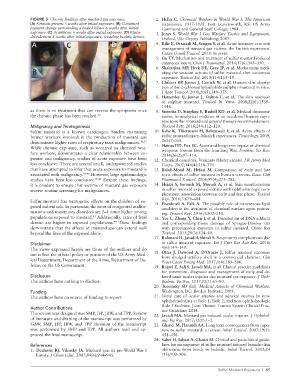
FIGURE 3  Chronic findings after mustard gas exposure.    2.  Heller C. Chemical Warfare in World War I: The American
              (A) Keratitis present 5 weeks after initial exposure. (B) Continued   Experience, 1917-1918. Fort Leavenworth, KS: US Army
              pigment change surrounding a healed blister 6 weeks after initial   Command and General Staff College; 1984.
              exposure. (C) Acanthosis 6 weeks after initial exposure. (D) Blister   3.  Jones S. World War I Gas Warfare Tactics and Equipment.
              debridement 8 weeks after initial exposure, revealing healing dermis.
                                                                    Oxford, UK: Osprey Publishing; 2007.
              A                                D                 4.  Kilic E, Ortatatli M, Sezigen S, et al. Acute intensive care unit
                                                                    management of mustard gas victims: the Turkish experience.
                                                                    Cutan Ocuul Toxicol. 2018. In press.
                                                                 5.  Gu TY. Mechanism and treatment of sulfur mustard-induced
                                                                    cutaneous injury. Chin J Traumatol. 2014;17(6):345–350.
                                                                 6.  Shakarjian MP, Heck DE, Gray JP, et al. Mechanisms medi-
                                                                    ating the vesicant actions of sulfur mustard after cutaneous
                                                                    exposure. Toxicol Sci. 2010;114(1):5–19.
                                                                 7.  Chilcott RP, Jenner J, Carrick W, et al. Human skin absorp-
                                                                    tion of bis-2-(chloroethyl)sulphide (sulphur mustard) in vitro.
                                                                    J Appl Toxicol. 2000;20(5):349–335.
                                                                 8.  Hattersley IJ, Jenner J, Dalton C, et al. The skin reservoir
                                                                    of sulphur mustard.  Toxicol In Vitro. 2008;22(6):1539–
                                                                    1546.
              as there is no treatment that can reverse the symptoms once   9.  Steinritz D, Stiepling E, Rudolf KD, et al. Medical documen-
              the chronic phase has been reached. 35                tation, bioanalytical evidence of an accidental human expo-
                                                                    sure to sulfur mustard and general therapy recommendations.
              Malignancy and Teratogenesis                          Toxicol Lett. 2016;244:112–120.
              Sulfur mustard is a known carcinogen. Studies examining   10.  Kehe K, Thiermann H, Balszuweit F, et al. Acute effects of
              former workers involved in the production of mustard gas   sulfur mustard injury–Munich experiences. Toxicology. 2009;
              demonstrate higher rates of respiratory tract malignancies. 36,37    263(1):3–8.
              While chronic exposure, such as occurred in chemical war-  11.  Haines DD, Fox SC. Acute and long-term impact of chemical
              fare workers, demonstrates a clear relationship between ex-  weapons: lessons from the Iran-Iraq War. Forensic Sci Rev.
                                                                    2014;26(2):97–114.
              posure and malignancy, studies of acute exposure have been   12.  Chemical casualties. Vesicants (blister agents). J R Army Med
              less conclusive. There are several small, underpowered studies   Corps. 2002;148(4):358–370.
              that have attempted to infer that acute exposure to mustard is   13.  Balali-Mood M, Hefazi M. Comparison of early and late
              associated with malignancy. 38-40  However, large epidemiologic   toxic effects of sulfur mustard in Iranian veterans. Basic Clin
              studies have been less conclusive. 41,42  Despite these findings,   Pharmacol Toxicol. 2006;99(4):273–282.
              it is prudent to ensure that victims of mustard gas exposure   14.  Hejazi S, Soroush M, Moradi A, et al. Skin manifestations
              receive routine screening for malignancies.           in sulfur mustard exposed victims with ophthalmologic com-
                                                                    plications: association between early and late phase. Toxicol
              Sulfur mustard has teratogenic effects on the children of ex-  Rep. 2016;3:679–684.
              posed individuals. In particular, the rates of congenital malfor-  15.  Eisenkraft A, Falk A. The possible role of intravenous lipid
                                                                    emulsion in the treatment of chemical warfare agent poison-
              mations and respiratory disorders are 2–4 times higher among   ing. Toxicol Rep. 2016;3:202–210.
              populations exposed to mustard.  Additionally, rates of fetal   16.  Yue L, Zhang Y, Chen J, et al. Distribution of DNA adducts
                                       43
                                                44
              demise are higher in exposed populations.  These findings   and corresponding tissue damage of Sprague-Dawley rats
              demonstrate that the effects of mustard gas can extend well   with percutaneous exposure to sulfur mustard.  Chem Res
              beyond the lives of the exposed alone.                Toxicol. 2015;28(3):534–40.
                                                                 17.  Rahmani H, Javadi I, Shirali S. Respiratory complications due
              Disclaimer                                            to sulfur mustard exposure. Int J Curr Res Aca Rev. 2016;
              The views expressed herein are those of the authors and do   4(6):143–149.
              not reflect the official policy or position of the US Army Med-  18.  Otter J, Dawood A, D’Orazio J. Sulfur mustard exposure
              ical Department, Department of the Army, Department of De-  from dredged artillery shell in a commercial clammer. Clin
                                                                    Pract Cases Emerg Med. 2017;1(4):283–286.
              fense, or the US Government.                       19.  Rajavi Z, Safi S, Javadi MA, et al. Clinical practice guidelines
                                                                    for prevention, diagnosis and management of early and de-
              Disclosure                                            layed-onset ocular injuries due mustard gas exposure. J Oph-
              The authors have nothing to disclose.                 thalmic Vis Res. 2017;12(1):65–80.
                                                                 20.  Tuorinsky SD (Ed).  Medical Aspects of Chemical Warfare.
              Funding                                               Washington, DC: Borden Institute; 2008.
              The authors have no source of funding to report.   21.  Initial care of ocular injuries and adnexal injuries by non-
                                                                    ophthalmologists at Role 1, Role 2, and non-ophthalmologic
              Author Contributions                                  Role 3 facilities. Joint Theater Trauma System Clinical Prac-
                                                                    tice Guideline; 2014.
              The review was designed was SMP, JFP, JBW, and TPP. Review   22.  Javadi MA. Mustard gas induced ocular injuries. J Ophthal-
              of literature and drafting of the manuscript was performed by   mic Vis Res. 2017;12(1):1–2.
              GAW, SMP, JFP, JBW, and TPP. Revision of the manuscript   23.  Ghanei M, Harandi AA. Long term consequences from expo-
              was performed by SMP and TPP. All authors read and ap-  sure to sulfur mustard: a review. Inhal Toxicol. 2007;19(5):
              proved the final manuscript.                          451–456.
                                                                 24.  Saber H, Saburi A, Ghanei M. Clinical and paraclinical guide-
              References                                            lines for management of sulfur mustard induced bronchiolitis
              1.  Duchovic RJ, Vilensky JA. Mustard gas: its pre-World War I   obliterans; from bench to bedside.  Inhal Toxicol. 2012;24
                history. J Chem Educ. 2007;84(6):944–945.           (13):900–906.

                                                                                           Sulfur Mustard Exposure  |  85

