


Page 84 - JSOM Summer 2019
P. 84
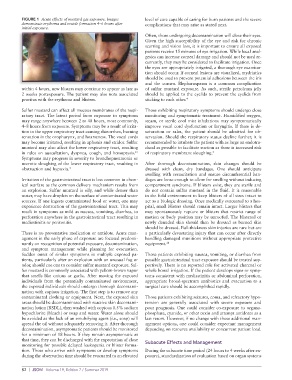
FIGURE 1  Acute effects of mustard gas exposure. Images   level of care capable of caring for burn patients and the severe
          demonstrate erythema and vesicle formation 4–6 hours after    complications that may arise as stated next.
          initial exposure.
                                                             Often, those undergoing decontamination will close their eyes.
                                                             Given the high susceptibility of the eye and risk for chronic
                                                             scarring and vision loss, it is important to ensure all exposed
                                                             patients receive 15 minutes of eye irrigation. While local anal-
                                                             gesics can increase corneal damage and should not be used re-
                                                             currently, they may be considered to facilitate irrigation. Once
                                                             the eyes are appropriately irrigated, a thorough eye examina-
                                                             tion should occur. If corneal lesions are visualized, mydriatics
                                                             should be used to prevent potential adhesions between the iris
                                                             and the cornea. Blepharospasm is a common complication
          within 4 hours, new blisters may continue to appear as late as   of  sulfur  mustard  exposure.  As  such,  sterile  petroleum  jelly
          2 weeks postexposure. The patient may also note associated   should be applied to the eyelids to prevent the eyelids from
          pruritus with the erythema and blisters.           sticking to each other. 4

          Sulfur mustard can affect all mucous membranes of the respi-  Those exhibiting respiratory symptoms should undergo close
          ratory tract. The latent period from exposure to symptoms   monitoring and symptomatic treatment. Humidified oxygen,
          may range anywhere between 2 to 48 hours, most commonly,   steam, or sterile cool mist inhalations may symptomatically
          4–8 hours from exposure. Symptoms may be a result of irrita-  improve vocal cord dysfunction or laryngitis. If there is de-
          tion in the upper respiratory tract causing rhinorrhea, burning   saturation or rales, the patient should be admitted for ob-
          sensation in the oropharynx, and hoarseness. The vocal cords   servation. Should the respiratory status decline further, it is
          may become irritated, resulting in aphonia and stridor. Sulfur   recommended to intubate the patient with as large an endotra-
          mustard may also affect the lower respiratory tract, resulting   cheal as possible to facilitate suction as there is increased risk
          in rales on auscultation, dyspnea, cough, and hemoptysis.    of respiratory membrane sloughing. 4
                                                         17
          Symptoms may progress in severity to bronchopneumonia or
          necrotic sloughing of the lower respiratory tract, resulting in   After thorough decontamination, skin changes should be
          obstruction and hypoxia. 4                         dressed with clean, dry bandages. One should anticipate
                                                             swelling  with  resuscitation  and  ensure  circumferential  ban-
          Irritation of the gastrointestinal tract is less common in chem-  dages are loose enough to allow for swelling without inducing
          ical warfare as the common delivery mechanism results from   compartment syndrome. If blisters exist, they are sterile and
          an explosion. Sulfur mustard is oily, and while denser than   do not contain sulfur mustard in the fluid. It is reasonable
          water, may have droplets on the surface of contaminated water   in the field environment to keep blisters of all sizes intact to
          sources. If one ingests contaminated food or water, one may   act as a biologic dressing. Once medically evacuated to a hos-
          experience destruction of the gastrointestinal tract. This may   pital, small blisters should remain intact. Larger blisters that
          result in symptoms as mild as nausea, vomiting, diarrhea, to   may spontaneously rupture or blisters that restrict range of
          perforation anywhere in the gastrointestinal tract resulting in   motion or body position may be unroofed. The blistered or
          mediastinitis or peritonitis.                      newly  denuded  skin should  then  be  dressed  as burned  skin
                                                             should be dressed. Full-thickness skin injuries are rare but are
          There is no preventative medication or antidote. Acute man-  a particularly devastating injury that can occur after directly
          agement in the early phase of exposure are focused predomi-  handling damaged munitions without appropriate protective
          nantly on recognition of potential exposure, decontamination,   equipment. 18
          and symptom management while planning for evacuation.
          Sudden onset of similar symptoms in multiple exposed pa-  Those patients exhibiting nausea, vomiting, or diarrhea from
          tients, particularly after an explosion with an unusual fog or   possible gastrointestinal tract exposure should be treated sup-
          odor, should cue one to consider sulfur mustard exposure. Sul-  portively. There is no reported role for activated charcoal or
          fur mustard is commonly associated with yellow-brown vapor   whole bowel irrigation. If the patient develops signs or symp-
          that smells like onions or garlic. After moving the exposed   toms consistent with mediastinitis or abdominal perforation,
          individuals from the potentially contaminated environment,   appropriate broad-spectrum antibiotics and evacuation to a
          the exposed individuals should undergo thorough decontami-  surgical care should be accomplished rapidly.
          nation with copious irrigation. The first step is to remove any
          contaminated clothing or equipment. Next, the exposed skin   Those patients exhibiting seizures, coma, and refractory hypo-
          areas should be decontaminated with reactive skin decontami-  tension are generally associated with severe exposure and
          nation lotion (RSDL), then washed with copious 0.5% sodium   poor prognosis. One could consider co-exposure to organo-
          hypochlorite (bleach) or soap and water. Water alone should   phosphate, cyanide, or other toxin and attempt antidotes as a
          be avoided as the lack of an emulsifying agent (i.e., soap) will   last resort. However, if no change with those additional man-
          spread the oil without adequately removing it. After thorough   agement options, one could consider expectant management
          decontamination, asymptomatic patients should be monitored   depending on resource availability or concurrent patient load.
          for a minimum of 18 hours. If they remain asymptomatic at
          that time, they can be discharged with the expectation of close   Subacute Effects and Management
          monitoring for possible delayed leukopenia or blister forma-
          tion. Those who arrive with symptoms or develop symptoms   During the subacute time period (24 hours to 4 weeks after ex-
          during the observation time should be evacuated to an elevated   posure), standardization of evaluation based on organ systems


          82  |  JSOM   Volume 19, Edition 2 / Summer 2019

