


Page 95 - JSOM Summer 2019
P. 95
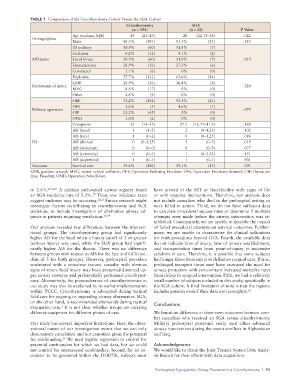
TABLE 1  Comparison of the Cricothyrotomy Cohort Versus the SGA Cohort
                                                     Cricothyrotomy             SGA
                                                        (n = 194)              (n = 22)             P Value
                               Age (median, IQR)       24   (21–29)          28   (22.75–35)          .022
              Demographics
                               Male                  98.5%   (191)         95.5%       (21)           .323
                               US military           30.9%    (60)         31.8%        (7)
                               Coalition             6.2%     (12)          9.1%        (2)
              Affiliation      Local forces          30.9%    (60)         31.8%        (7)           .915
                               Humanitarian          28.9%    (56)         27.3%        (6)
                               Contractor            3.1%      (6)          0%          (0)
                               Explosive             57.7%   (112)         63.6%       (14)
                               GSW                   28.9%    (56)         36.4%        (8)
              Mechanism of injury                                                                     .328
                               MVC                   8.8%     (17)          0%          (0)
                               Other                 4.6%      (9)          0%          (0)
                               OEF                   73.2%   (142)         95.5%       (21)
                               OFS                   2.6%      (5)          4.6%        (1)
              Military operation                                                                      .075
                               OIF                   23.2%    (45)          0%          (0)
                               OND                   1.0%      (2)          0%          (0)
                               Composite               25   (14–33)         27.5   (16.75–41.5)       .168
                               AIS (head)               3    (1–5)            2     (0–4.25)          .102
                               AIS (face)               1    (0–2)            0     (0–1.25)          .086
              ISS              AIS (thorax)             0  (0–2.25)           3       (0–3)           .019
                               AIS (abdomen)            0    (0–0)            0       (0–3)           .077
                               AIS (extremity)          0    (0–3)            1     (0–3.25)          .151
                               AIS (superficial)        1    (0–1)            1       (0–1)           .901
              Outcome          Survival rate         54.6%   (106)         59.1%       (13)           .691
              GSW, gunshot wound; MVC, motor vehicle collision; OEF, Operation Enduring Freedom; OFS, Operation Freedoms Sentinel; OIF, Operation
              Iraqi Freedom; OND, Operation New Dawn.

              to 2.4%. 4,16–21  A military prehospital airway registry found   have arrived at the FST or fixed-facility with signs of life
              an SGA incidence rate of 0.3%.  These low incidence rates   or with ongoing interventions. Therefore, our analysis does
                                       20
              suggest underuse may be occurring. 20,21  Future research might   not include casualties who died in the prehospital setting or
              investigate  factors  contributing  to  cricothyrotomy  and  SGA   were killed in action. Third, we do not have sufficient data
              underuse, to include investigation of alternative airway ad-  to calculate procedural success rates or determine if multiple
              juncts in patients requiring ventilation. 22–24    attempts were made before the airway intervention was es-
                                                                 tablished. Consequently, we are unable to describe the impact
              Our analysis revealed few differences between the interven-  of failed procedural attempts on survival outcomes. Further-
              tional groups. The cricothyrotomy group had significantly   more,  we  are  unable  to  characterize  the  clinical  indications
              higher AIS for the head when a binary cutoff of 3 or greater   for both procedures beyond GCS. Fourth, the available data
              (serious injury) was used, while the SGA group had signifi-  do not indicate time of injury, time of airway establishment,
              cantly higher AIS for the thorax. There was no difference   and transportation times from point-of-injury to successive
              between groups with respect to AIS for the face and GCS (me-  echelons of care. Therefore, it is possible that some subjects
              dian  of  3  for  both  groups).  However,  prehospital  providers   had longer times from injury to definitive surgical care. If true,
              confronted with a comatose trauma casualty with obvious   prolonged  transport  times  may  have  increased  the  need  for
              signs of severe head injury may have presumed distorted up-  airway protection with concomitant increased mortality rates
              per airway anatomy and preferentially performed cricothyrot-  from delays to surgical intervention. Fifth, we had a relatively
              omy. Alternatively, the preponderance of cricothyrotomies in   small number of subjects included in this study, specifically in
              our study may also be explained by its earlier implementation   the SGA cohort. A final limitation of note is that the registry
              within TCCC. Cricothyrotomy is advocated during tactical   includes patients even if their data are incomplete. 26
              field care for ongoing or impending airway obstruction; SGA,
              on the other hand, is recommended afterwards during tactical   Conclusions
              evacuation care.  It is not clear whether troops are carrying
                          3
              different equipment for different phases of care.  We found no difference in short-term outcomes between com-
                                                                 bat casualties who received an SGA versus cricothyrotomy.
              Our study has several important limitations. First, the obser-  Military prehospital personnel rarely used either advanced
              vational nature of our investigation means that we can only   airway intervention during the recent conflicts in Afghanistan
              demonstrate correlation and not causation given the potential   and Iraq.
              for confounding.  We used logistic regression to control for
                           25
              potential confounders for which we had data, but we could   Acknowledgments
              not control for unmeasured confounders. Second, for an en-  We would like to thank the Joint Trauma System Data Analy-
              counter  to  be  generated  within  the  DODTR,  subjects  must   sis Branch for their efforts with data acquisition.

                                                                 Prehospital Supraglottic Airway Placement vs Cricothyrotomy  |  93

