


Page 116 - JSOM Summer 2019
P. 116
Navy SEALS), DS consumption is even higher, with about   heat acclimation protocol  increased gastrointestinal barrier
          80% of these groups reporting use.  Certain DSs including   permeability (increasing endotoxicity), reduced the expression
                                       88
          ephedra, caffeine, green tea extracts, and capsaicin increase   of heat shock proteins, and exercise core temperature was not
          resting metabolic rate and are thus considered “thermo-  reduced over the 7 days.  Three days of 500mg/day curcumin
                                                                                103
          genic.” 90,91  They have been hypothesized  to exacerbate heat   supplementation (generally promoted for antioxidant and
          stress, but studies are generally sparse. Case studies suggested   anti-inflammatory effects) improved gastrointestinal barrier
          that ephedra may have been associated with aggravating EHS   function and reduced overall core temperature in nonacclima-
          in hot enviroments. 92,93  Ephedra was banned by the US Food   tized individuals during 60 minutes of treadmill running in
          and Drug Administration in 2004,  in the wake of numerous   the heat (99°F, 25% RH).  Current data suggest that gluta-
                                     94
                                                                                 104
          adverse effects (primarily cardiovascular) associated with its   mine and curcumin may reduce gastrointestinal permeability
          use,  but synephrine, another compound with similar chemi-  and curcumin may improve thermoregulation during exercise
             95
          cal structure, is still on the market.             in the heat, but more investigation under a wider variety of
                                                             conditions are needed before these can be recommended for
          The few studies that have examined the effect of acute inges-  these purposes.
          tion of various dosages of caffeine (3–6mg/kg body weight) on
          core temperature in the heat (86–95°F) are equivocal. Some   Conclusion
          studies showing a core temperature elevation (compared with
          a placebo), 96,97  but others do not. 98,99        EHS is a relatively rare event, but as shown by data from the
                                                             Falmouth Road Race (Table 1) the incidence can be relatively
          Beetroot juice has a high concentration of nitrates (NO ) that   high if individual are intensely active, especially under condi-
                                                     –
                                                     3
          convert to nitrogen compounds (i.e., NO , NO). Studies have   tions of high ambient temperature and humidity. Symptoms
                                          –
                                          2
          generally shown that beetroot juice improves the utilization   and signs are mental dysfunction combined with a core tem-
          of  oxygen  in  skeletal  muscle  and  reduce  the  energy  cost  of   perature (measured rectally) near 40°C (104°F). The goal of
          exercise.  This could lower thermogenesis during physical   treatment is to lower the temperatures as rapidly as possible,
                 100
          activity in the heat, but results from two studies are not clear.   preferentially with a whole body water bath. In the field, wa-
          One study in which participants consumed beetroot juice or a   ter baths may not be available, and in this case it may be nec-
          placebo for 6 days before 45 minutes of walking on a treadmill   essary to use cold packs or towels soaked in ice water over as
          with a load in the heat (106°F, 20% RH) showed a more rapid   much of the body as possible or to splash large quantities of
          rise in core temperature after consuming the beetroot juice,   water over the body with fanning. The victim should be trans-
          despite a 6% reduction in energy cost.  On the other hand,   ported to more definitive care after cooling, but cooling should
                                        101
          3 days consumption of beetroot juice or a placebo before 60   continue while transporting. Prevention involves proper accli-
          minutes of cycling in a hot environment (91°F, 49% RH)   mation to heat, understanding the thermal environment, ap-
          showed effects on core temperature and energy cost did not   preciating work/rest cycles, proper hydration during activity,
          differ between the two conditions.  Current evidence does   and considering DSs that may influence thermoregulation.
                                      100
          not support the use of beetroot to assist in thermoregulation.  Proper attention to these factors should considerably reduce
                                                             the incidence of EHS.
          Other DSs including glutamine, quercetin, and curcumin have
          been examined for effects on gastrointestinal permeability   Disclaimer
          and core temperature during exercise in the heat. However,   The views expressed in this presentation are those of the au-
          more research is needed because for each DS tested there is   thors and do not necessarily reflect the official policy of the
          only one investigation and these were conducted under very   Department of Defense, Department of the Army, US Army
          specific conditions (e.g., dosages, temperature, exercise inten-  Medical Department or the US government. The use of trade-
          sity). A single, acute ingestion of 0.9g/kg body weight of the   mark names does not imply endorsement by the US Army but is
          amino acid glutamine was found to reduced gastrointestinal   intended only to assist in the identification of a specific product.
          permeability and plasma endotoxins during 60 minutes of
          treadmill running (70% VO max) in the heat (86°F and 12–  References
                                2
          20% RH).  Two g/day of quercetin (a DS promoted for its   1.  Climate change impacts in the United States: the third national cli-
                  102
          antioxidant and anti-inflammatory effects in cell cultures and   mate assessment https://doi.org/10.7930/J0Z31WJ2. Accessed 30
          animal models) consumed each day during a 7-day exercising   January 2019.
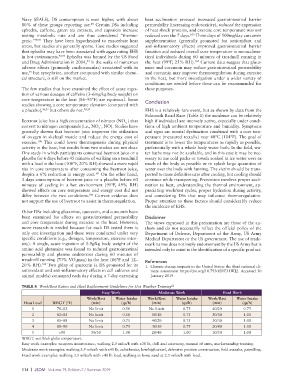
          TABLE 4  Work/Rest Ratios and Fluid Replacement Guidelines for Hot Weather Training 82
                                           Easy Work              Moderate Work              Hard Work
                                     Work/Rest    Water Intake   Work/Rest    Water Intake   Work/Rest    Water Intake
           Heat Level  WBGT (°F)       (min)       (qt/h)       (min)       (qt/h)       (min)       (qt/h)
              1          78–82        No limit      0.50       No Limit      0.75        40/20        0.75
              2          82–85        No limit      0.50        50/10        0.75        30/30        1.00
              3          85–88        No limit      0.75        40/20        0.75        30/30        1.00
              4          88–90        No limit      0.75        30/30        0.75        20/40        1.00
              5          >90           50/10        1.00        20/40        1.00        10/50        1.00
          WBGT, wet blub globe temperature.
          Easy work examples: weapons maintenance, walking 2.5 miles/h with ≤30 lb, drill and ceremony, manual of arms, marksmanship training.
          Moderate work examples: walking 3.5 miles/h with ≤40 lb, calisthenics, low/high crawl, defensive position construction, field assaults, patrolling.
          Hard work examples: walking 3.5 miles/h with >40 lb load, walking in loose sand at 2.5 miles/h with load.


          114  |  JSOM   Volume 19, Edition 2 / Summer 2019

